Scientists Create Mango That Extends Summer Into Late June
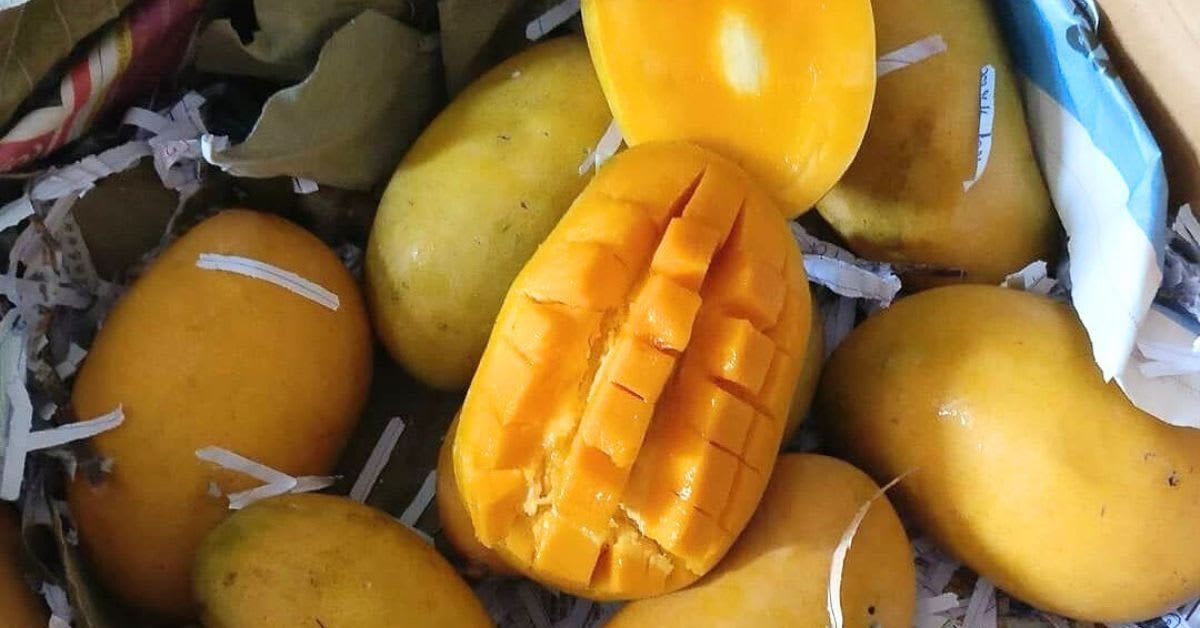
In 1971, Indian researchers developed a mango variety that yields fruit every year, grows on compact trees, and arrives just when mango season feels over. The Amrapali mango is changing how farmers grow and how long we all get to enjoy summer's sweetest treat.
The best part of summer isn't the heat. It's biting into a perfectly ripe mango and having the juice run down your chin.
For generations, mango lovers faced the same frustration: their favorite trees bore fruit unpredictably, only every other year, and by late June the season was over. Then in 1971, Dr. Pijush Kanti Majumdar at the Indian Agricultural Research Institute solved both problems at once.
After thousands of careful experiments, his team crossed two beloved varieties: Dasheri, known for rich sweetness, and Neelum, prized for reliable fruiting. The result was Amrapali, a mango named after a legendary figure from ancient India who was reportedly found as an infant beneath a mango tree.
What makes Amrapali revolutionary goes beyond its honey-like flavor. The trees grow only 10 to 13 feet tall, compared to traditional mangoes that tower over 30 feet. Farmers can plant up to 15 times more trees per acre, dramatically increasing productivity.
Even better, Amrapali produces fruit every single year instead of alternating seasons. That predictability transformed mango farming from a gamble into a dependable livelihood for countless growers across India.
The timing matters too. Amrapali ripens in mid to late June, arriving after most varieties have vanished from market stalls. It quietly extends the season just when everyone assumes they've eaten their last mango of the summer.
Why This Inspires
The Amrapali story shows how patient scientific work can solve real problems for real people. Dr. Majumdar and his team weren't chasing headlines. They spent years on meticulous cross-pollination to help farmers earn consistent income and give families more weeks to enjoy seasonal fruit.
The mango itself is fiber-light and intensely sweet, packed with vitamins A and C, antioxidants, and beta-carotene. It nourishes while it delights, proving that indulgence and wellness can arrive in the same golden package.
Today, Amrapali trees thrive in orchards across northern India, quietly supporting farmers through consistent yields and manageable tree sizes. What started as a research project five decades ago now feeds millions and keeps summer alive a little longer each year.
Sometimes the best innovations aren't flashy. They're simply thoughtful solutions that make life sweeter for everyone involved.
More Images
%2Fenglish-betterindia%2Fmedia%2Fmedia_files%2F2026%2F03%2F20%2Famrapali-mango-2026-03-20-12-40-54.jpg)
%2Ffilters%3Aformat(webp)%2Fenglish-betterindia%2Fmedia%2Fmedia_files%2F2026%2F03%2F20%2Famrapali-mango-2026-03-20-12-42-50.jpg)

%2Ffilters%3Aformat(webp)%2Fenglish-betterindia%2Fmedia%2Fmedia_files%2F2026%2F03%2F20%2Famrapali-mango-2026-03-20-12-44-26.jpg)
Based on reporting by The Better India
This story was written by BrightWire based on verified news reports.
Spread the positivity!
Share this good news with someone who needs it