Scientists Create Powerful New Weapon Against Flu Viruses
An international team has developed a new class of flu-fighting drugs that permanently disable the virus, going far beyond today's treatments. The breakthrough could revolutionize how we prepare for and fight future pandemics.
Scientists just took a major leap forward in our ability to stop influenza in its tracks, creating experimental compounds that lock flu viruses in an inactive state permanently.
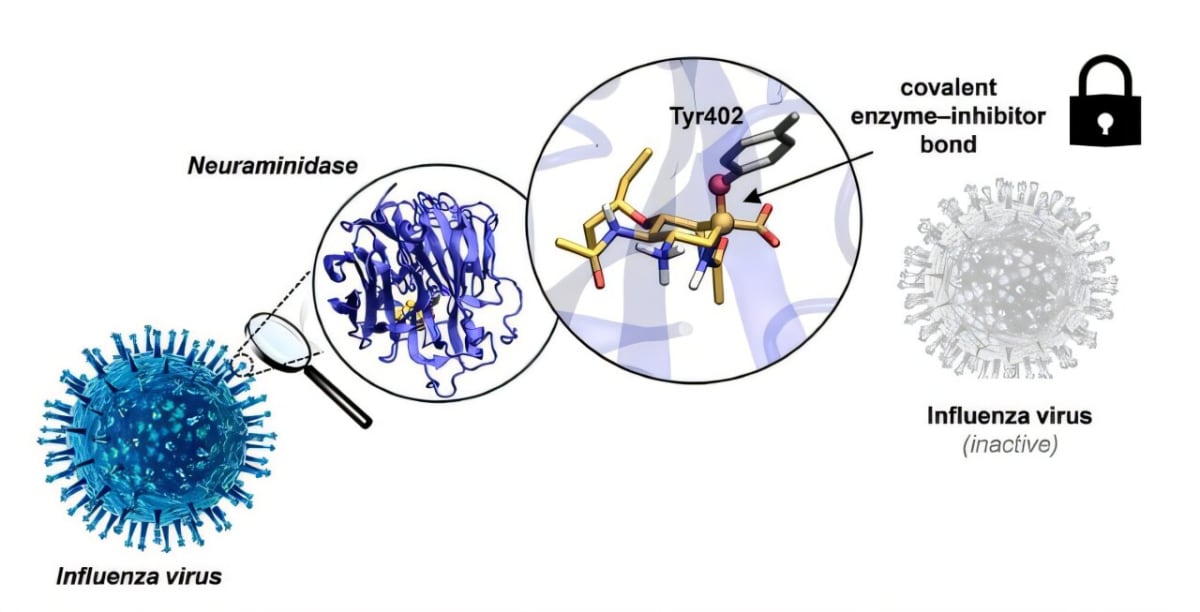
Researchers from universities across the UK, Netherlands, and Spain designed molecules called "sugar aziridines" that work fundamentally differently than current flu medications. While drugs like Tamiflu temporarily block the virus, these new compounds form a permanent bond with the virus's key spreading mechanism.
The secret lies in how influenza spreads. Flu viruses use a surface enzyme called neuraminidase to jump from infected cells to healthy ones. Today's frontline medicines work by temporarily blocking this enzyme, but the virus can eventually break free.
The new compounds take a smarter approach. First, they mimic a critical moment in the enzyme's chemical reaction, allowing them to grip incredibly tightly. Then they snap shut like a trap, forming a permanent chemical bond that locks the enzyme down for good.
The researchers started with Tamiflu's proven structure and added a special ring-shaped component called an aziridine. This ring acts as a reactive "warhead" that enables the permanent bond, overcoming the temporary nature of current drugs.
Lab tests following World Health Organization guidelines showed impressive results. The compounds strongly blocked H3N2, one of the main viruses behind seasonal flu in humans. They also worked effectively against H5N1 bird flu strains, raising hopes for pandemic preparedness.
Why This Inspires
Beyond treating sick patients, these molecules open exciting new doors for prevention. Scientists can use them as research tools to measure and improve flu vaccines, potentially making vaccines more effective. The compounds could help accelerate quality control testing and improve how we measure vaccine potency.
The project showcased international collaboration at its best, combining chemical synthesis experts, computer modeling specialists, structural biologists, and virologists across four institutions. Professor Gideon Davies from the University of York called it a beautiful synergy of different scientific disciplines coming together.
Professor Carme Rovira from the University of Barcelona explained that their combined approach let them watch these molecules "shut down" neuraminidase at the atomic level. The team is now working to patent-protect their discovery while developing it toward clinical use.
The compounds aren't available as medicines yet and will need extensive safety testing in animals and humans. Leiden Professor Hermen Overkleeft acknowledged that drug development is lengthy and costly, with failure more common than success. But he emphasized that the unique permanent-bond approach gives these compounds a real advantage over competing solutions.
This discovery represents genuine progress in our pandemic toolkit, offering hope that future flu outbreaks might be stopped more effectively than ever before.
More Images



Based on reporting by Google News - Scientists Discover
This story was written by BrightWire based on verified news reports.
Spread the positivity!
Share this good news with someone who needs it