Scientists Create Ultra-Precise X-Ray Laser for Medicine
A team at European XFEL just proved that X-ray lasers can work like traditional lasers, creating the sharpest X-ray light ever made. This breakthrough could revolutionize how we study diseases, chemical reactions, and tiny biological structures.
Scientists just achieved something experts once thought nearly impossible: making X-rays behave like the laser pointer in your desk drawer.
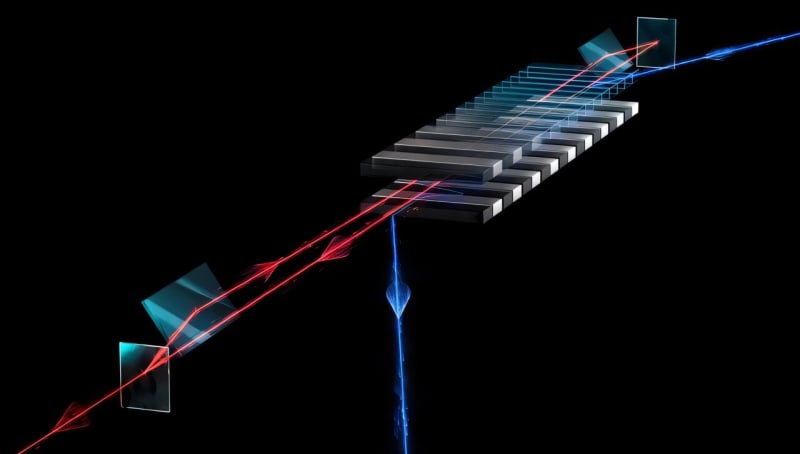
A team at the European XFEL facility in Germany successfully built the first hard X-ray laser oscillator, nicknamed XFELO. Think of it as taking blurry X-ray light and sharpening it to a single, perfect point.
The challenge was enormous. X-rays are incredibly difficult to bounce between mirrors because their short wavelengths make them hard to reflect at large angles. For decades, this seemed like an insurmountable problem.
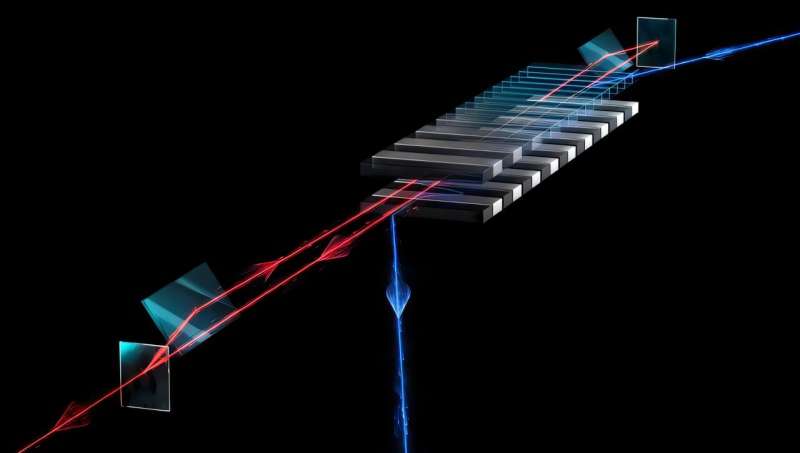
The XFELO system works by bouncing X-ray light through a 66-meter-long cavity between diamond crystal mirrors. Each time the light passes through, it interacts with fresh electron bunches traveling near light speed. With every pass, the light gets stronger and more focused.
Patrick Rauer from DESY, whose doctoral work laid the groundwork for this project, describes it perfectly. "With every round trip, the noise in the X-ray pulse gets less and the concentrated light more defined. It gets more stable and you start to see this single, clear frequency, this spike."
That spike is the breakthrough. It represents X-ray light with unprecedented precision and clarity.
The system required years of painstaking work. The team had to position crystals with micrometer accuracy and synchronize timing down to femtoseconds (that's a millionth of a billionth of a second). The 1.7-kilometer-long accelerator needed to maintain perfect stability over multiple days.
The Ripple Effect
This razor-sharp X-ray light opens doors scientists couldn't access before. Researchers can now investigate ultrafast chemical reactions as they happen and examine biological structures in extraordinary detail.
For medical research, this means potentially seeing disease processes at the molecular level with clarity never before possible. Drug designers could watch exactly how molecules interact. Biologists could study proteins and viruses with unprecedented precision.
The team is now working to strengthen the X-ray light further and make the system reliable enough for research teams worldwide to use. Managing Director Thomas Feurer sums up the impact: "With this system, researchers can investigate structures and processes that were until now barely measurable."
What started as a theoretical proposal by Professor Jörg Rossbach decades ago has become reality, and he was there to witness the first successful spike in the data himself.
More Images


Based on reporting by Phys.org
This story was written by BrightWire based on verified news reports.
Spread the positivity!
Share this good news with someone who needs it