Scientists Create Zero-Carbon Fridge Using Salt and Water
Chinese researchers just solved one of refrigeration's biggest problems with a cooling system that uses dissolving salt instead of electricity-guzzling compressors. The breakthrough could eliminate carbon emissions from fridges and air conditioners worldwide.
Your refrigerator might be about to get a green makeover thanks to a discovery that sounds almost too simple to work.
Scientists at the Chinese Academy of Sciences have created a revolutionary cooling system using nothing more than salt, water, and pressure. Published in Nature, their "dissolution barocaloric" method could replace the power-hungry compressors that have defined refrigeration for over a century.
Here's how it works. When ammonium thiocyanate salt dissolves in water, it releases massive amounts of heat. Apply pressure, and the salt precipitates back out, creating a cooling effect. Repeat the cycle, and you've got refrigeration without the carbon footprint.
The breakthrough solves what researchers called the "impossible triangle" of cooling technology. Previous eco-friendly options could achieve low emissions or high efficiency, but never both. Solid-state coolers existed but couldn't transfer heat effectively enough for real-world use.
This new method turns the coolant itself into a flowing liquid that pumps directly through heat exchangers. It's like combining the best parts of traditional and experimental cooling into one system.
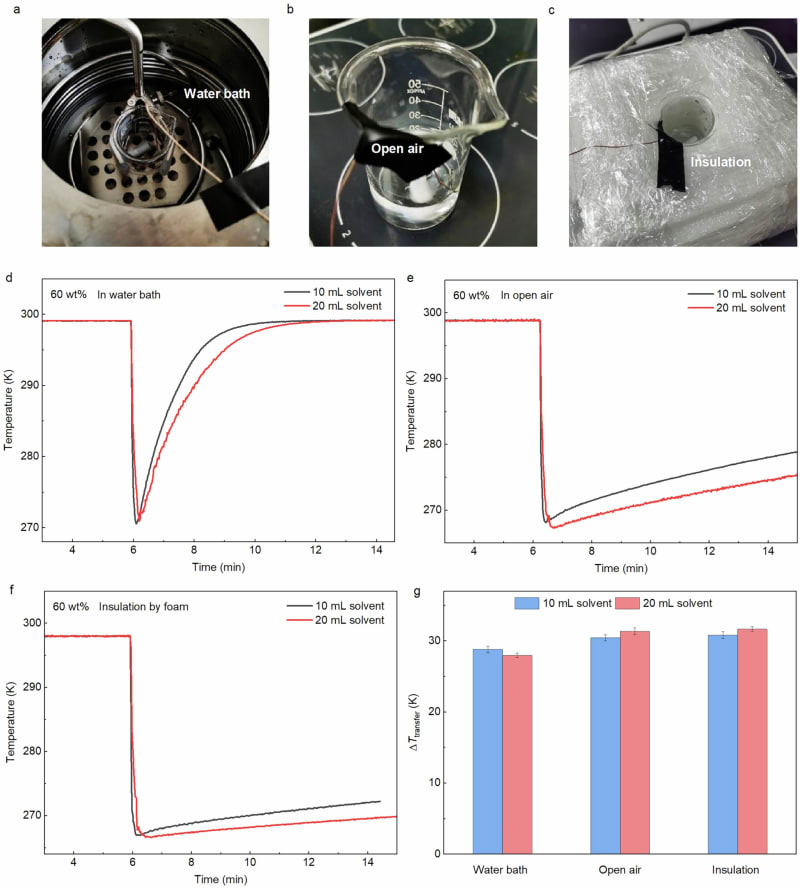
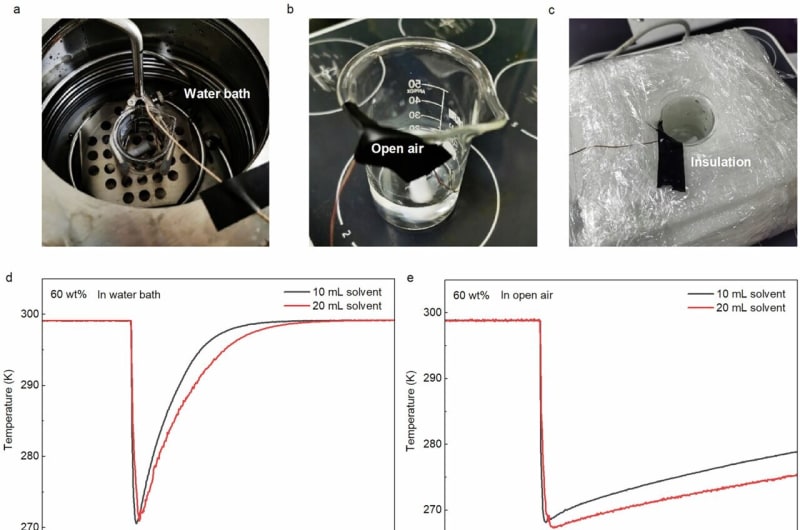
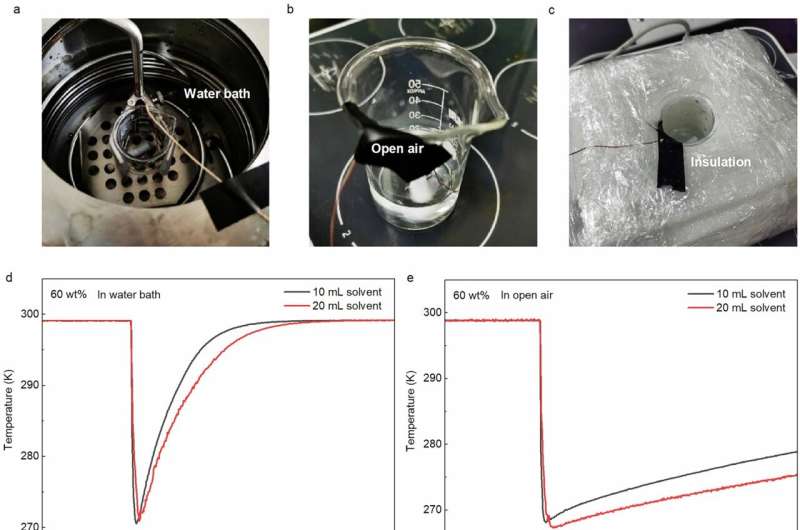
The results exceeded expectations. In lab tests, the solution dropped temperatures by nearly 30 Kelvin in just 20 seconds at room temperature. At higher temperatures, it achieved cooling spans of 54 Kelvin, crushing existing solid-state alternatives.
Computer simulations of a working prototype showed 77% efficiency and a cooling capacity of 67 joules per gram. The system responds instantly to pressure changes and stays stable through repeated cycles, two critical requirements for any practical refrigerator.
Lead researcher Professor Li Bing and his team confirmed the process works through advanced spectroscopic technology. The chemical reactions are reversible and reliable, meaning the technology could scale from home refrigerators to industrial cooling systems.
The Ripple Effect
This discovery arrives at a perfect moment. Traditional refrigeration accounts for massive global energy consumption and carbon emissions. As temperatures rise and more people worldwide need cooling, the environmental cost keeps climbing.
The technology shows particular promise for AI data centers, which generate enormous heat and require constant cooling. The system's excellent high-temperature performance makes it ideal for these demanding applications. Imagine entire server farms cooled without adding to the climate crisis they're often used to model and predict.
The shift from compressors to salt solutions represents more than just incremental improvement. It's a fundamental rethinking of how we move heat around, opening pathways to zero-emission cooling that works as well as or better than what we use today.
A world where keeping cool doesn't heat the planet just got closer to reality.
More Images

Based on reporting by Phys.org - Technology
This story was written by BrightWire based on verified news reports.
Spread the positivity!
Share this good news with someone who needs it