
Scientists Develop Breakthrough Method to Rapidly Test Heat Shields for Future Space Travel
A dedicated team of engineers at Sandia National Laboratories has achieved a remarkable breakthrough in aerospace technology, creating innovative ways to quickly evaluate heat shield materials for hypersonic vehicles. This advancement promises to accelerate the development of safer, more efficient spacecraft and make space travel more accessible than ever before.
In an exciting leap forward for aerospace engineering, researchers at Sandia National Laboratories have cracked the code on one of space travel's biggest challenges: rapidly testing materials that protect vehicles from the extreme heat of hypersonic flight.
Led by aerospace engineer Justin Wagner, this passionate team spent three years combining cutting-edge computer modeling, laboratory experiments, and flight testing to revolutionize how we understand and develop heat shields. Their groundbreaking work means we can now predict how these critical protective systems will perform much faster than ever before, opening doors to safer and more advanced space exploration.
The project emerged from a simple conversation between colleagues who wondered: could there be a better way? That curiosity sparked an innovative collaboration that brought together expertise from multiple renowned institutions, including the University of Texas at Austin, University of Minnesota Twin Cities, University of Colorado Boulder, and Oak Ridge National Laboratory.
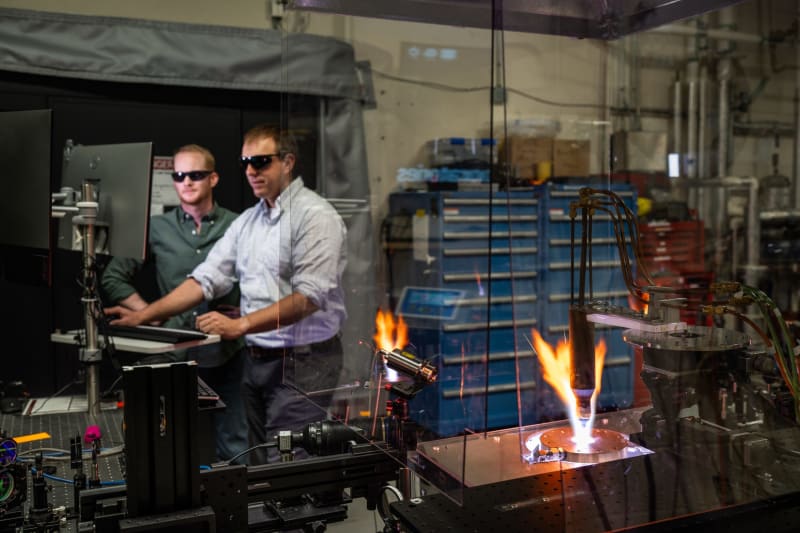
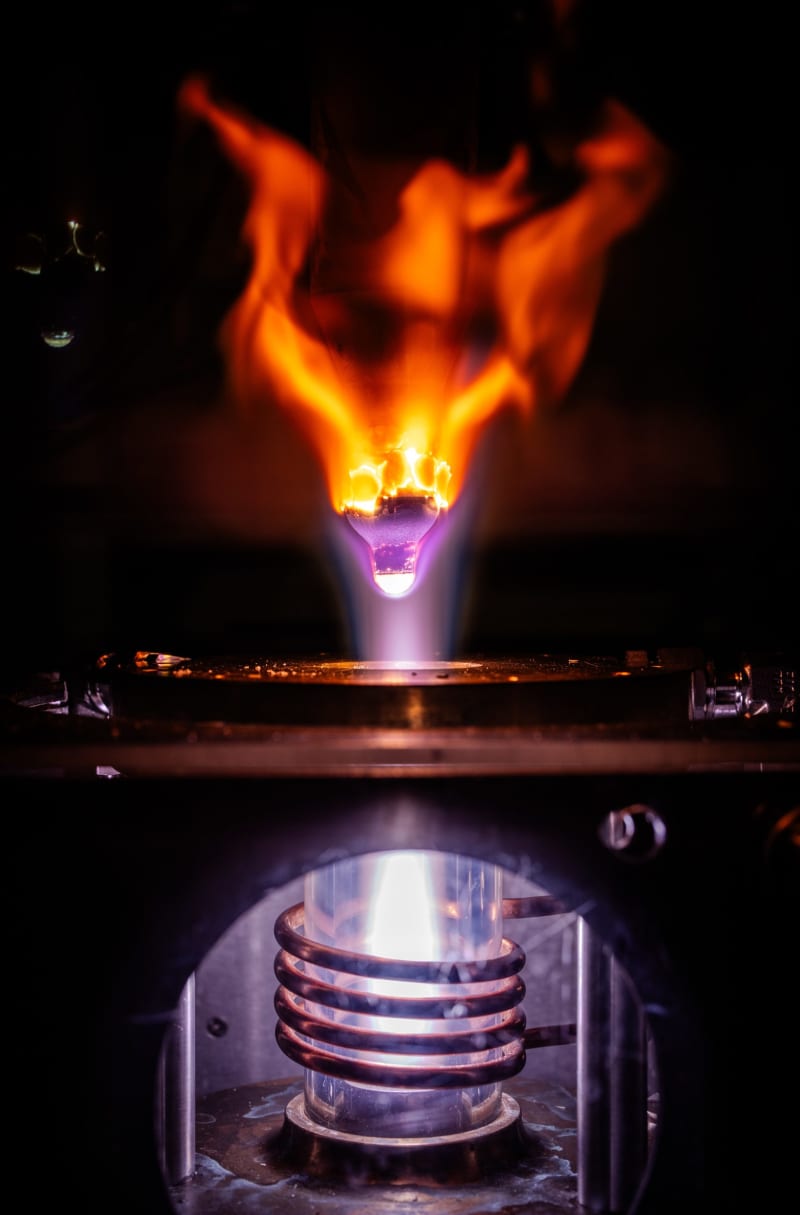
What makes this achievement particularly impressive is the creative approach the team took. Since replicating the exact conditions of hypersonic flight on Earth is impossible, the engineers designed clever experiments to test different aspects of the extreme environment. They used an inductively coupled plasma torch that reaches temperatures hotter than the sun's surface to study how materials respond to intense heat. Imagine holding a piece of the sun in a laboratory—that's the remarkable level of innovation at work here.
The team also harnessed the power of nature itself at Sandia's National Solar Thermal Test Facility, using concentrated sunlight from a field of mirrors to create extreme temperatures for testing larger heat shield samples. Additionally, they employed a hypersonic shock tunnel capable of producing both scorching temperatures and Mach-velocity gas bursts, simulating flight at ten times the speed of sound.
The researchers tested an impressive range of materials, from everyday graphite—yes, the same carbon found in pencils—to sophisticated carbon-based and ceramic composites. Hundreds of samples were carefully crafted by materials scientist Bernadette Hernandez-Sanchez and her dedicated team.
Chemical engineer Scott Roberts led the effort to transform all this experimental data into sophisticated computer models that can predict how heat shields will behave in actual flight conditions. This computational breakthrough means engineers can now evaluate new materials and designs in a fraction of the time previously required.
The implications of this research extend far beyond military applications. These advances in thermal protection systems are essential for the growing commercial space industry, making routine space travel safer and more reliable. From protecting astronauts returning from the International Space Station to enabling future missions to Mars, better heat shields mean better outcomes for everyone reaching for the stars.
This collaborative achievement showcases the best of scientific innovation—curious minds asking "what if," dedicated teams working together across institutions, and breakthrough solutions that push humanity forward. As we stand on the threshold of a new era in space exploration, these engineers have provided us with tools to get there faster and safer than ever imagined.
More Images

Based on reporting by Reddit - Space
This story was written by BrightWire based on verified news reports.
Spread the positivity! 🌟
Share this good news with someone who needs it
More Good News
 🚀 Innovation
NASA's 25-Year Timelapse Reveals 400-Year-Old Supernova Still Dazzling Scientists
 🚀 Innovation
Philanthropists Fund Hubble-Beating Space Telescope in Just 3 Years for Fraction of Cost
 🚀 Innovation
Schmidt Sciences Unveils Lazuli: Private Space Telescope Larger Than Hubble
Joke of the Day
Why did the calendar go on vacation?
Explore Categories
Quote of the Day
"A friend is someone who knows all about you and still loves you."
— Elbert Hubbard