Scientists Discover 7 New Frog Species in Madagascar
Researchers have identified seven new species of diamond frogs hiding beneath Madagascar's forest floors, solving a puzzle that stumped scientists for over a decade. The discovery reveals surprising hidden diversity and could help protect these rare amphibians as their habitats disappear.
Scientists just discovered seven new species of frogs that have been hiding under the forest floor in Madagascar all along, and the findings could help save these elusive creatures before their homes vanish.
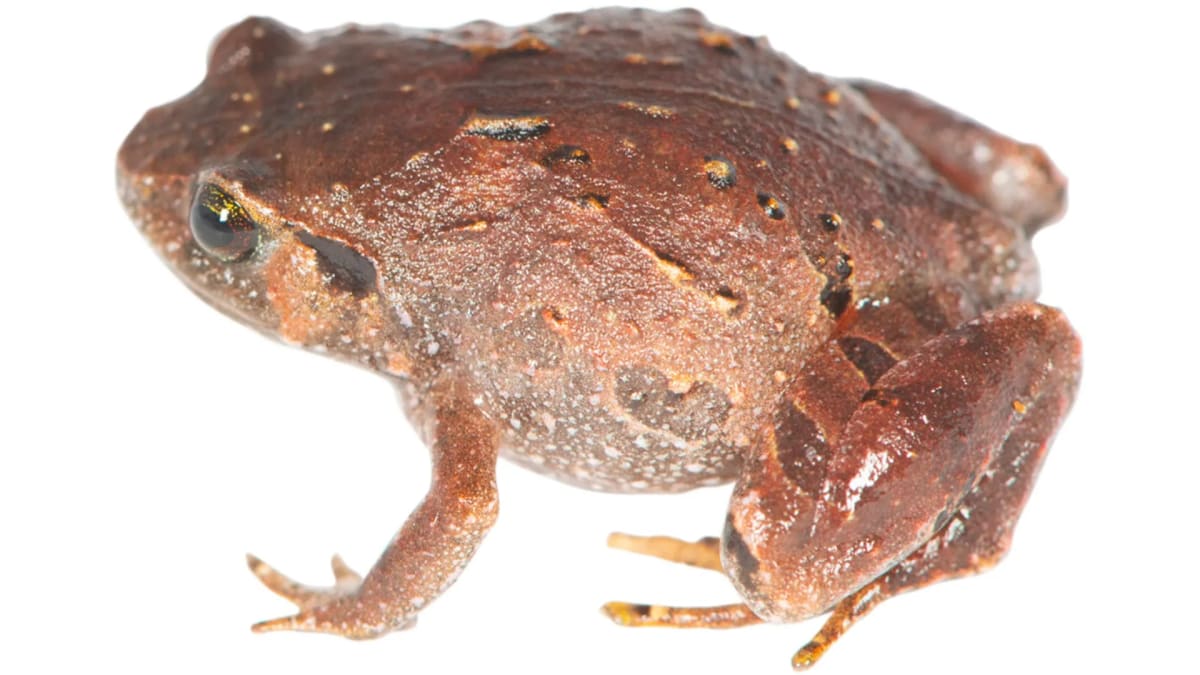
An international research team identified the previously unknown diamond frogs after more than 12 years of detective work. These unusual amphibians spend most of their lives buried beneath leaf litter, making them incredibly difficult to study and even harder to tell apart.
"Diamond frogs have been hiding their diversity beneath our feet," said Dr. Mark Scherz, lead author of the study and Curator of Herpetology at the Natural History Museum Denmark. Many species look deceptively similar at first glance, camouflaging brown until they move and reveal hidden flashes of bright orange or bold black and white patterns on their legs and backs.
The breakthrough came from a clever scientific approach called museomics. Researchers extracted DNA from century-old frog specimens preserved in museums and compared it with genetic material from newly collected frogs, finally matching historical species names with the correct modern specimens.
The work wasn't easy. Every expedition to Madagascar seemed to reveal another mysterious frog, but researchers struggled to determine which ones were truly new species versus ones already named decades ago.
Why This Inspires
This discovery shows how international cooperation and creative problem-solving can unlock nature's secrets. Scientists from Madagascar and Europe worked together, combining field observations, museum collections, DNA analysis, and even recordings of frog calls to piece together the puzzle.
The timing couldn't be better for conservation. Several of the newly identified species, including one called Rhombophryne quentini, are already helping shape proposals to expand protected areas in Madagascar as part of the country's Biodiversity 30x30 Program launched in March 2026.
Dr. Andolalao Rakotoarison from Madagascar's Institut d'Enseignement Supérieur de Soavinandriana Itasy emphasized how critical this knowledge is. Scientists still know almost nothing about how many of these frogs breed, how large their populations are, or what they need to survive, making it nearly impossible to protect them effectively without basic information.
The discovery brings the total number of known diamond frog species to 27. But researchers believe more unnamed species are almost certainly waiting to be found in Madagascar's rapidly disappearing forests.
Every newly described species represents millions of years of unique evolutionary history. The more scientists learn about Madagascar's remarkable amphibians, the clearer it becomes that protecting these hidden treasures starts with knowing they exist.
Based on reporting by Science Daily
This story was written by BrightWire based on verified news reports.
Spread the positivity!
Share this good news with someone who needs it