Scientists Discover Ants Run Tiny Cleaning Stations
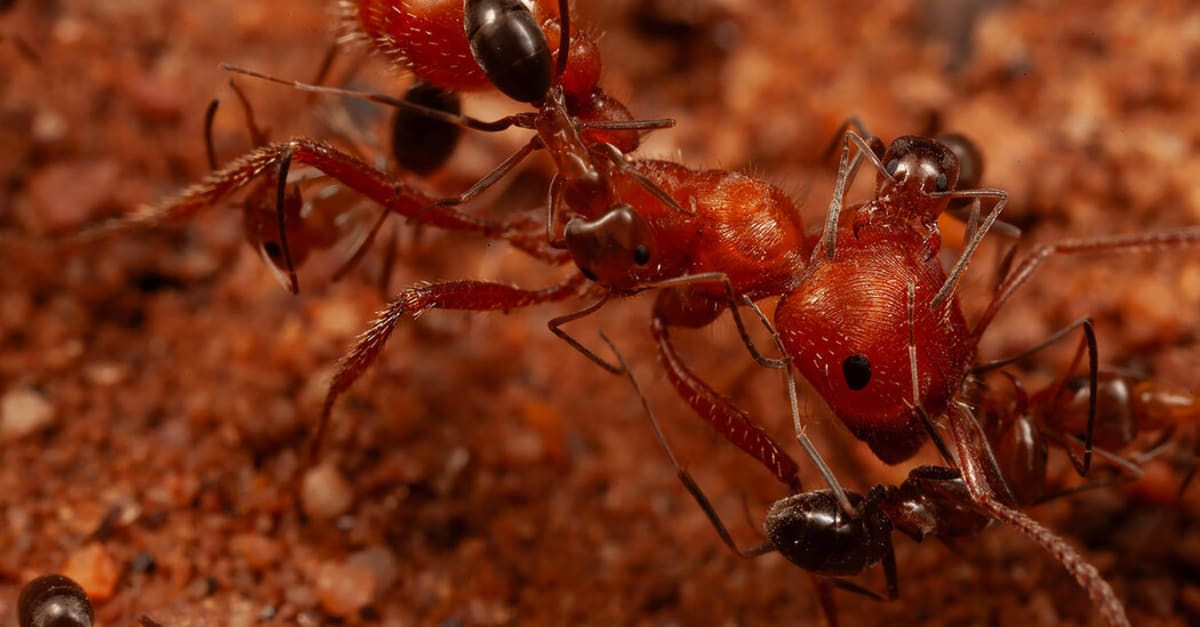
In the Arizona desert, tiny cone ants climb onto much larger harvester ants to groom them, just like cleaner fish do in the ocean. This adorable discovery reveals a surprisingly cooperative relationship between two very different ant species.
Twenty years ago, an entomologist drinking his morning coffee witnessed something no scientist had ever documented: ants getting spa treatment from other ants.
Mark Moffett from the Smithsonian National Museum of Natural History was relaxing behind a cottage in Portal, Arizona, when he noticed large red harvester ants behaving strangely. The insects were freezing in awkward positions near the nest entrances of much smaller cone ants.
Then the magic happened. The tiny cone ants emerged and climbed aboard the harvesters, licking and nibbling them clean.
Dr. Moffett immediately recognized the behavior. It looked exactly like the cleaner fish he'd seen in ocean documentaries, where small fish clean parasites and debris off larger species. But this was happening on desert ground between two ant species.
He grabbed his camera and documented the interaction, capturing proof of a behavior scientists didn't know existed in the ant world. The harvesters appeared to be actively seeking out this cleaning service, positioning themselves at the cone ant nests and waiting patiently.
This discovery challenges what we thought we knew about ant behavior. Most ant species are fiercely territorial and aggressive toward other colonies. Yet here were two completely different species cooperating in what appears to be a mutually beneficial arrangement.
Why This Inspires
This tiny cleaning station in the Arizona desert reminds us that cooperation exists in the most unexpected places. Even in the competitive world of nature, different species find ways to help each other survive and thrive.
The observation also shows the value of simply paying attention. Dr. Moffett wasn't conducting formal research that morning, just enjoying his coffee. Sometimes the most important scientific discoveries happen when we slow down and notice the small wonders around us.
Scientists can now study this relationship further to understand how these partnerships form and what benefits each species receives.
One chance morning coffee break led to discovering an entirely new type of ant behavior hidden in plain sight.
Based on reporting by Google News - Science
This story was written by BrightWire based on verified news reports.
Spread the positivity!
Share this good news with someone who needs it