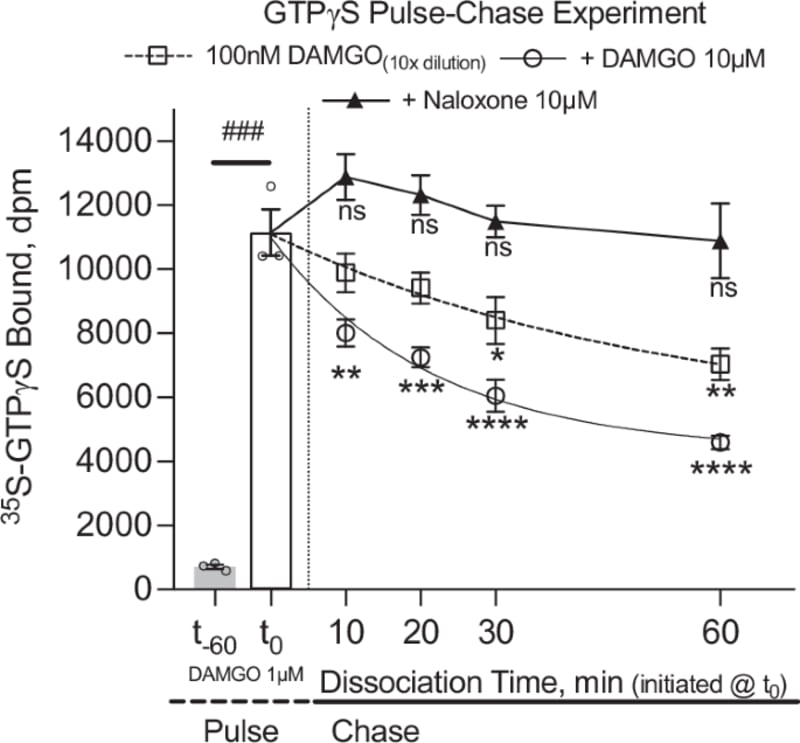
Scientists Discover Breakthrough for Safer, Long-Lasting Pain Relief Without Addiction Risk
Researchers have made an exciting discovery in pain management by identifying a new class of compounds called "GTP release-selective agonists" that maintain pain relief without developing tolerance. This groundbreaking approach targets specific receptor functions to deliver effective analgesia while dramatically reducing harmful side effects, opening new doors for millions suffering from chronic pain.
In a remarkable advancement that could transform how we treat pain, scientists have uncovered a promising new approach to opioid medications that maintains their powerful pain-relieving benefits while minimizing the risks that have plagued traditional painkillers.
The research team has identified what they call "GTP release-selective agonists," a innovative class of compounds that work differently from conventional opioids. By targeting specific functions within cell receptors, these new agents can provide sustained pain relief without the body developing tolerance—meaning patients wouldn't need increasingly higher doses over time.
This discovery stems from a deeper understanding of how G protein-coupled receptors (GPCRs) work at the cellular level. These receptors are crucial communication hubs on cell surfaces, and the research team made a fascinating discovery: receptors don't just turn signals on—they can also regulate them in surprisingly sophisticated ways.
The scientists demonstrated that receptors can catalyze both the binding and release of GTP, a molecule essential for cellular signaling. This dual capability represents a fundamental shift in our understanding of how these vital cellular mechanisms operate. Think of it like discovering that a key doesn't just unlock a door—it can also carefully control how quickly that door closes.
What makes this finding particularly exciting is the concept of "release selectivity." The researchers found that different compounds can preferentially stimulate either GTP binding or GTP release. This selectivity opens up entirely new possibilities for designing medications that produce desired therapeutic effects while avoiding unwanted side effects.
The implications for pain management are profound. Chronic pain affects millions of people worldwide, and current opioid medications, while effective, carry significant risks including addiction, tolerance, and dangerous side effects. The opioid crisis has devastated communities and left many patients and doctors seeking safer alternatives.
This new approach offers genuine hope. By targeting specific receptor states, scientists can potentially develop pain medications that maintain their effectiveness over time without requiring dose escalation. Patients could experience consistent pain relief without the shadow of addiction or the need for increasingly higher doses.
The research team successfully demonstrated these mechanisms not just in laboratory settings, but also in human spinal cord tissue samples. This crucial step shows that their findings translate to physiologically relevant conditions, bringing the discovery closer to real-world applications.
The study represents nearly a decade of dedicated research, showcasing the patience and precision required for groundbreaking scientific discoveries. The companion work further validates these findings, providing a robust foundation for future development.
Looking forward, this research opens exciting avenues for pharmaceutical development. Scientists can now design compounds with specific release selectivity profiles, tailoring medications to maximize benefits while minimizing risks. This targeted approach represents a new frontier in drug design that could extend beyond pain management to other therapeutic areas.
For the millions of people living with chronic pain, and for healthcare providers seeking better tools to help their patients, this discovery offers renewed optimism. The path from laboratory discovery to approved medication requires further research and clinical trials, but the foundation has been laid for a safer, more effective generation of pain management therapies.
This breakthrough reminds us that persistent scientific inquiry and innovative thinking can overcome seemingly intractable challenges, bringing us closer to a future where effective pain relief doesn't come with devastating costs.
Based on reporting by Reddit - Science
This story was written by BrightWire based on verified news reports.
Spread the positivity! 🌟
Share this good news with someone who needs it
More Good News
 🧘 Health & Wellness
UVA Scientists Discover Promising Way to Prevent Alzheimer's After Head Injuries
 🧘 Health & Wellness
Breakthrough GLP-1 Study Shows 27% of Global Adults Could Transform Their Health
 🧘 Health & Wellness
Brazilian Scientists Crack Code on Pig-to-Human Kidney Transplants
Joke of the Day
Why did the dog apply for a job at the bank?
Explore Categories
Quote of the Day
"The greatest thing you'll ever learn is just to love and be loved in return."
— Moulin Rouge (from the film, popularized by Ewan McGregor)