Scientists Discover Exciting New Source of Life-Supporting Hydrogen in Deep Ocean
Researchers have made a thrilling breakthrough in understanding how life thrives in the deep sea, discovering an entirely new way that hydrogen—a crucial building block for ocean life—is produced at extreme ocean depths. This finding opens up exciting new possibilities for understanding how life can flourish in Earth's most extreme environments.
In a discovery that's rewriting what we know about life in Earth's deepest waters, scientists have uncovered a brand-new source of hydrogen in the ocean—and it's happening in one of the planet's most extreme environments.
Dr. Alexander Diehl and his team from MARUM—Center for Marine Environmental Sciences at the University of Bremen have revealed that superheated sediments deep beneath the ocean are producing hydrogen in a way never before documented. This breakthrough, published in Communications Earth & Environment, expands our understanding of how life can thrive in the most unlikely places.
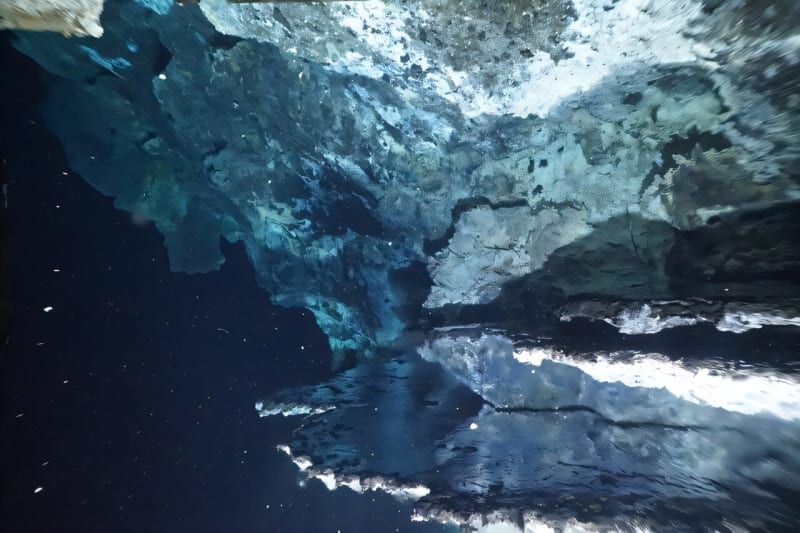
The exciting discovery happened at the Jøtul Hydrothermal Field off the coast of Norway, where the North American and Eurasian tectonic plates meet. This remarkable underwater landscape, first discovered during a 2022 expedition, sits an impressive 3,000 meters below the ocean surface—deeper than most similar hydrothermal systems.
What makes this finding so special? For years, scientists believed that a process called serpentinization was the primary way hydrogen formed at these deep-sea vents. But this research team discovered something entirely different: under the intense pressure and heat of the deep ocean, organic materials in sediments break down and release hydrogen molecules—essentially creating a natural "pressure cooker" effect.
"Our models showed that, because of the high pressures and temperatures in the subsurface at the hydrothermal vents, the organic materials in the sediments decompose under supercritical conditions, causing the release of hydrogen molecules," explains Dr. Diehl.
The discovery required some serious detective work and cutting-edge technology. During the initial 2022 expedition, the team collected samples using the remotely operated vehicle MARUM-QUEST 4000. However, bringing samples up from such depths posed a challenge—gases would escape on the way to the surface, much like opening a fizzy drink. Determined to solve this puzzle, the team returned in 2024 with specially designed gas-tight containers that could maintain the extreme pressure during sampling.
Professor Gerhard Bohrmann, who led both expeditions, emphasizes the significance: "At a depth of 3,000 meters, high pressures dominate, which influences the geological and chemical processes taking place there in fascinating ways."
This discovery has profound implications for understanding life in extreme environments. Hydrogen serves as a fundamental energy source for microorganisms living around hydrothermal vents, supporting entire ecosystems in complete darkness. By identifying this new hydrogen production pathway, scientists now realize that sediment-rich hydrothermal systems may be even more important for supporting deep-sea life than previously thought.
The research opens exciting new avenues for exploration, not just on Earth but potentially on other planets and moons where similar conditions might exist. It reminds us that our planet still holds remarkable secrets waiting to be discovered, and that life finds ways to flourish in the most extraordinary circumstances.
As we continue to explore Earth's final frontier—the deep ocean—discoveries like this show us that there's still so much to learn about our amazing blue planet.
Based on reporting by Phys.org
This story was written by BrightWire based on verified news reports.
Spread the positivity! 🌟
Share this good news with someone who needs it
More Good News
 🚀 Innovation
Ancient Moroccan Fossils Illuminate Our Fascinating Human Story
 🚀 Innovation
Ancient Innovation: 60,000-Year-Old Discovery Reveals Our Ancestors' Remarkable Intelligence
 🚀 Innovation
International Space Station Celebrates 25 Years of Unity and Discovery
Joke of the Day
Why don't scientists trust atoms?
Explore Categories
Quote of the Day
"The only way to do great work is to love what you do."
— Steve Jobs