Scientists Discover How Brain Learns From a Single Glance
NYU researchers have pinpointed exactly where and how the brain stores visual memories that let us instantly recognize something we've seen just once. The breakthrough could help millions with neurological disorders and revolutionize artificial intelligence.
Scientists just cracked the code on one of the brain's most mysterious superpowers: recognizing something instantly after seeing it only once.
Researchers at NYU Langone Health discovered that a brain region called the high-level visual cortex stores images like a mental photo album, letting us identify blurry objects in a flash. This primal ability once helped our ancestors spot predators in the shadows, and it still shapes how we navigate the world today.
The team used an ingenious experiment with "Mooney images," faded pictures of animals and objects that look like abstract blobs until you know what they are. After seeing just one clear version, people became twice as good at recognizing the blurry ones. That single moment of clarity rewired their brains.
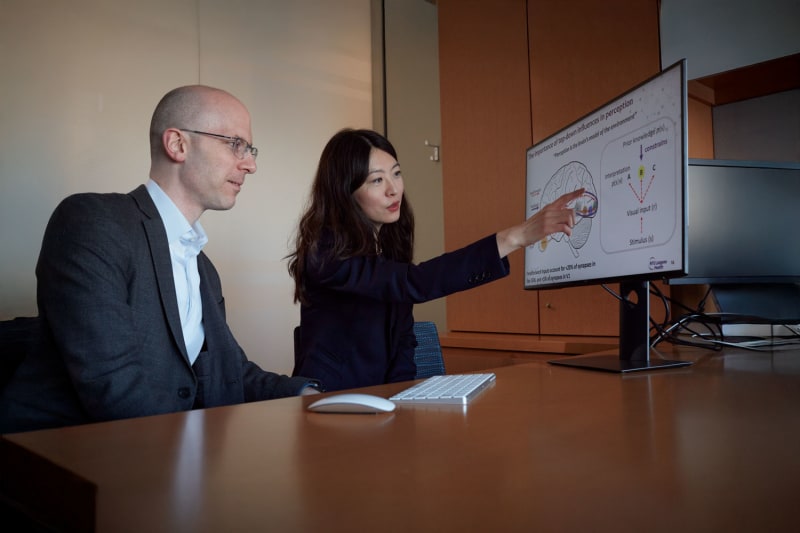
Dr. Biyu He and her team combined brain scans, AI modeling, and recordings from patients undergoing neurosurgery to capture this lightning-fast learning in action. They found that the high-level visual cortex doesn't just store old images. It actively pulls them up to help make sense of new information coming through our eyes.
The research, published in Nature Communications, goes beyond satisfying scientific curiosity. Patients with schizophrenia and Parkinson's disease have disrupted versions of this system, where stored memories overwhelm present reality and create hallucinations. Understanding the mechanism gives doctors their first clear target for treatment.
The team is now studying what goes wrong in these patients' brains, testing theories that could lead to new therapies. They're also exploring connections between visual recognition and those satisfying "aha moments" when we suddenly understand a new concept.
Why This Inspires
The breakthrough is already changing artificial intelligence. Co-senior author Dr. Eric Oermann and his team built an AI model based on their findings that achieved humanlike one-shot learning, outperforming leading models that need thousands of examples to learn patterns.
For decades, AI has struggled to match the human brain's ability to learn from a single experience. Computer vision systems need massive training datasets to recognize a cat, while a toddler needs to see one just once. This research bridges that gap, pointing toward AI that thinks more like we do.
The findings reveal something beautiful about human cognition: our brains are constantly comparing the present to the past, filling in gaps and making connections at speeds we barely notice. Every time you recognize a friend's face in a crowd or spot your car in a parking lot, this system is working its magic.
From helping patients escape the prison of hallucinations to building smarter machines, understanding how we learn in an instant opens doors we didn't know existed.
Based on reporting by Google News - Researchers Find
This story was written by BrightWire based on verified news reports.
Spread the positivity!
Share this good news with someone who needs it