Scientists Discover Why Humans Are Awake During the Day
Researchers finally solved a mystery millions of years in the making: why humans evolved to be awake during the day while most early mammals were nocturnal. The answer lies in tiny cellular switches that respond differently to daily temperature changes.
Scientists just cracked the code on why you're reading this during daylight hours instead of prowling around at night like your distant mammalian ancestors.
A groundbreaking study published in Science reveals that the switch from nocturnal to diurnal living happened at the cellular level. While our early mammal ancestors hid from dinosaurs during the day and came out at night, human ancestors eventually flipped their schedule completely.
The puzzle stumped scientists for years because the brain's master clock works similarly in both day-active and night-active animals. So what made the difference?
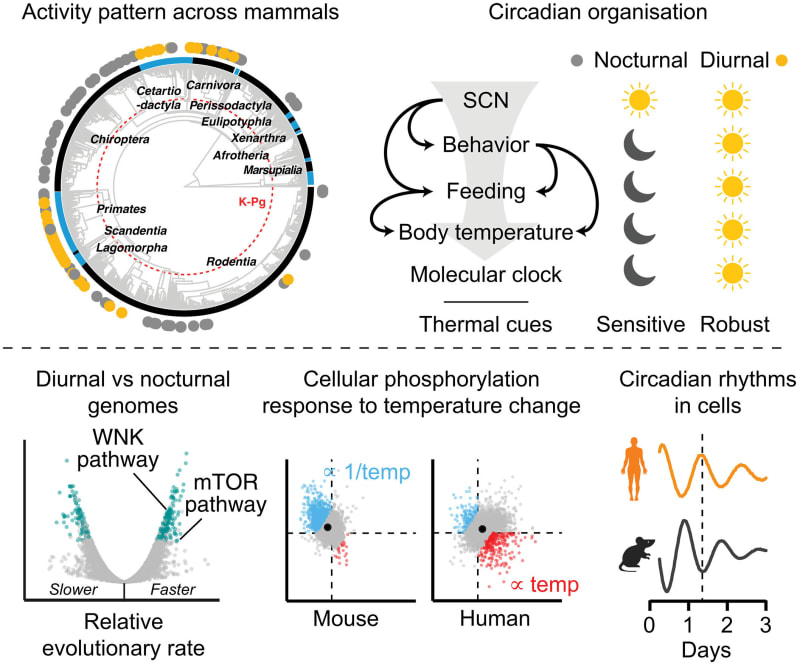
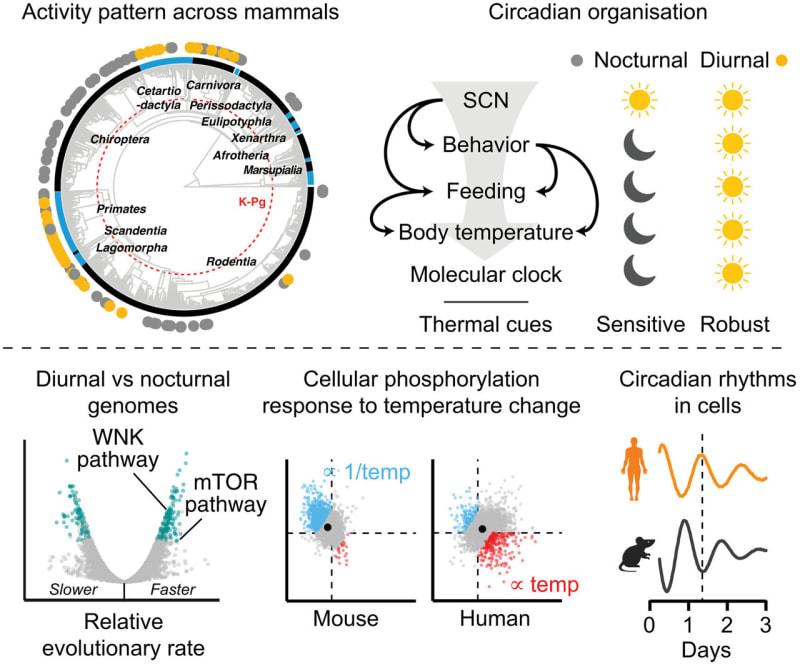
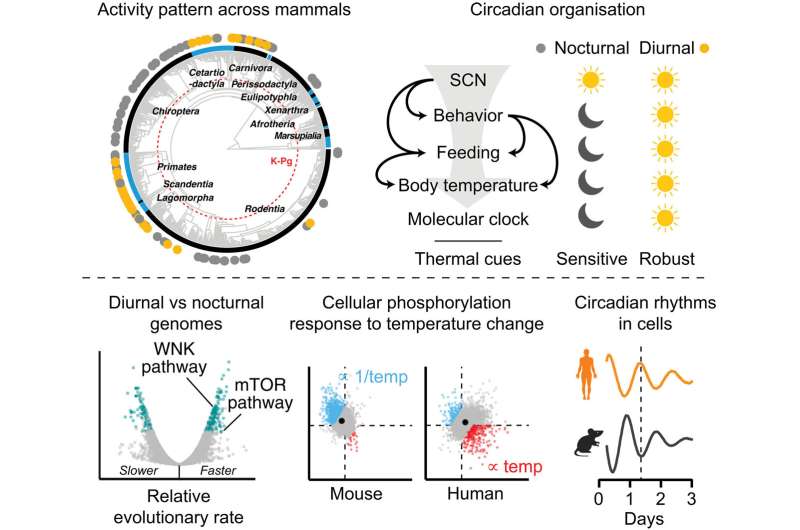
Researchers at the Medical Research Council Laboratory of Molecular Biology discovered that individual cells in diurnal and nocturnal mammals respond to environmental signals in opposite ways. When exposed to daily temperature cycles, human cells and mouse cells shifted their internal clocks in completely different directions.
The key players are two cellular pathways called mTOR and WNK. These pathways help cells detect nutrients and respond to subtle shifts like body temperature and fluid balance throughout each 24-hour cycle. In humans and other day-active mammals, these pathways evolved to work differently than in nocturnal creatures.
Working with geneticist Matthew Christmas from Uppsala University in Sweden, the team analyzed genes across multiple species. They found that mTOR and WNK genes evolved unusually quickly in diurnal mammals, suggesting that becoming day-active required fundamental changes to how cells function.
Why This Inspires
The discovery goes beyond explaining human evolution. When researchers gently reduced mTOR activity in nocturnal mice through diet-based treatments, something remarkable happened: the mice started behaving like diurnal animals, shifting their active hours into daytime.
This means scientists have identified a biological switch that can literally change when an animal prefers to be awake. The implications stretch from understanding human health to predicting how animals might adapt as climate change alters their environments.
Lead researcher John O'Neill explained that understanding our diurnal nature sheds new light on circadian rhythms, which play crucial roles in long-term health. The research reveals how fundamental cellular pathways sense and respond to daily environmental changes in ways scientists hadn't fully appreciated before.
The findings also help explain how warming temperatures might cause mammals to shift their active hours, potentially affecting entire ecosystems as animals adjust to rapidly changing conditions.
This elegant solution to an ancient evolutionary puzzle shows how small changes at the cellular level can reshape entire lifestyles across millions of years.
More Images


Based on reporting by Phys.org
This story was written by BrightWire based on verified news reports.
Spread the positivity!
Share this good news with someone who needs it