Scientists Double Membrane Strength for Clean Energy Tech
Australian researchers just solved a major problem holding back batteries and fuel cells. Their new technique makes critical membranes twice as strong without sacrificing performance.
Clean energy devices just got a lot tougher, thanks to a breakthrough that could make batteries, fuel cells, and hydrogen systems last much longer.
Scientists at the University of Queensland have developed ultra-thin membranes that are twice as strong as conventional versions while actually performing better at their job. The innovation tackles a problem that has plagued clean energy technology for years: the delicate membranes that transport ions inside these devices often break down under harsh operating conditions.
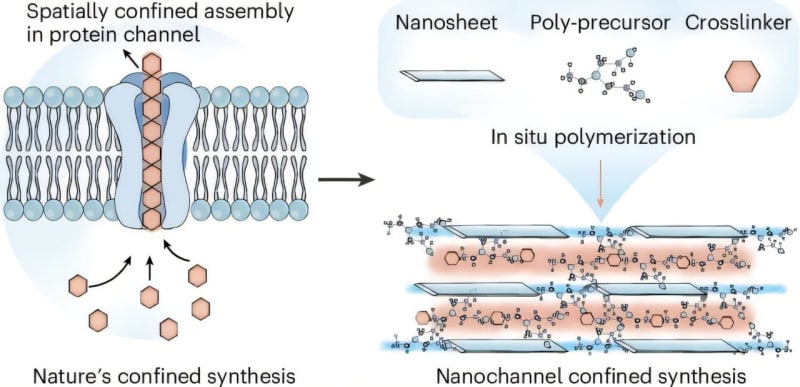
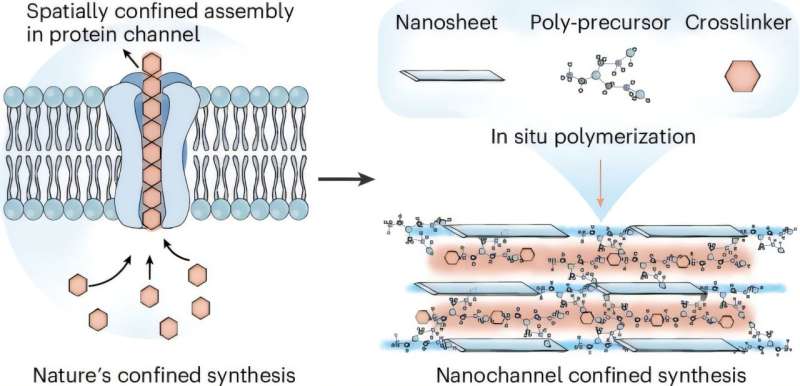
Dr. Zhuyuan Wang and Professor Xiwang Zhang used what they call "nanoconfinement polymerization" to build these super-strong films. The technique forces chemical reactions to happen inside channels so tiny that molecules have no choice but to pack together in perfectly neat, dense arrangements.
"In such a tight space, the polymers have no room to grow in a messy way," Professor Zhang explained. "They are forced to pack neatly and tightly, which makes the membranes extra dense, very strong, and excellent at letting target ions pass through quickly and efficiently."
The results are impressive. These new membranes can bend 100,000 times without losing their structure. Their ion exchange capacity jumps nearly 20% higher than both commercial products and other research membranes, while conductivity and selectivity outperform everything currently available.
What makes this discovery particularly exciting is that engineers previously thought strengthening these membranes meant sacrificing their electrochemical performance. It was considered an unavoidable tradeoff. This research proves that compromise isn't necessary.
The Ripple Effect
The implications stretch far beyond just better batteries. Fuel cells that power clean vehicles, electrolyzers that produce green hydrogen, and next-generation energy storage systems all rely on these ion-transporting membranes. Making them stronger and more efficient means these technologies become more reliable and cost-effective.
The fabrication method can be adapted to other thin film technologies too, potentially improving efficiency and power output across multiple types of electrochemical devices used for decarbonization. The research team published their findings in the peer-reviewed journal Nature Synthesis this month.
Dr. Wang says the next challenge is scaling up production so manufacturers can actually use this technique in real-world applications. But the foundation is solid: a way to make the building blocks of clean energy technology stronger, longer-lasting, and better performing all at once.
Sometimes the biggest breakthroughs come from thinking really, really small.
More Images

Based on reporting by Google News - Clean Energy
This story was written by BrightWire based on verified news reports.
Spread the positivity!
Share this good news with someone who needs it