Scientists Engineer Bacteria to Eat Tumors From Inside
Researchers at the University of Waterloo have engineered bacteria that naturally thrive without oxygen to invade and consume cancer tumors from their oxygen-starved cores. The breakthrough includes a safety switch that only activates the bacteria's survival mechanism when enough have gathered inside the tumor, preventing them from spreading to healthy tissue.
Scientists have created bacteria that could one day eat cancer from the inside out, offering new hope for treating solid tumors that resist conventional therapy.
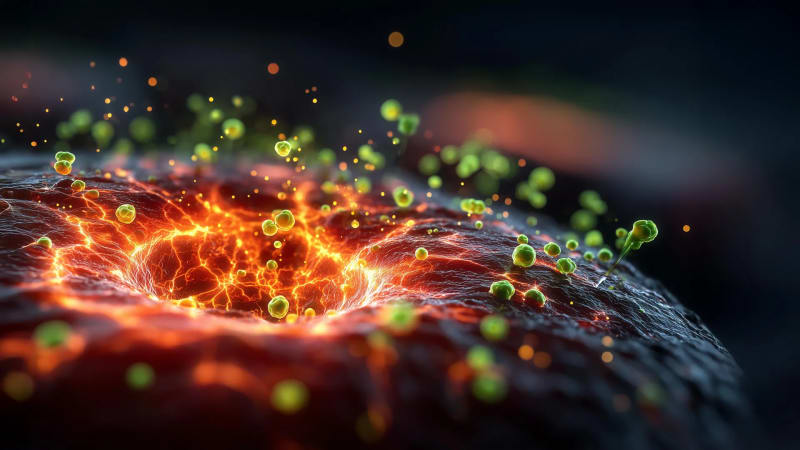
Researchers at the University of Waterloo engineered a soil bacterium called Clostridium sporogenes to target the oxygen-free centers of cancerous tumors. These dark, dead zones inside tumors become breeding grounds where the bacteria multiply and consume the cancer.
"The bacterium is essentially ridding the body of the tumor," said Dr. Marc Aucoin, a chemical engineering professor leading the project. The microbes treat tumor cores like an all-you-can-eat buffet, thriving on nutrients while destroying cancer cells.
The team faced a significant challenge. As bacteria spread outward toward oxygen-exposed areas of the tumor, they died before finishing the job. To solve this, researchers inserted a gene from a related bacterium that tolerates oxygen better, allowing the microbes to survive longer and reach more of the tumor.
But adding oxygen tolerance created a new problem. If the bacteria could survive in oxygen, they might spread through the bloodstream and colonize healthy tissue. The solution came through elegant biological programming.
The researchers used quorum sensing, a natural bacterial communication system. As bacteria multiply inside the tumor, they release chemical signals that grow stronger with their numbers. Only when enough bacteria have gathered does the signal flip a genetic switch that activates their oxygen-resistant gene.
"Using synthetic biology, we built something like an electrical circuit, but instead of wires we used pieces of DNA," explained Dr. Brian Ingalls, an applied mathematics professor on the team. Each genetic component has a specific job, creating a predictable system that turns on only at the right moment.
The team already confirmed their quorum sensing design works by programming bacteria to glow green when the system activates. Their next step combines the oxygen-tolerance gene with the safety switch and tests the complete system against tumors in preclinical trials.
Why This Inspires
This research represents more than clever genetic engineering. It shows how collaboration across different fields can unlock solutions that seemed impossible just years ago. Engineers, mathematicians, and life scientists worked together to transform a simple soil bacterium into a potential cancer fighter.
The project began with PhD student Bahram Zargar and has grown into a partnership with CREM Co Labs in Toronto. Dr. Sara Sadr, a former Waterloo doctoral student, played a leading role in advancing the technology from theory to reality.
What makes this approach especially promising is its precision. Unlike chemotherapy that affects the entire body, these bacteria target only oxygen-free tumor cores, potentially reducing side effects while increasing effectiveness.
The research is still in early stages, but it opens a door to treating cancers in ways we never imagined possible.
Based on reporting by Google News - Science
This story was written by BrightWire based on verified news reports.
Spread the positivity!
Share this good news with someone who needs it