Scientists Explain Why Happy People Walk Faster
New research reveals that dopamine gives you a literal "spring in your step" when you're excited. The discovery could help doctors track and treat conditions like Parkinson's disease and depression.
Scientists just proved what we've all felt: happiness really does speed up your step.
Engineers at the University of Colorado Boulder discovered that dopamine, the brain's reward chemical, makes people move faster when they're excited about something. Think about it: you probably sprint to greet your parents at the airport but casually stroll to meet a coworker.
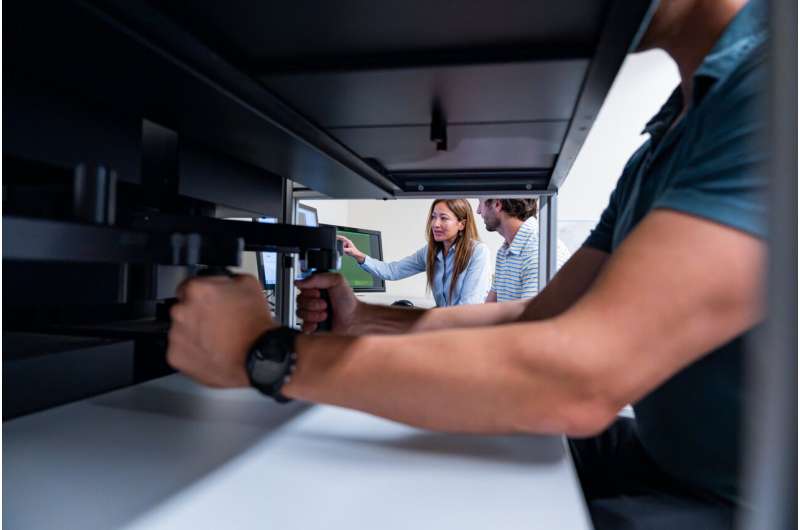
The research team asked volunteers to use a joystick to reach for targets on a computer screen. Some targets gave rewards (a beep and flash of light), while others didn't. The results were fascinating.
When people hit a target they expected to reward them, they moved at a normal pace. But when they got an unexpected reward from a less promising target, their movements suddenly sped up by 220 milliseconds. That's faster than you can blink.
The speed boost happened even after they'd already received the reward, suggesting their brains were giving them a second jolt of dopamine from the pleasant surprise. When rewards became predictable, that extra pep disappeared.
Past experiences shaped movement too. A lucky streak made people faster overall. A string of disappointments slowed them down across the board.
Why This Inspires
This breakthrough could transform how doctors monitor their patients' health. People with Parkinson's disease lose dopamine-producing brain cells and struggle with movement. Those with depression often move more slowly than others.
Professor Alaa Ahmed envisions a future where doctors track how patients move over months or years to catch early warning signs. Your walking speed could become a window into your brain health, offering clues about conditions that are hard to detect otherwise.
The research builds on decades of dopamine studies, including famous experiments where monkeys learned to expect apple juice rewards. Scientists discovered that dopamine spikes when we anticipate something good and dips when we're disappointed. Our brains are constantly teaching themselves what's worth pursuing.
But this study is the first to show how those internal reward calculations translate directly into how fast we move. Your brain isn't just processing feelings; it's adjusting your physical energy in real time based on your mood and expectations.
The findings appeared in the journal Science Advances. Ahmed sums it up perfectly: "If you've had a good day, you'll go faster. If you've had a bad day, you'll move slower. It's basically that skip in your step."
More Images


Based on reporting by Medical Xpress
This story was written by BrightWire based on verified news reports.
Spread the positivity!
Share this good news with someone who needs it