Scientists Fight TikTok Lies With Viral Truth Videos
Climate experts and health professionals are beating misinformation at its own game by creating engaging social media content that makes science accessible. Their videos are racking up millions of views and changing how people get accurate information online.
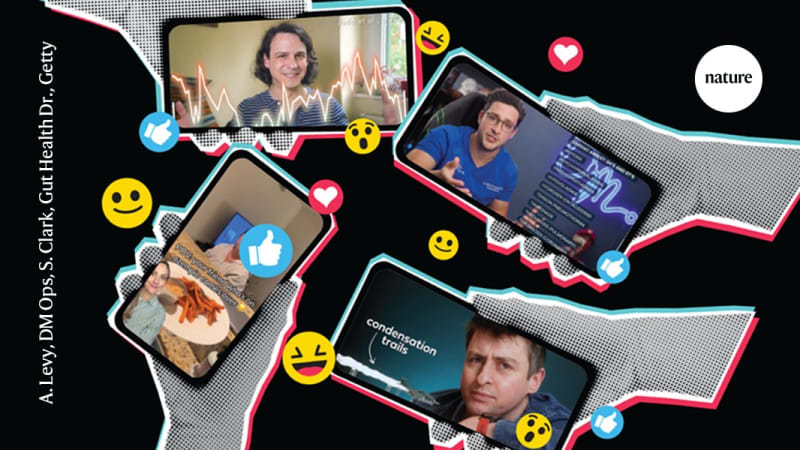
When physicist Simon Clark saw climate denial spreading across TikTok, he didn't write a research paper. He grabbed his phone and started making videos that now reach hundreds of thousands of viewers who might never pick up a science journal.
Clark's most popular video starts with him pretending to be a climate contrarian shouting "Renewables are a scam!" Then he switches to his real self, armed with charts and deadpan humor, systematically dismantling renewable energy myths. The video has nearly 180,000 views and counting.
He's not alone in this fight. Scientists and medical experts worldwide are flooding social media with accurate information to counter the tsunami of pseudoscience that dominates platforms like TikTok and Instagram.
The problem is massive. A 2025 Reuters Institute report found that 65% of people worldwide now get their video content from social media, with young people especially relying on these platforms for news. But much of that "news" comes from influencers pushing climate denialism, vaccine myths, and fake treatments.
One study analyzed nearly 1,000 Instagram and TikTok posts about medical screening tests and found them overwhelmingly misleading. Many creators had financial interests in pushing certain treatments. Another study examined the 100 most popular TikTok videos about ADHD and found more than half contained false information, yet they'd been viewed 280 million times collectively.
Scientists are fighting back by adopting the same engagement tactics that make misinformation spread. Clark admits he sometimes does silly things like wearing his shirt backwards to spark comments, because comments boost a video's reach. It might seem stupid, he says, but it works.
Registered dietitian Megan Rossi started her Instagram account in 2015 after watching patients follow dangerous diet advice from blogs. Now her gut health videos reach millions, always citing peer-reviewed research and her credentials as a King's College London research fellow. Her followers thank her for providing solid science without fearmongering.
Why This Inspires
These scientists prove that truth doesn't have to be boring to beat lies. By meeting people where they already spend their time and speaking in language anyone can understand, they're making accuracy as addictive as the algorithms that spread misinformation. Clark and Rossi show that you don't need to sacrifice scientific integrity to go viral.
The strategy works because engagement matters more than perfection on social media. Every comment, share, and view pushes credible information higher in the algorithm, helping it reach people who desperately need reliable sources in a sea of dangerous advice.
Young people scrolling through their feeds now have real experts offering entertaining, accurate content alongside the conspiracy theorists and snake oil salespeople. These science influencers are building communities where evidence matters and credentials count for something.
Their success proves that good information can compete in the attention economy when delivered with the same creativity and understanding of human psychology that makes misinformation spread.
More Images




Based on reporting by Nature News
This story was written by BrightWire based on verified news reports.
Spread the positivity!
Share this good news with someone who needs it