Scientists Film Sperm Whale Birth Off Dominica Coast
For the first time ever, researchers captured sperm whales helping a mother give birth and supporting her newborn calf in a remarkable display of cooperation. The discovery reveals behavior dating back 36 million years that only whales and primates share.
Scientists have filmed something extraordinary happening beneath Caribbean waters: a group of sperm whales working together to help one of their own give birth and protect her newborn baby.
On July 8, 2023, researchers from Project Ceti spotted 19-year-old Rounder surrounded by family and friends off the coast of Dominica as she prepared to deliver her second calf. Over nearly five and a half hours, the team documented every moment using boats, drones, and underwater recording equipment.
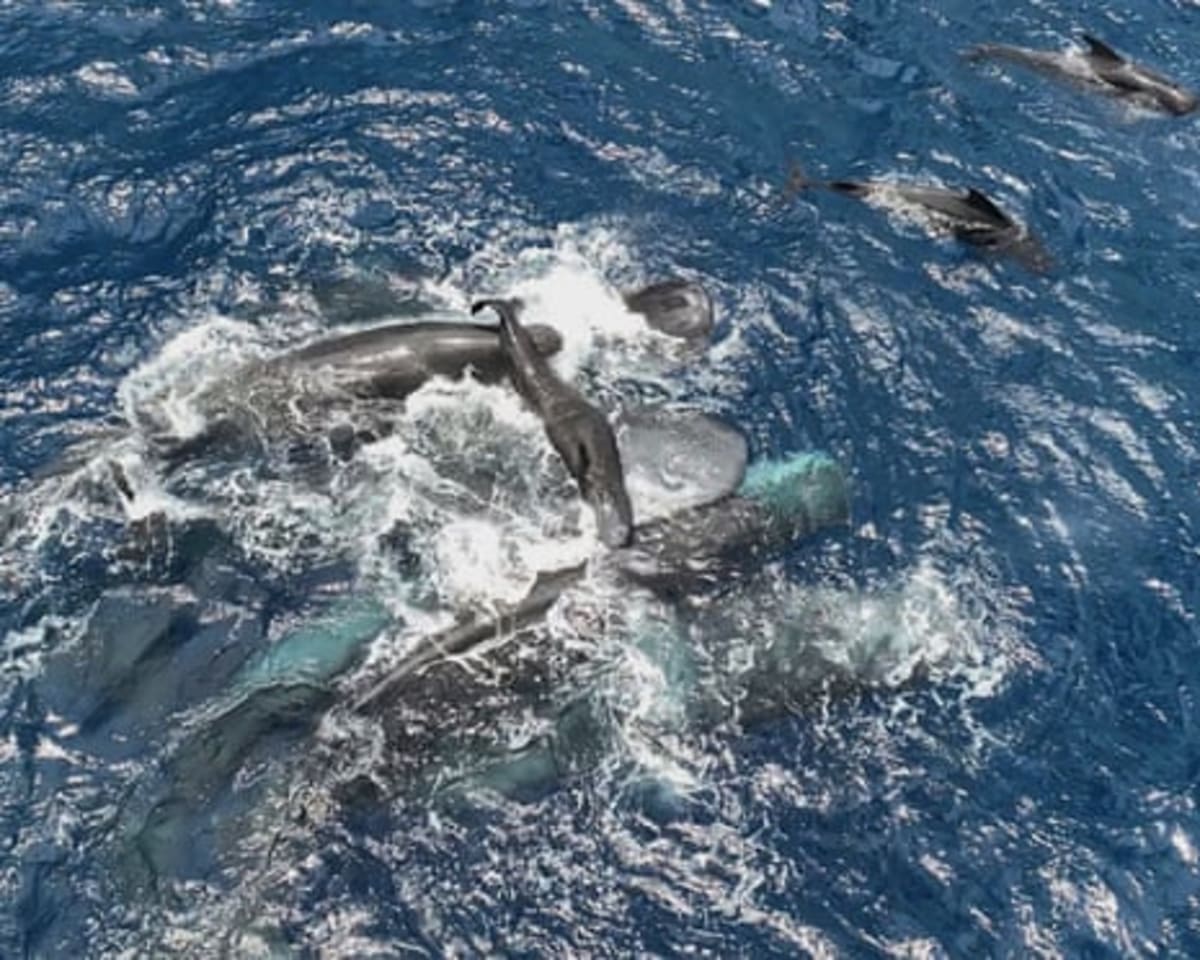
The 34-minute birth itself was stunning to witness. Adult females dove under Rounder's body during labor, often flipping onto their backs and positioning themselves near her. The moment the calf emerged, the entire pod sprang into action.
Every whale surrounded the newborn, squeezing its body between theirs and gently pushing it around. They guided the baby to the surface with their noses, lifting it above water so it could take its first breaths. Without this help, the newborn would have sunk and drowned.
Out of 93 whale, dolphin, and porpoise species, only nine have ever been observed giving birth in the wild. What makes this discovery even more special is that non-family members helped out, something never before documented in animals except primates like humans.
The Ripple Effect goes back millions of years. When whale ancestors returned to the ocean after living on land, they needed evolutionary adaptations to survive underwater births. Baby sperm whales are born tail-first instead of head-first, but they still can't swim immediately. This communal support system emerged as the solution, creating bonds that strengthen entire whale communities across generations.
The team also recorded dramatic changes in whale vocalizations during key moments, including when pilot whales approached after the birth. These sound shifts suggest the group was coordinating their efforts and protecting the vulnerable newborn through communication.
Sperm whales have one of the longest pregnancies in the animal kingdom at 16 months. Calves arrive already 13 feet long and depend on their mothers for at least two years. Young whales become the center of pod life, with others babysitting while mothers hunt for food.
The team lost track of the pod for over a year after filming. Then on July 25, 2024, they spotted the calf again, swimming happily alongside other young pod members. Surviving that crucial first year means the baby will likely reach adulthood, carrying forward this ancient tradition of whales helping whales.
More Images


Based on reporting by Guardian Environment
This story was written by BrightWire based on verified news reports.
Spread the positivity!
Share this good news with someone who needs it