Scientists Find 10 Million Whales Feeding Deep-Sea Life
Chinese researchers discovered the world's largest "whale graveyard" 20,000 feet below the Indian Ocean, where millions of whale skeletons have created thriving ecosystems full of life. The massive find includes species unknown to science and bones dating back 5.3 million years.
Twenty thousand feet below the Indian Ocean, scientists found something extraordinary: a whale graveyard so massive it's rewriting what we know about deep-sea life.
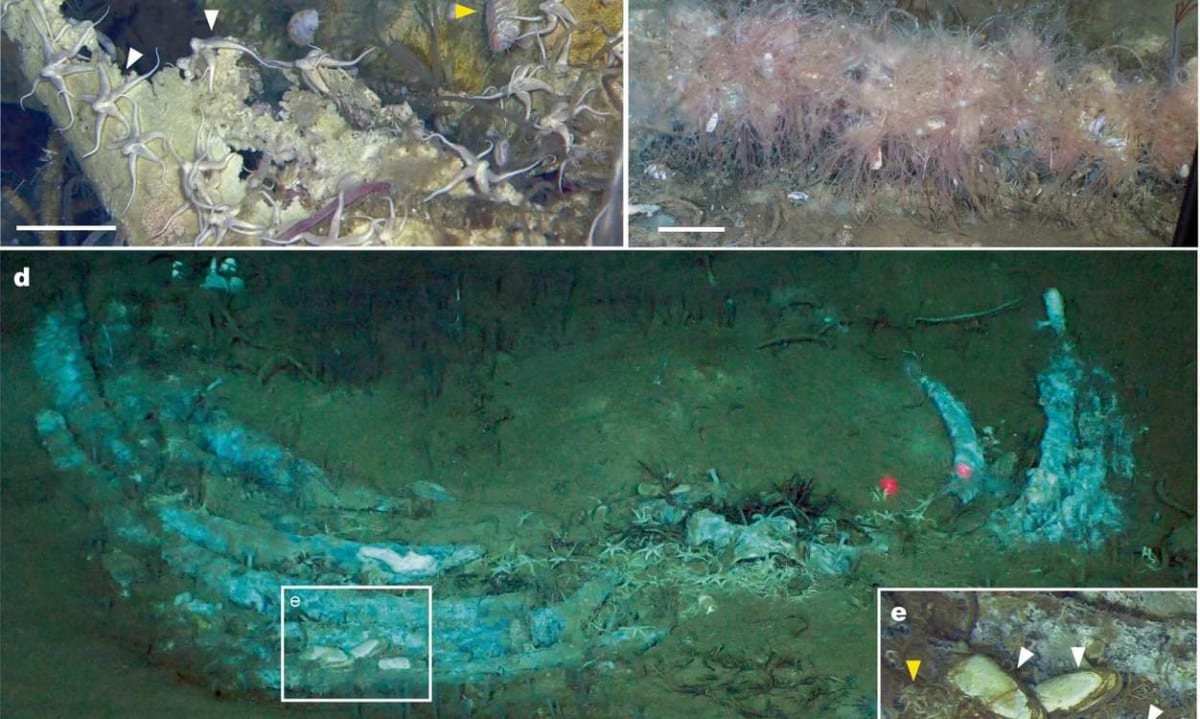
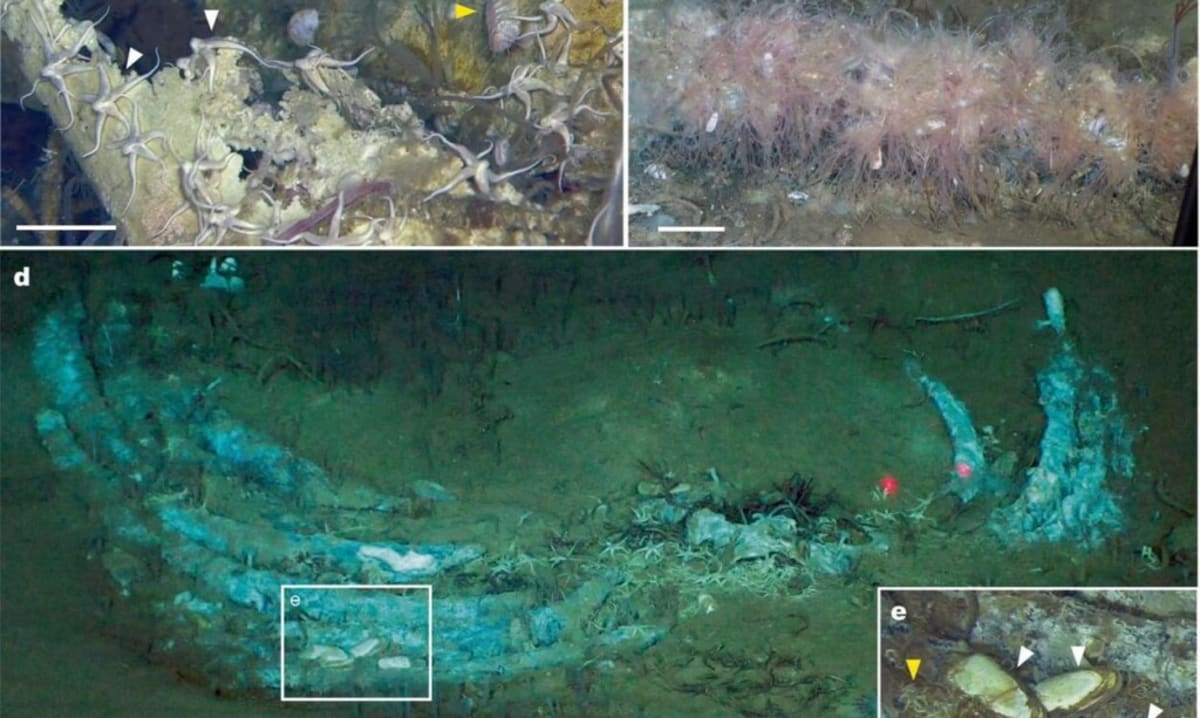
Chinese researchers exploring the Diamantina Fracture Zone discovered nearly 500 whale skeletons across a 660-mile stretch of ocean floor. Their calculations suggest up to 10 million dead whales may rest in this underwater necropolis, most of them beaked whales that once roamed these waters.
"Discovering a necropolis of this scale was completely unexpected," said lead researcher Xiaotong Peng. The team used robotic arms to collect 485 bones, including fossils 5.3 million years old.
But here's where it gets truly remarkable. These whale carcasses aren't just resting on the seafloor. They're bustling with life.
Thousands of creatures thrive around the ancient bones: bivalves, brittle stars, worms, and jellyfish, many of which appear to be new to science. Some species normally found only near hydrothermal vents have made these whale falls their home, suggesting the decomposing remains provide similar life-giving nutrients.
The researchers identified bones from Andrew's beaked whales, strap-toothed whales, and Antarctic minke whales still living today. They also found skulls from two extinct species, Pterocetus and Izikoziphius, plus several mysterious bones that might belong to undiscovered species.
Why This Inspires
This discovery shows how nature creates abundance even in the most unexpected places. The ocean's darkest, coldest depths, once thought nearly lifeless, actually pulse with thriving communities built around these underwater oases.
"The vibrant ecosystems we saw offered a completely different perspective on this otherwise dark and cold ocean floor," said co-author Peng Zhou. The finding supports the theory that whale falls act as evolutionary hotspots, providing crucial stepping stones that allow deep-sea creatures to spread across vast ocean distances.
For decades, scientists wondered how isolated deep-sea species survived between rare nutrient sources like hydrothermal vents. This massive whale graveyard suggests an answer: these gentle giants continue giving life long after death, creating highways of hope across the seafloor.
The discovery reminds us that even in Earth's most remote corners, life finds a way to flourish.
More Images
Based on reporting by Good News Network
This story was written by BrightWire based on verified news reports.
Spread the positivity!
Share this good news with someone who needs it