Scientists Find 2 New Sea Spider Species After 100 Years
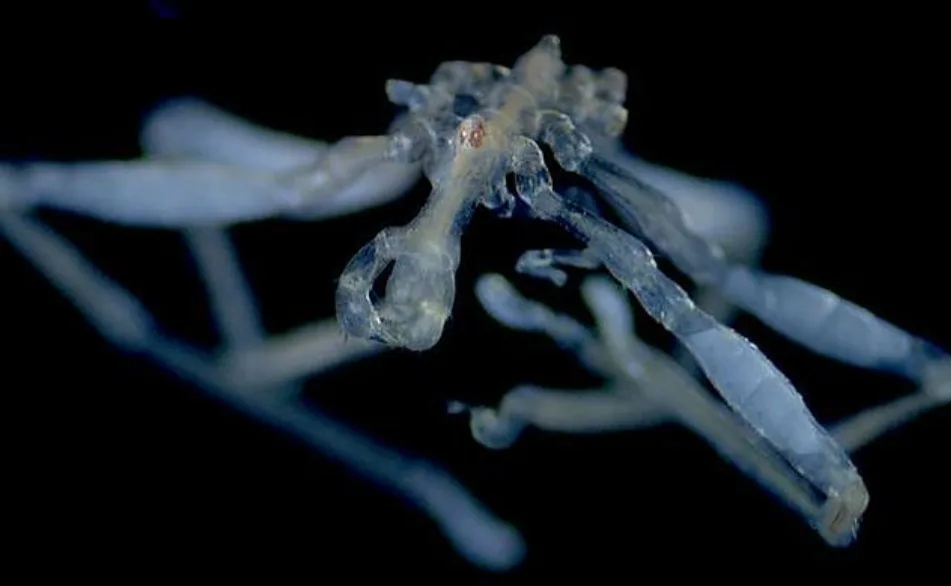
After nearly a century, researchers have discovered two remarkable new species of sea spiders in the waters between Canada and the United States. One features striking red eyes, specialized claws, and a unique three-lipped mouth covered in sensory hairs.
Scientists have discovered two new species of sea spiders in the Salish Sea, marking the first such finds in this region in nearly 100 years.
Researchers from the University of British Columbia collected specimens during dives up to 60 feet deep between September 2023 and August 2024. The waters between Canada and the United States revealed creatures that had been hiding in plain sight for generations.
The first species, named Callipallene pilosuspedes, looks like something from a science fiction movie. Its bright red eyes help it navigate the ocean floor, while its triangular mouth sports three distinct lips covered in tiny sensory hairs that help it find food. Long, curved spines coat its legs, giving it a fuzzy appearance. Scientists even watched one spider using specialized limbs to clean itself, almost like washing its face.
The second discovery, Tanystylum kiixin, earned the nickname "ecosystem within an ecosystem" from researchers. They kept finding tiny parasites living on its body, creating a miniature world of its own.
These ancient creatures have been crawling across ocean floors for 500 million years, predating dinosaurs by hundreds of millions of years. They're relatives of scorpions and horseshoe crabs, though they've taken a very different evolutionary path. Some species sport up to 12 legs, and they range in size from smaller than your pinky nail to longer than a ruler.
Sea spiders breathe through their skin instead of lungs or gills. In a twist on typical parenting, males carry the offspring by attaching eggs to their bodies until they hatch.
The Ripple Effect
Both species have been added to a global database that helps scientists track ocean biodiversity worldwide. The discoveries suggest that even well-studied waters can still surprise us with new life forms.
Researchers believe more undiscovered species may be living in the Salish Sea. The area's complex underwater terrain and varying depths create perfect hiding spots for creatures that have avoided human detection for centuries.
These discoveries remind us that our planet still holds countless mysteries waiting to be revealed, even in waters we thought we knew well.
Based on reporting by Google News - Scientists Discover
This story was written by BrightWire based on verified news reports.
Play Today’s BrightWire Positive Mini Crossword & Word Game
Keep your mind sharp with our free 5-minute uplifting daily crossword and positivity word puzzle.
Spread the positivity!
Share this good news with someone who needs it


