Scientists Find 40-Foot 'Hell Heron' in Sahara Desert
Paleontologists discovered a new Spinosaurus species in Niger—a fish-eating dinosaur as long as a school bus with a blade-shaped crest. The 95-million-year-old predator rewrites what we know about where these ancient giants lived.
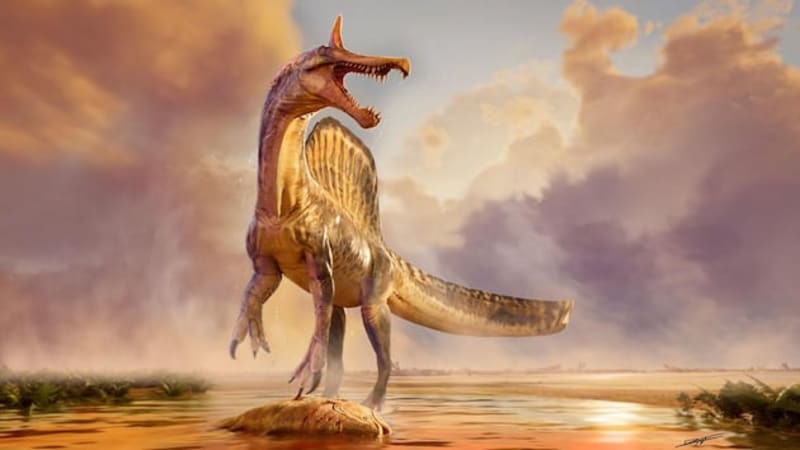
Picture a 40-foot dinosaur wading through ancient rivers, snatching fish with interlocking teeth beneath a brilliant scimitar-shaped crest. That's the stunning creature paleontologists just unearthed in the Sahara Desert.
The team from the University of Chicago found fossils of Spinosaurus mirabilis (Latin for "astonishing Spinosaurus") in Niger, making it only the second known species in this family of giants. At 5 to 7 tons, this "hell heron" hunted in inland forests and rivers over 95 million years ago, behaving more like a modern wading bird than the coastal predators scientists expected.
"This find was so sudden and amazing, it was really emotional for our team," said lead researcher Paul Sereno. The discovery happened during a 2022 expedition to West Africa, where researchers collected 55 tons of specimens from a site originally found in 2019.
The breakthrough came when the team crowded around a laptop at camp to view 3D digital models of the bones. That's when they realized they'd found something completely new—a species with a dramatically larger crest, longer snout, and different teeth than its Egyptian cousin discovered in 1915.
The Ripple Effect
This discovery does more than introduce us to an incredible prehistoric predator. It bridges a crucial gap in our understanding of how these dinosaurs spread across continents. Researchers previously knew Spinosaurus lived in North Africa and Brazil but couldn't explain the connection.
"This discovery really helps to see that their distribution might have been unbroken," said Daniel Vidal, a postdoctoral researcher on the team. Finding this species in Niger shows these remarkable creatures migrated across a much wider range than anyone imagined.
The fragile, blade-shaped crest likely wasn't a weapon but a colorful display feature for attracting mates or defending territory. "It's about love and life—attracting a mate, defending your hot feeding shallows," Sereno explained. "What else could be more important?"
The findings, published in the journal Science, challenge previous assumptions about where fish-hunting dinosaurs lived. While similar species have typically been found near ancient coastlines, this inland discovery rewrites the rulebook on spinosaurid habitats and behavior.
Sereno called the expedition the "expedition of a century," and it's easy to see why—each fossil helps paint a clearer picture of life on Earth millions of years before humans walked the planet.
More Images


Based on reporting by Google News - Scientists Discover
This story was written by BrightWire based on verified news reports.
Spread the positivity!
Share this good news with someone who needs it