Scientists Find 77-Year-Old Humpback Whale Recording
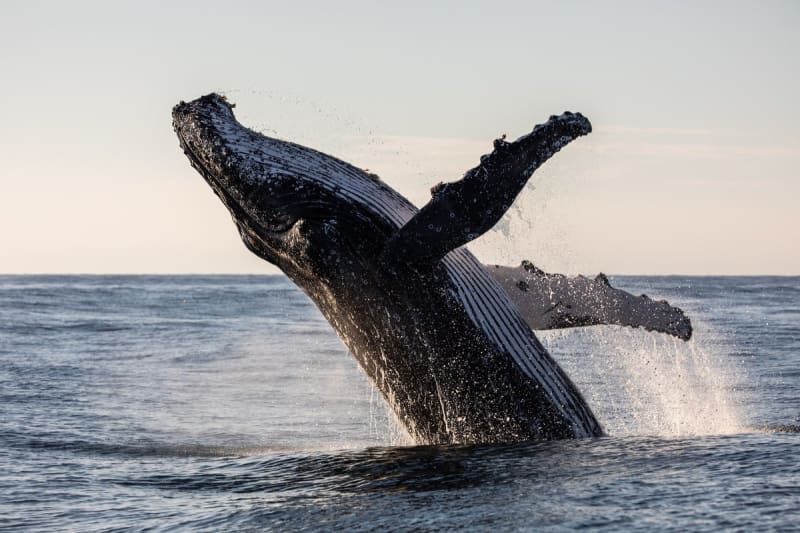
A haunting whale song from 1949 has been rediscovered in Massachusetts archives, offering scientists a rare window into ocean life before modern pollution changed everything. The recording captures a humpback whale when fewer than 1,000 remained in the North Atlantic.
Imagine lowering a clunky office machine into the ocean and accidentally capturing a piece of history that would matter 77 years later.
That's exactly what happened on March 7, 1949, when researchers aboard the R/V Atlantis off Bermuda's coast recorded mysterious sounds from the deep. The thin plastic disk they created sat forgotten in the Woods Hole Oceanographic Institution archives in Massachusetts until recently, when scientists realized what they had: probably the oldest whale recording still in existence.
The haunting sounds etched into that disk came from a humpback whale, singing at a time when its species was in serious trouble. Commercial whaling had devastated North Atlantic humpback populations, pushing them below 1,000 animals by 1955. Today, that population has bounced back to at least 20,000 to 25,000 whales.
Marine bioacoustician Laela Sayigh explains why this discovery matters so much. "Data from this time period simply don't exist in most cases," she said. The recording offers a baseline for understanding how whale songs have evolved and how human activity has reshaped ocean soundscapes over eight decades.
The timing couldn't be more valuable for current research. Scientists worry that noise pollution from shipping interferes with how whales communicate through their songs. This 1949 recording captures what humpback whales sounded like before modern ocean traffic exploded, giving researchers a pristine comparison point.
Humpback whales travel some of the longest migration routes of any mammal, swimming 5,000 miles between tropical breeding waters and cold feeding grounds. They filter krill and small fish through baleen plates in their mouths, found in every ocean on Earth.
Why This Inspires
This forgotten disk represents more than just scientific data. It's a time capsule proving that conservation works. Those haunting 1949 songs came from a species on the brink, with fewer than 1,000 individuals struggling to survive decades of commercial hunting.
Today, those whales have multiplied twentyfold. The recording captures not just sound, but hope: evidence that even species pushed to the edge can recover when we give them the chance. Every eerie howl preserved on that plastic disk now serves as both a warning about human impact and proof that we can reverse the damage.
Scientists plan to compare the 1949 sounds with modern humpback songs to understand how these magnificent creatures have adapted to our noisier oceans, turning an accidental archive discovery into a roadmap for protecting marine life going forward.
More Images
Based on reporting by Scientific American
This story was written by BrightWire based on verified news reports.
Spread the positivity!
Share this good news with someone who needs it