Scientists Find Ancient Galaxy Eaten by the Milky Way
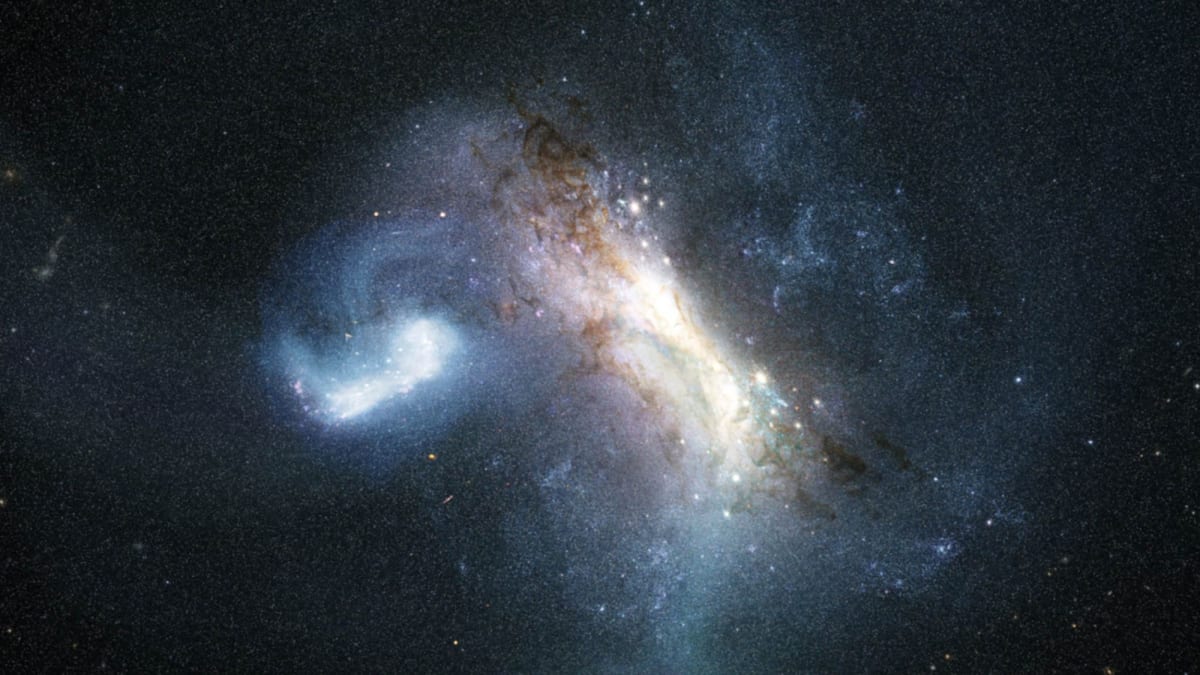
Astronomers discovered remnants of a dwarf galaxy our Milky Way devoured 10 billion years ago, offering new clues about how our cosmic home grew from a smaller galaxy into the massive spiral we call home today.
Our galaxy has a secret hidden in its stars: the remains of an ancient meal that changed everything about how it grew.
Astronomers found 20 unusual stars located about 7,000 light years from Earth that don't quite fit with their surroundings. These stars contain very little metal, making them ancient relics in a neighborhood typically filled with younger, metal-rich stars near the Milky Way's disk.
The team named the consumed galaxy Loki, after the Norse trickster god. The discovery could rewrite our understanding of the Milky Way's early history, revealing it was once much smaller than scientists thought.
Dr. Federico Sestito from the University of Hertfordshire led the research using observations from the European Space Agency's Gaia telescope. His team then studied the stars more closely using a powerful telescope in Hawaii, confirming these cosmic oddballs all share similar chemical fingerprints.
The stars tell a story of cosmic growth. The Milky Way wasn't always the giant it is today, spanning 100,000 light years and containing up to 400 billion stars. It grew by merging with dozens of smaller dwarf galaxies over billions of years, starting about 12 billion years ago.
What makes these particular stars special is where they were found. Most ancient stars hide in the Milky Way's halo, a diffuse cloud surrounding the main disk. Finding metal-poor stars this close to the disk suggests a major merger happened early in our galaxy's history.
The stars move in different directions too. Eleven orbit in the same direction as the galactic disk, while nine move the opposite way. This scattered movement makes sense if they were hijacked from another galaxy when the Milky Way was still young and small, with weaker gravity that allowed the captured stars to end up in various orbital patterns.
Why This Inspires
This discovery reminds us that even our home in space has a rich history of growth and transformation. The Milky Way built itself into a cosmic giant by gathering smaller galaxies, preserving their stars as living memories of mergers that happened billions of years ago.
Dr. Cara Battersby from the University of Connecticut, who wasn't involved in the study, explained that these ancient stars are like time capsules. They've existed for billions of years, holding clues about the universe's earliest generations of stars and the conditions that shaped our cosmic neighborhood.
The research shows how far astronomy has come in reading the universe's history, using stars as witnesses to events that happened when our galaxy was just an infant.
These ancient stars continue their journeys through space today, silent reminders that growth often comes from bringing different parts together into something greater.
More Images



Based on reporting by Google News - Science
This story was written by BrightWire based on verified news reports.
Spread the positivity!
Share this good news with someone who needs it