Scientists Find Best Planet Yet for Alien Life Hunt
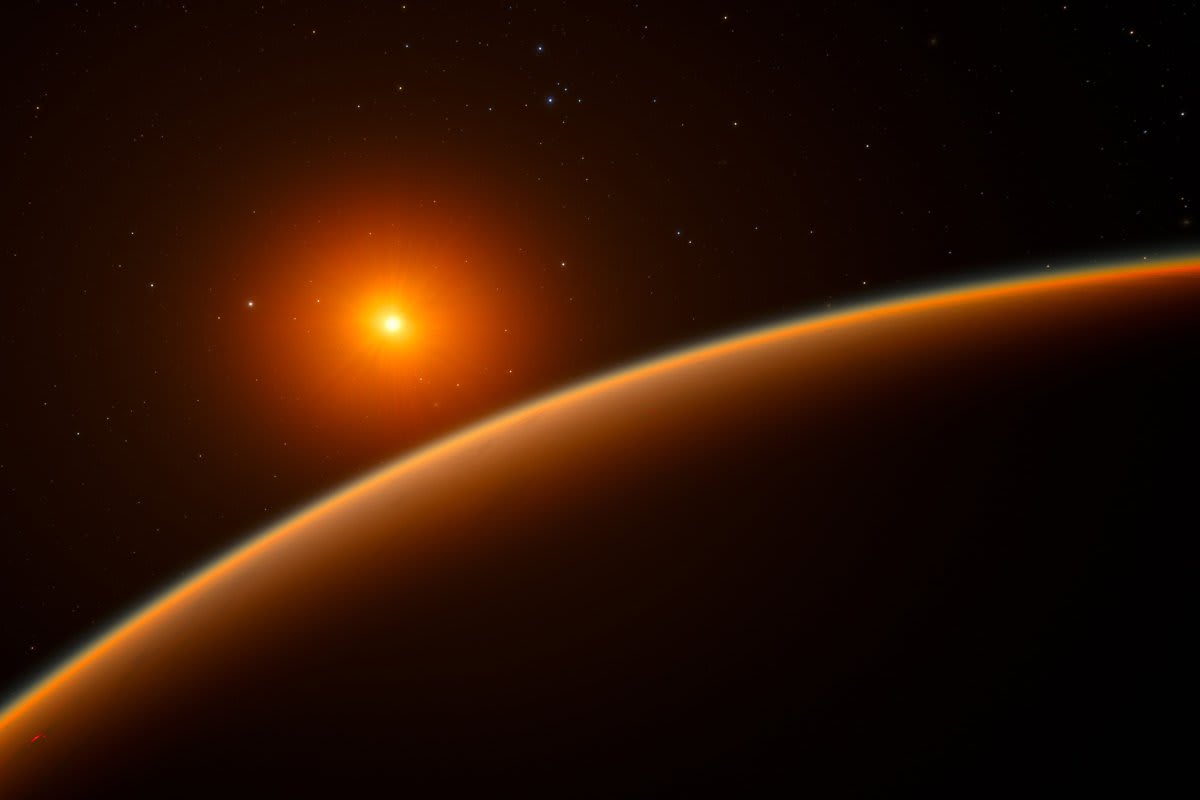
Astronomers discovered an Earth-like planet 48 light years away with a stable atmosphere, the first rocky world that could truly support life. LHS 1140b has everything needed: the right distance from its star, liquid water potential, and protection from cosmic radiation.
For the first time ever, astronomers have found a rocky planet outside our solar system with an atmosphere strong enough to potentially harbor life.
The planet, called LHS 1140b, sits 48 light years from Earth and has scientists buzzing with excitement. It orbits within the habitable zone of its star, where liquid water can exist on the surface, and researchers just confirmed it's spewing helium into space, a telltale sign of a robust, stable atmosphere.
"When there's one, there's more in exoplanets," Sara Seager, an MIT astrophysicist, told the New York Times. "Hopefully this is the start of something new."
Finding planets with atmospheres is incredibly rare. While we've catalogued millions of stars, only about 6,000 exoplanets have been confirmed, and most atmospheric discoveries belong to gas giants that can't support life as we know it.
What makes this discovery particularly special is that LHS 1140b survived conditions that should have destroyed it. The planet orbits a red dwarf star, which scientists long believed were too volatile for life. These small stars bombard nearby planets with intense solar flares and radiation that typically strip away protective atmospheres.
Yet LHS 1140b kept its atmosphere intact. Using computer models that tracked how hydrogen and helium behave under stellar bombardment, the research team predicted the planet's upper atmosphere would be helium-rich. Their observations, published in the journal Science, confirmed exactly that.
Lead author Collin Cherubim, a planetary scientist at Harvard, was careful to manage expectations. "At this point, we have absolutely no evidence for life on the planet," he said. "But we think all of the really important, essential ingredients are there."
Why This Inspires
This discovery rewrites what we thought was possible. Twenty years ago, scientists weren't even sure Earth-like planets existed beyond our solar system. Then we learned they're common. The burning question became whether any could maintain atmospheres against the harsh conditions of space.
Now we know at least one can. LHS 1140b proves that rocky, potentially habitable worlds with stable atmospheres aren't just theoretical possibilities. They're real, they're out there, and we're finally developing the tools to find them.
"The next question was whether any of them had managed to keep an atmosphere," said Robin Wordsworth, a Harvard professor of earth and planetary sciences. "Now we know at least one has."
The implications ripple outward. If one Earth-like planet can maintain life-supporting conditions around a red dwarf, the most common type of star in our galaxy, then potentially habitable worlds might be far more abundant than we ever imagined.
Our planet might not be such a cosmic anomaly after all.
More Images
Based on reporting by Futurism
This story was written by BrightWire based on verified news reports.
Spread the positivity!
Share this good news with someone who needs it