Scientists Find Brain Chemical That Helps Break Habits
Researchers discovered how acetylcholine helps mice shift behavior when rewards disappear, offering hope for treating addiction and OCD. The breakthrough reveals why some brains struggle to break harmful patterns.
Your brain has a chemical messenger that helps you quit old habits and try new things, and scientists just watched it work in real time.
Researchers at the Okinawa Institute of Science and Technology in Japan discovered that a neurotransmitter called acetylcholine floods specific brain areas when expectations suddenly change. Using advanced imaging, they watched mouse brains light up the moment an expected reward disappeared.
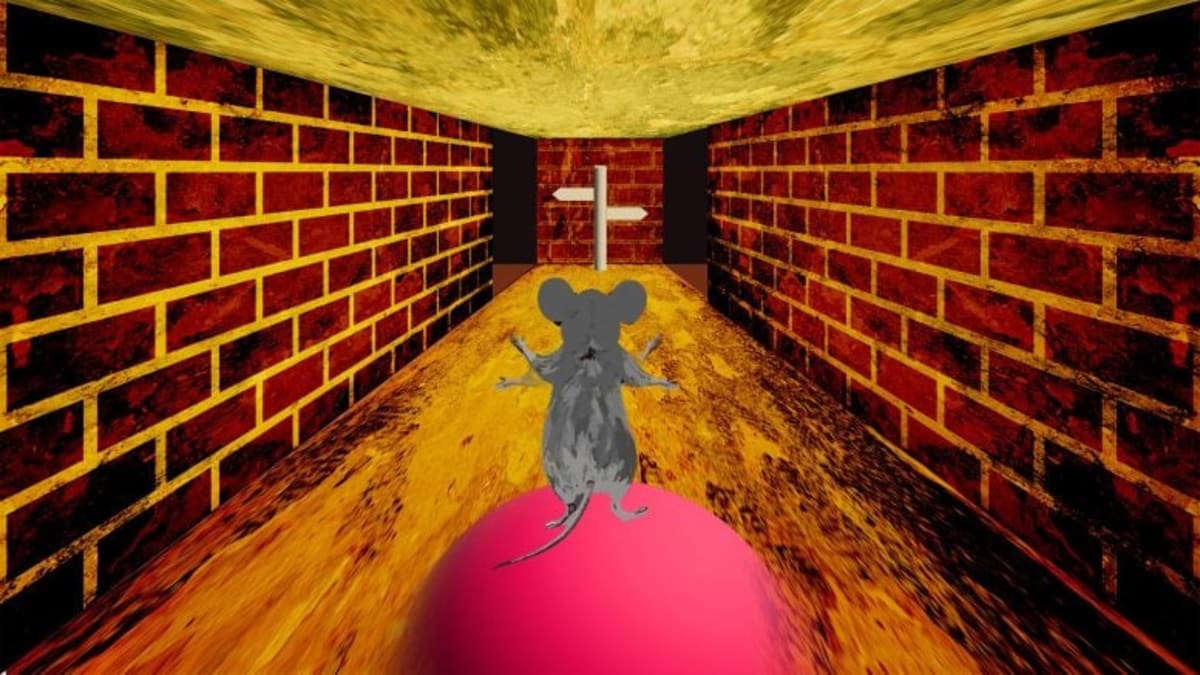
The experiment was elegantly simple. Scientists trained mice to navigate a virtual maze where one path led to a treat. Once the mice mastered the route, researchers secretly changed which path was correct. The moment the mice realized their usual choice didn't work, acetylcholine levels surged.
Dr. Gideon Sarpong, the study's lead author, noticed something remarkable. The more acetylcholine a mouse's brain released, the more likely that mouse was to try a different path. Mice with higher levels adapted quickly while others kept choosing the wrong route.
To confirm acetylcholine's role, the team reduced the chemical in some mice. Those animals struggled to change their choices even after repeated disappointments. They were essentially stuck in their old patterns.
The discovery gets even more interesting. Most brain cells increased acetylcholine release during the surprise, but small clusters actually decreased it. Researchers believe these areas preserve memories of what worked before, just in case circumstances change again.
Why This Inspires
This breakthrough matters far beyond laboratory mice. Conditions like addiction, obsessive compulsive disorder, and Parkinson's disease all involve difficulty breaking harmful patterns. People with these conditions often know their behavior isn't helping them, but their brains struggle to shift gears.
Professor Jeffery Wickens, who led the research team, explains that many treatments for neuropsychiatric disorders already affect acetylcholine levels. Understanding exactly how this chemical enables behavioral flexibility could lead to more targeted, effective therapies.
The findings, published in Nature Communications, represent one crucial piece of a larger puzzle. Behavioral flexibility involves multiple interconnected brain systems working together. But the striatum, where these acetylcholine-releasing cells live, sits at the center of this network.
For millions of people trapped in cycles of addiction or compulsive behaviors, this research offers tangible hope that better treatments are on the horizon.
More Images
Based on reporting by Google News - Scientists Discover
This story was written by BrightWire based on verified news reports.
Spread the positivity!
Share this good news with someone who needs it