Scientists Find Exploding Cells That Kill Bacteria Fast
Researchers discovered immune cells in flatworms that literally explode to destroy bacteria and damaged tissue in minutes. The finding reveals a completely new way that bodies can defend themselves against disease.
Your immune system might be more explosive than you think.
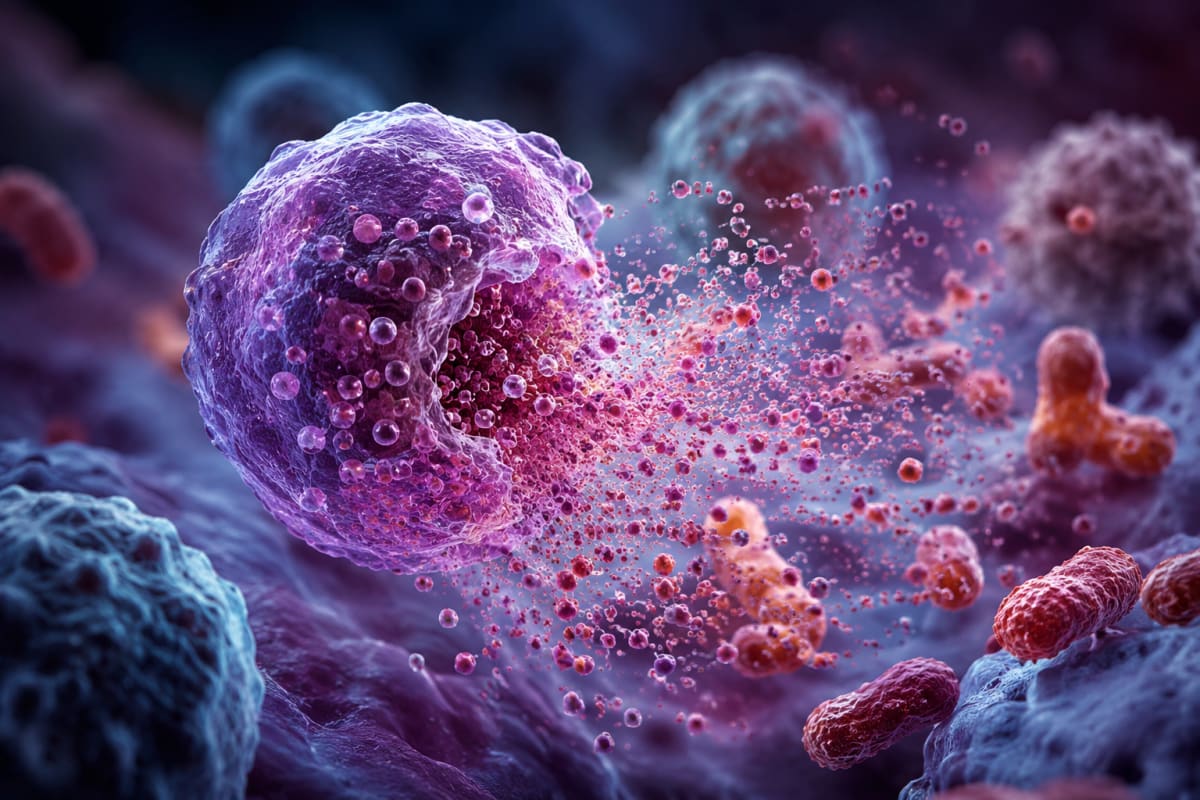
Scientists at Ben-Gurion University and Stanford University just identified a brand new type of immune cell that protects the body by bursting apart like a tiny grenade. The cells, called ruptoblasts, release a lethal chemical blast that kills nearby bacteria and damaged cells within minutes.
The discovery came from studying planarian flatworms, small creatures known for their remarkable ability to regenerate. Unlike the white blood cells we learn about in school, these defenders don't attack germs through direct contact. Instead, they sacrifice themselves in a controlled explosion that wipes out threats in the surrounding area.
What triggers this dramatic response is just as surprising. The cells react to activin, a hormone that normally helps regulate tissue growth and healing. When activin levels spike too high, it acts like an alarm signal, telling ruptoblasts to detonate in what researchers call "ruptosis."
Professor Benyamin Rosental and Professor Bo Wang led the research team that caught this process on camera. When they exposed isolated cells to activin, about 60 to 70 percent burst within five minutes, spilling toxic granules that quickly dispersed. Cells near the blast died soon after.
The team then tested whether these explosive cells actually help fight infections. When they exposed flatworms to dangerous Pseudomonas bacteria, the activin pathway activated, but only when bacterial numbers got high enough to threaten the animal. Worms with reduced ruptoblast activity became more vulnerable to infection and died days earlier than normal worms.
The researchers also discovered that ruptoblasts play a role in tissue rejection. When they fused two genetically different flatworms together, the mismatched tissues triggered chronic inflammation and eventual rejection, driven by ruptoblast activation. Blocking the pathway prevented the rejection response.
Why This Inspires
This research shows that nature has invented far more creative solutions to health challenges than we ever imagined. Most of what we know about immunity comes from studying just a handful of animals, but the natural world is full of unexplored defenses waiting to be discovered.
The explosive defense system might seem alien, but understanding how different creatures solve the same problems gives scientists new ideas for fighting disease in humans. Sometimes the strangest biology holds the most practical answers.
The study was published in the journal Cell in June 2026, opening a new chapter in how we understand the body's ability to protect itself.
More Images



Based on reporting by Google News - Scientists Discover
This story was written by BrightWire based on verified news reports.
Spread the positivity!
Share this good news with someone who needs it