Scientists Find Fish That Breathed Asteroid Dust 66M Years Ago
Researchers discovered fossilized fish in North Dakota with tiny glass beads from the dinosaur-killing asteroid lodged in their gills, proving they were alive when the impact debris rained down. It's the most direct evidence yet of what happened in the first hour after Earth's most famous catastrophe.
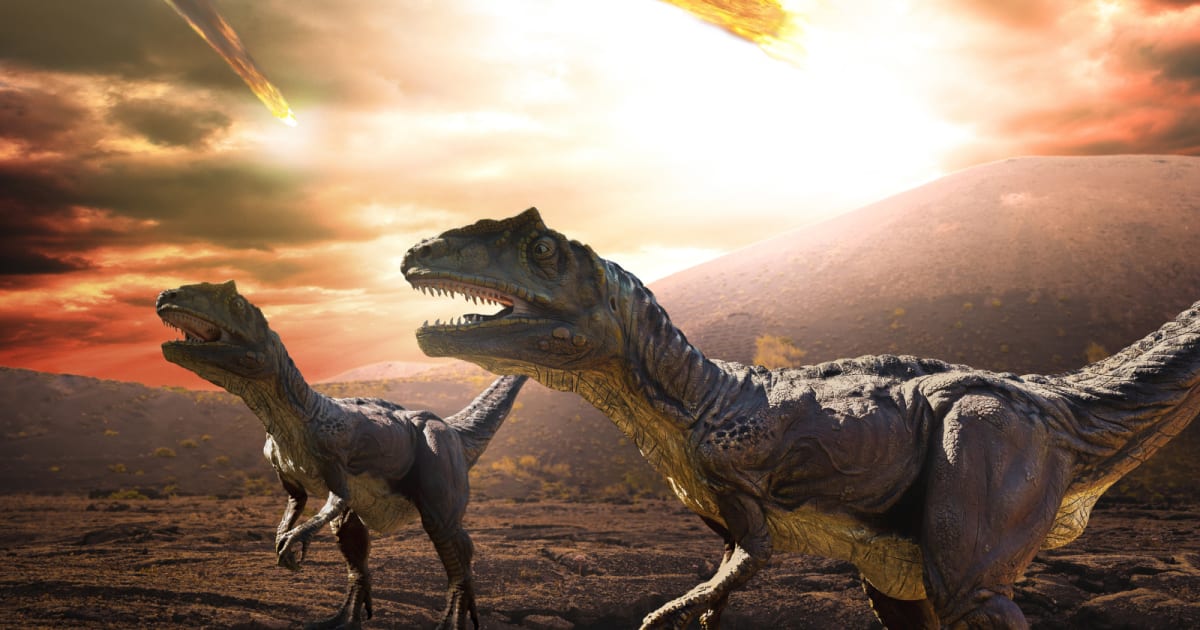
Scientists just confirmed one of the most remarkable fossil discoveries ever: fish that were literally breathing as the asteroid that ended the dinosaur age struck Earth 66 million years ago.
At a site called Tanis in North Dakota, researchers found freshwater fish with tiny glass beads stuck in their gills. These beads formed when the asteroid impact melted rock and blasted it into the sky, where it cooled into spheres and fell back to Earth like deadly rain.
The fish inhaled these particles while filtering water through their gills, then died and were buried within minutes or hours. It's a snapshot of a single catastrophic day, frozen in time.
The discovery, published in a major scientific journal, solves a puzzle that had made some scientists skeptical. Glass spherules from ancient impacts show up in lots of rock layers, often moved there by water or storms long after they originally fell. Finding them mixed with fossils doesn't necessarily mean those animals died on impact day.
But these beads were trapped inside the fish's gills, the organs they used to breathe underwater. The only way they could have gotten there was if the fish inhaled them while alive, then were buried so quickly the beads couldn't wash away.
Some spherules were also found sealed in tree amber at the site, fixing them in place the moment the resin hardened. Together, these finds create what scientists call a timestamp, linking the deposit to a specific window of time.
The site also preserves a surge of water that rushed inland, carrying jumbled sediments, burned wood, and marine creatures far from the ocean. Researchers believe seismic waves from the impact, estimated at magnitude 10 or 11, triggered the surge within an hour of the strike, 3,000 kilometers away.
Why This Inspires
What makes this discovery so powerful isn't just what it reveals about a terrible day 66 million years ago. It's what it shows about human curiosity and persistence.
Scientists spent years carefully studying this site, looking past the obvious drama to find the small details that tell the real story. They didn't just find fossils. They found proof, examined at the microscopic level, peer-reviewed and tested by other experts.
This is science at its patient, meticulous best. While some claims about dinosaur remains at the site are still being studied and debated, the fish and their last breaths have been documented with extraordinary care.
The work reminds us that understanding our planet's deep past requires both wonder and rigor. Every major discovery builds on thousands of careful observations, measurements, and honest questions about what the evidence actually shows.
Somewhere in the rocks beneath our feet lies a record of nearly everything that's ever happened on Earth, and scientists keep finding new ways to read it.
More Images

Based on reporting by Google News - Science
This story was written by BrightWire based on verified news reports.
Spread the positivity!
Share this good news with someone who needs it
%2Fhttps%3A%2F%2Ftf-cmsv2-smithsonianmag-media.s3.amazonaws.com%2Ffiler_public%2F4e%2F9f%2F4e9f0fe8-aa48-438a-b88f-3a29cd71107e%2Fhttps___wwwfrontiersinorg_files_articles_1758862_xml-images_fmats-13-1758862-g001.jpeg)
%2Fhttps%3A%2F%2Ftf-cmsv2-smithsonianmag-media.s3.amazonaws.com%2Ffiler_public%2F8e%2F83%2F8e837bc6-e2b3-4bb6-bb1c-4f1287b45a6f%2Fcastillo-39-rincon_de_los_signos.jpg)