Scientists Find Genetic Switch to Boost Cancer Immunity
Australian researchers discovered a genetic "off switch" that makes immune cells far more sensitive to the body's natural cancer-fighting signals. The breakthrough could lead to safer, more effective cancer treatments that harness what's already inside us.
Your body already has an army of cancer-fighting cells that patrol for threats every single day, and scientists just found a way to make them dramatically better at their job.
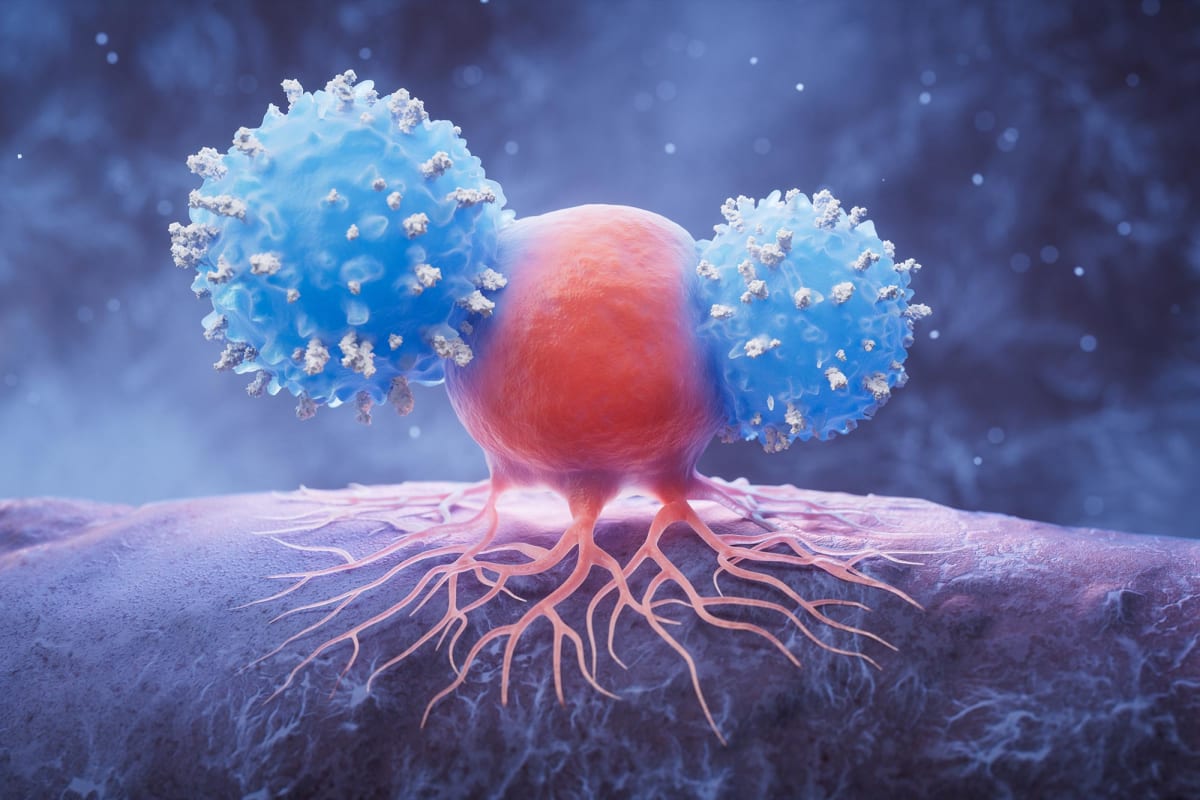
Researchers at Monash University in Melbourne, Australia have identified a gene that, when switched off, supercharges Natural Killer cells. These specialized immune cells already hunt down cancer, but this discovery makes them up to 100 times more responsive to IL-15, a natural growth factor your body produces to fight tumors.
The breakthrough solves a frustrating puzzle. For years, doctors knew that boosting IL-15 activity could help the immune system destroy cancer. But drugs designed to activate IL-15 receptors caused terrible side effects because they overstimulated immune cells throughout the entire body, not just near tumors.
This new approach works differently. By disabling a single gene in NK cells, the immune system becomes incredibly sensitive to the tiny amounts of IL-15 that already exist naturally. The treatment targets cancer exactly where it grows, while leaving healthy tissues alone.
Professor Nick Huntington, who led the study published in Cancer Cell, used CRISPR screening to hunt for genes that control immune response. His team found that the gene produces an enzyme, which means it can potentially be blocked with a pill rather than requiring complex cell therapy.
The timing matters especially for colorectal cancer patients. These tumors naturally produce higher levels of IL-15 than healthy tissue, creating a perfect opportunity for enhanced NK cells to strike hard where it counts. Early tests showed the modified cells slowed colorectal cancer growth in preclinical models.
The Ripple Effect
What makes this discovery particularly exciting is how it could amplify existing treatments. The approach appears compatible with checkpoint inhibitors, the widely used immunotherapy drugs that have already saved countless lives. Combining both strategies could create an even stronger immune assault against advanced tumors.
The best part? A drug that blocks this molecular pathway has already been tested safely in patients with a different blood disorder. That means researchers have a head start on developing targeted medications with better safety profiles than previous attempts.
This isn't about adding foreign substances to overwhelm cancer. It's about fine-tuning the remarkable defense system you were born with, making it sensitive enough to catch threats it might otherwise miss.
The road from laboratory discovery to pharmacy shelf takes time, but every breakthrough starts with understanding how our bodies work and finding smarter ways to help them heal.
More Images
Based on reporting by Google News - Scientists Discover
This story was written by BrightWire based on verified news reports.
Spread the positivity!
Share this good news with someone who needs it