
Scientists Find Gut Signal That Stops Sugar Cravings
Your gut might be smarter than you think. Researchers discovered a hidden communication system between your gut and brain that shifts cravings from sugar to protein when your body needs it most.
Scientists just revealed that your gut does something remarkable when your body runs low on protein: it tells your brain to stop craving sugar and start seeking nutrient-rich foods instead.
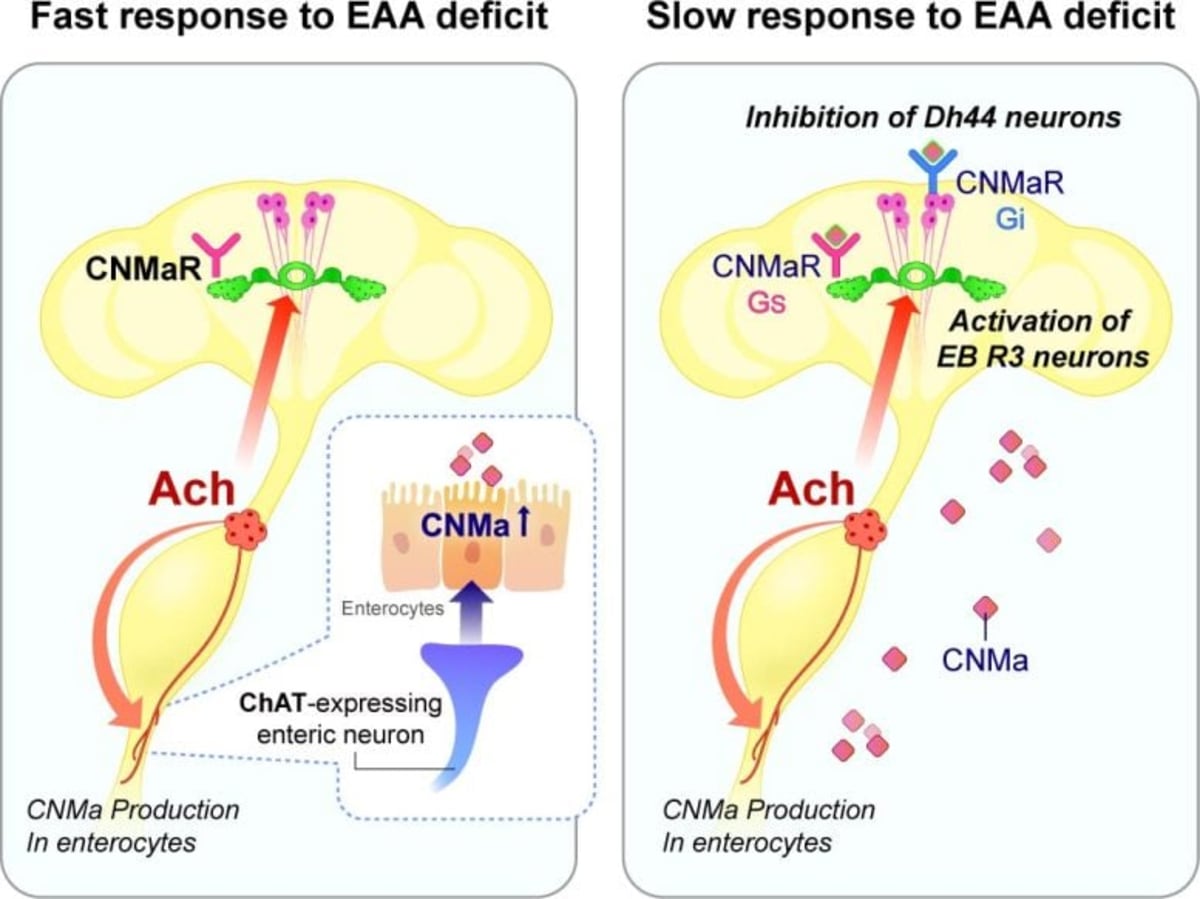
A team at South Korea's Institute for Basic Science discovered a previously unknown gut-brain communication network that actively monitors what nutrients your body needs. When protein levels drop, specialized cells in your intestine release a hormone called CNMa that travels two routes to change what you want to eat.
The first route is lightning fast. CNMa activates nerve cells in the gut that send immediate signals directly to your brain, alerting it about the protein shortage. The second route moves more slowly, with CNMa entering your bloodstream and reaching the brain to maintain protein-seeking behavior over time.
Here's where it gets fascinating. This system doesn't just make you hungrier for everything. Instead, it specifically suppresses your brain's response to sugar while making protein-rich foods more appealing, effectively reprogramming your food preferences to match your nutritional needs.
The researchers used fruit flies to map this process because their neural circuits are easier to study. When flies were deprived of dietary protein, their guts immediately began communicating with their brains to shift feeding behavior. The same CNMa hormone simultaneously worked through both fast neural pathways and slower hormonal channels to create lasting changes in food choices.
The team also found something unexpected about gut bacteria. Flies without their normal gut microbes showed even stronger activation of protein-seeking brain neurons, suggesting our microbiome plays a role in regulating these nutritional signals.
The Bright Side
This discovery could transform how we approach obesity and metabolic health. For years, scientists assumed animals simply ate more when nutrients were missing. Now we know the brain can selectively adjust cravings to target exactly what the body lacks.
The system appears to be conserved across species. Mice showed the same protein-seeking behavior when deprived of essential amino acids, indicating this nutrient-sensing network evolved long ago and exists in mammals too.
Even more promising, mice that lacked FGF21 (a hormone previously thought essential for protein appetite) still developed strong protein preferences. This means additional nutrient-sensing systems exist beyond what science has already identified, opening new doors for research.
Director Seong-Bae Suh explained that most current obesity drugs rely on gut hormone signaling, but we still understand relatively little about how naturally produced gut signals influence behavior. Understanding this gut-brain axis could lead to new therapeutic strategies for metabolic disorders and eating issues that work with the body's natural wisdom rather than against it.
Your gut isn't just digesting dinner—it's actively monitoring your nutritional state and guiding your choices toward better health.
More Images

Based on reporting by Google News - Scientists Discover
This story was written by BrightWire based on verified news reports.
Spread the positivity!
Share this good news with someone who needs it