Scientists Find Hidden Code Inside Human DNA
Researchers discovered that human DNA contains a second layer of instructions that controls how genes work, potentially explaining why identical proteins can behave differently in our cells. This breakthrough could change how we understand and treat diseases.
Your DNA has been keeping a secret, and scientists just cracked the code.
Researchers at Kyoto University and RIKEN discovered that human genetic instructions contain a hidden second layer of information that controls how cells build proteins. This finding changes everything we thought we knew about how genes work.
For years, scientists believed that different genetic "spellings" for the same protein were basically interchangeable. Think of it like writing "color" versus "colour." Same meaning, different spelling, no big deal.
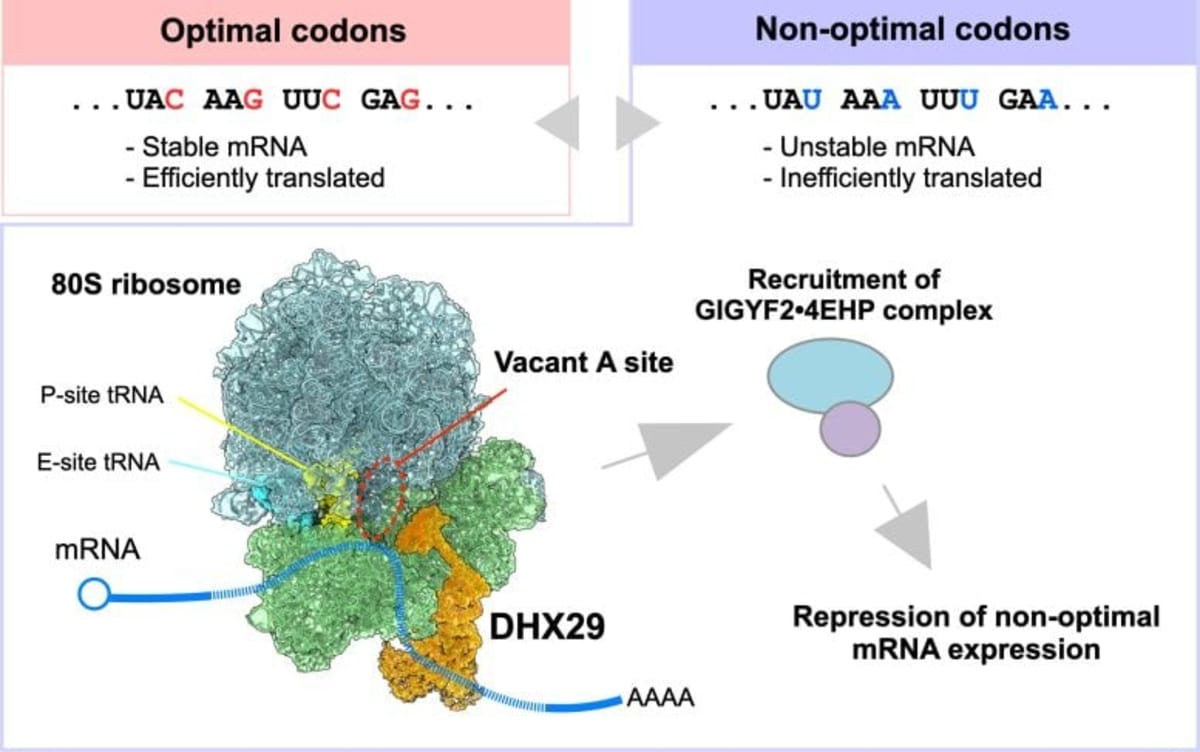
But it turns out those variations matter a lot. Some versions help cells build proteins efficiently, while others slow down or even stop the process entirely.
The team identified a protein called DHX29 that acts like a quality control inspector. It scans the genetic instructions looking for inefficient code, then flags those messages for shutdown. This explains why two genetically identical protein recipes can produce completely different results inside your cells.
Using advanced imaging technology, the researchers watched DHX29 in action. They saw it attach to cellular protein factories called ribosomes and recruit helper proteins to suppress poorly coded messages. The entire system works like a hidden regulatory network operating beneath the genetic code everyone learns about in biology class.
The Ripple Effect
This discovery reaches far beyond the lab. Understanding how cells read this hidden code could reshape how we approach treating cancer, genetic diseases, and cellular dysfunction.
The mechanism might influence crucial processes like how stem cells transform into specialized tissues or how cells maintain healthy balance. When this system goes wrong, it could contribute to disease development.
The research team plans to investigate how DHX29 affects human health. Early indications suggest this protein plays a role in everything from normal development to cancer progression.
"We have long been fascinated by how cells interpret the hidden layer of information embedded within the genetic code," says team leader Osamu Takeuchi. Discovering the molecular factor that reads this hidden code has been particularly rewarding for the researchers.
This breakthrough opens entirely new possibilities for gene therapy and drug development. If scientists can manipulate how cells read this second layer of instructions, they might be able to fine-tune gene expression with unprecedented precision.
The genetic code just got a lot more interesting, and our ability to understand and heal the human body took a major leap forward.
More Images
Based on reporting by Google News - Science
This story was written by BrightWire based on verified news reports.
Spread the positivity!
Share this good news with someone who needs it