Scientists Find Key to Controlling Body's Immune Response
Researchers at UT Southwestern discovered how two lipids work with a crucial protein to activate the immune system, opening new paths to treat cancer and autoimmune diseases. The breakthrough explains a long-standing mystery about how our bodies fight threats.
Scientists just solved a puzzle that could transform how we treat everything from cancer to autoimmune disorders.
Researchers at UT Southwestern Medical Center discovered two lipids that work like molecular switches to turn on the body's immune response. The finding answers questions scientists have been asking for years about how our innate immune system knows when to fight back.
At the center of this discovery is a protein called STING, which acts like a security guard in our cells. When STING detects danger, it kicks off a chain reaction that tells the immune system to spring into action. But scientists never fully understood how STING actually got switched on.
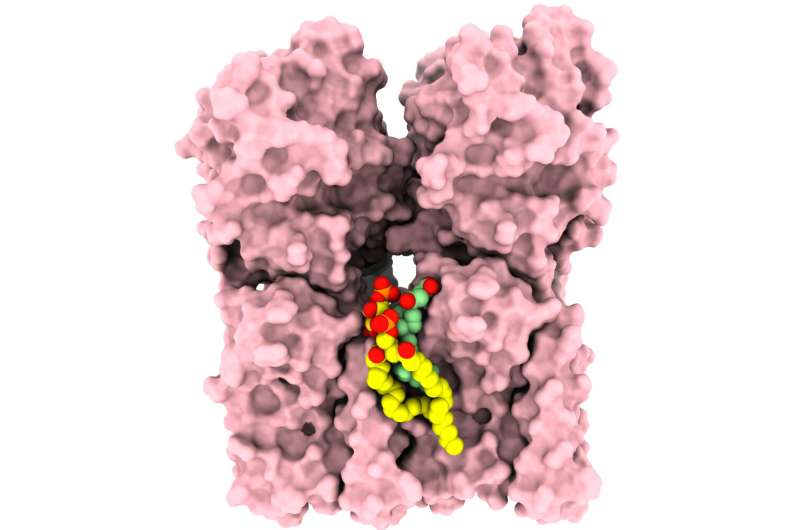
The research team, led by Dr. Zhijian "James" Chen and his colleagues, found that two molecules—a lipid called PtdIns(3,5)P2 and cholesterol—work together to activate STING. Think of them as keys that have to turn in the right locks at the right time.
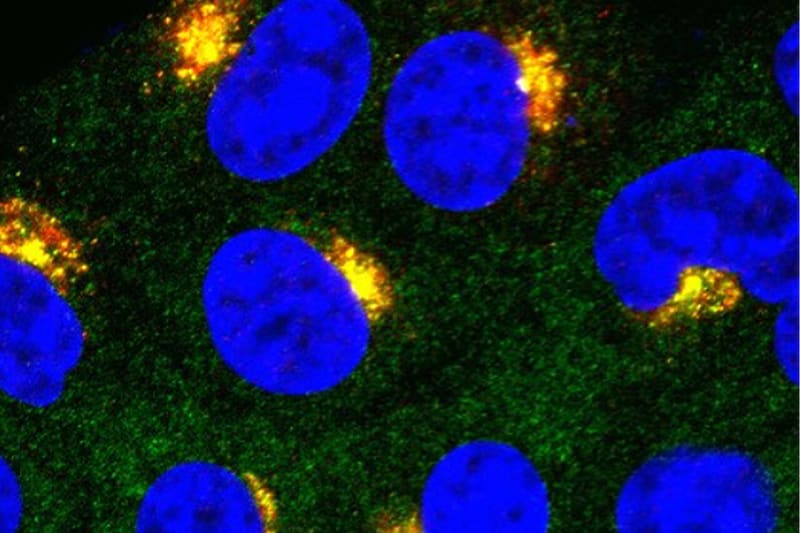
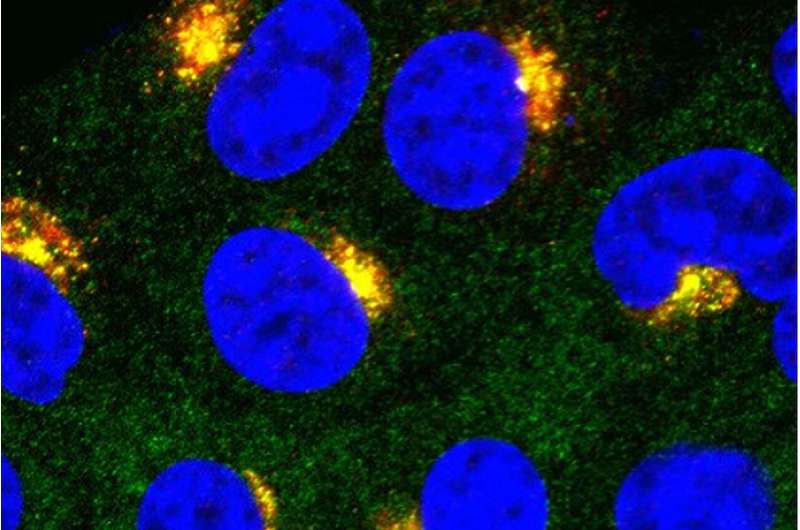
Here's what makes this exciting: STING starts out inactive in one part of the cell called the endoplasmic reticulum. When it detects foreign DNA from viruses or bacteria, it needs to travel to another area called the Golgi to sound the alarm. Scientists couldn't figure out why it had to make that journey.
The answer turned out to be simple and elegant. The Golgi has much higher concentrations of both PtdIns(3,5)P2 and cholesterol than other parts of the cell. STING needs both molecules present in large amounts to link together in chains and properly activate the immune response.
Using powerful cryo-electron microscopy, the researchers watched these molecules interact at the atomic level. They saw PtdIns(3,5)P2 acting like a bridge between STING molecules, while cholesterol stabilized the whole structure.
The Ripple Effect
This discovery gives doctors new targets for controlling the immune system. Too much STING activity causes autoimmune diseases where the body attacks itself. Too little leaves us vulnerable to infections and cancer.
Researchers can now develop drugs that either boost or dampen STING activity by targeting these lipid switches. That means more precise treatments with fewer side effects than current options.
Dr. Chen's work on this immune pathway has already earned him some of science's top honors, including the 2024 Albert Lasker Award and the 2026 Japan Prize. But the real prize will be new therapies that help millions of patients.
The findings appeared in two papers published simultaneously in the prestigious journal Nature, showing how collaboration between different research teams accelerated the discovery. One team studied which molecules interact with STING, while the other used advanced imaging to see exactly how those interactions work.
Clinical applications could begin within the next few years as pharmaceutical companies develop compounds that target these newly understood mechanisms.
This breakthrough reminds us that some of the most powerful medical advances come from understanding the elegant systems our bodies already use to protect us.
More Images


Based on reporting by Medical Xpress
This story was written by BrightWire based on verified news reports.
Spread the positivity!
Share this good news with someone who needs it