Scientists Find Key to Cutting Cow Methane by 15%
Researchers discovered the "hydrogenobody," a tiny structure in cow gut microbes that drives methane production. The breakthrough could help slash greenhouse gas emissions from one of agriculture's biggest climate contributors.
Scientists just cracked the code on why cows burp so much planet-warming methane. And the discovery might help us do something about it.
A single cow belches out 220 pounds of methane every year. That's a big deal because methane traps nearly 30 times more heat than carbon dioxide, and livestock worldwide account for 15 percent of all greenhouse gas emissions.
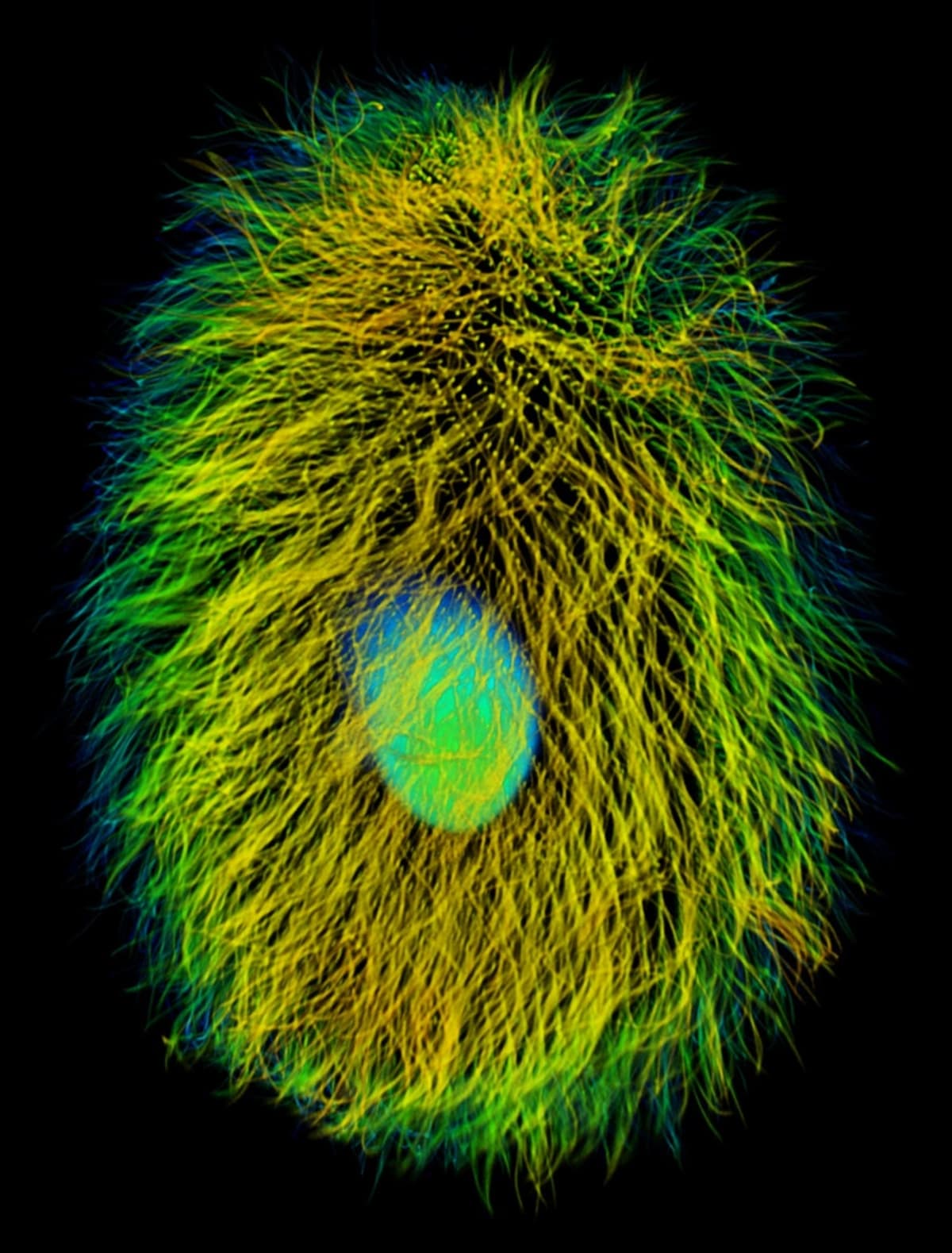
Researchers at the Chinese Academy of Sciences found the culprit hiding inside microscopic organisms living in cow stomachs. They're calling it the "hydrogenobody," a special structure that churns out hydrogen gas.
Here's how it works: These tiny hair-covered microbes, called rumen ciliates, use hydrogenobodies to process food and produce hydrogen. Other microbes nearby gobble up that hydrogen and transform it into methane, which cows then burp into the atmosphere.
The team combined genetic analysis of hundreds of microbial genomes with detailed imaging and real-world measurements from dairy cows. They published their findings Thursday in Science.
"We were somewhat surprised by how clearly this structure links cell biology to methane emissions," says study co-author Jie Xiong. His team found that microbes with more hydrogenobodies produced significantly more methane than those with fewer structures.
Scientists suspected these gut microbes played a role in methane production for years, but they couldn't figure out exactly how. This discovery fills in the missing piece.
Why This Inspires
This breakthrough gives scientists a clear target for reducing agricultural emissions. Instead of vague strategies, researchers can now focus on tweaking how the hydrogenobody itself functions.
Ermias Kebreab, a professor at UC Davis who wasn't involved in the study, calls it a "mechanistic breakthrough" in understanding cow emissions. Previous research showed methane-producing microbes cluster near hydrogen sources, but this reveals exactly how that hydrogen gets made in the first place.
The implications extend beyond climate science. With livestock emissions representing such a massive chunk of global greenhouse gases, even modest reductions could make a real difference.
Xiong notes that practical applications are still in early stages. But his team now has a clear framework for developing interventions that could significantly cut methane from cattle without harming the animals or reducing food production.
For farmers and climate scientists alike, understanding this microscopic process opens doors that seemed locked just months ago.
More Images


Based on reporting by Scientific American
This story was written by BrightWire based on verified news reports.
Spread the positivity!
Share this good news with someone who needs it