Scientists Find Key to Human Reproduction in Space
A groundbreaking study reveals sperm struggle to navigate in microgravity, but researchers discovered a promising solution. The findings could help future space colonists start families beyond Earth.
Scientists just took a major step toward understanding how humans might have children in space, and the results are surprisingly hopeful.
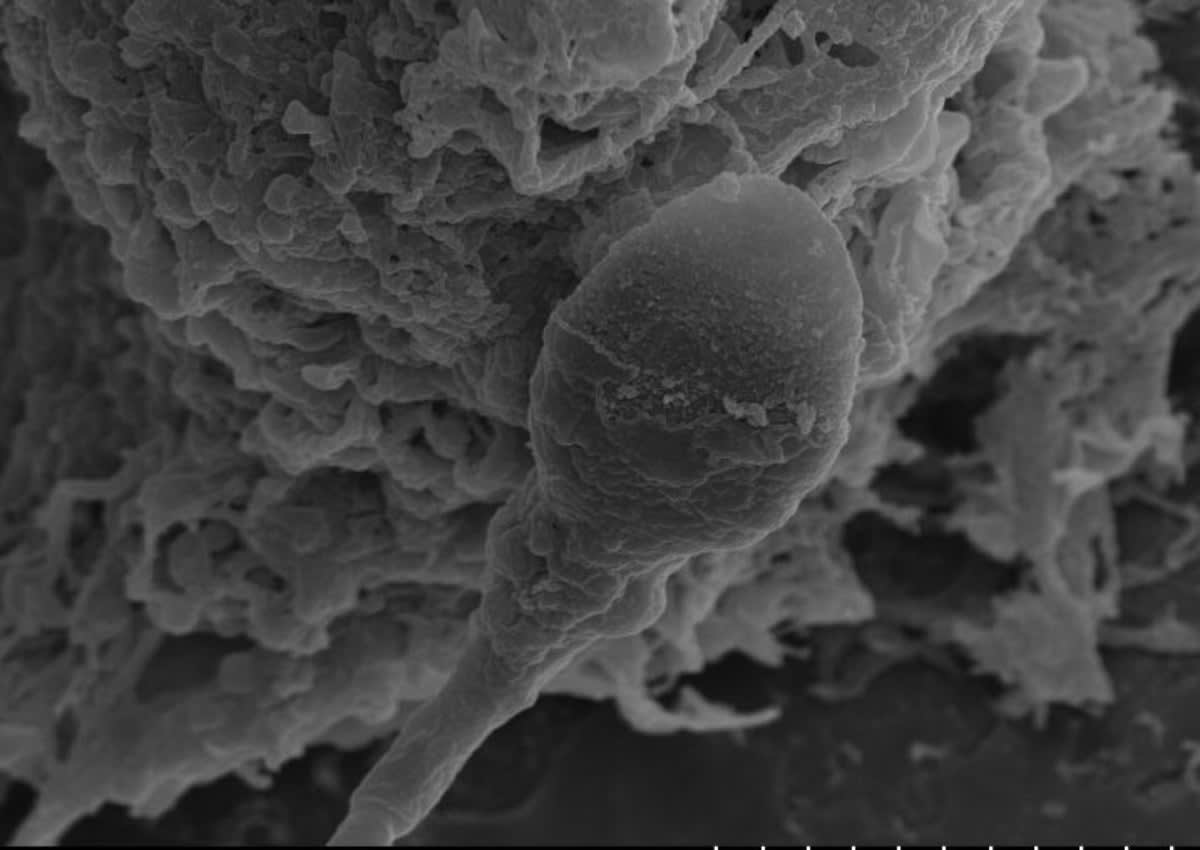
Researchers at Adelaide University put human sperm through a test that's never been done before. They placed sperm cells in a chamber designed to mimic the female reproductive tract under microgravity conditions, like those astronauts experience in space.
The sperm got lost. Without Earth's gravity, they struggled to navigate toward their destination far more often than under normal conditions.
The team also tested fertilization rates using mouse eggs. Under microgravity, 30 percent fewer eggs were fertilized over a four-hour period compared to normal gravity conditions.
But here's where the story gets exciting. The researchers discovered that adding progesterone, a hormone naturally released by eggs, helped sperm find their way even in microgravity.
"Progesterone works as a chemical signal, a kind of biological homing beacon that the egg releases around the time of ovulation," explains Nicole McPherson, the study's senior author. Sperm have special receptors that detect this signal and use it to navigate.
The progesterone concentrations needed were higher than what occurs naturally, so it's not an immediate solution. However, the discovery opens a promising path for future research.
Why This Inspires
As NASA and other agencies plan missions to the Moon and Mars, understanding reproduction in space shifts from curiosity to necessity. McPherson puts it perfectly: "As missions to the moon and Mars move from aspiration to reality, understanding whether humans can successfully reproduce in those environments is not a curiosity; it is a necessity."
This research addresses one of the most fundamental questions about humanity's future beyond Earth. If we're going to establish permanent settlements on other worlds, we need to know whether families can grow there.
The fact that researchers found a potential solution in their very first major study is genuinely encouraging. Nature has already developed an elegant navigation system for sperm. Now scientists are learning how to make it work in entirely new environments.
The study, published in Communications Biology, represents pioneering work in space reproduction biology. While no one has ever had sex in space according to NASA, future space travelers will likely want to start families during long-duration missions or permanent settlements.
This research proves we're asking the right questions and finding real answers to help humanity thrive among the stars.
More Images

Based on reporting by Scientific American
This story was written by BrightWire based on verified news reports.
Spread the positivity!
Share this good news with someone who needs it