Scientists Find Liver Switch That Cuts Bad Cholesterol
Researchers at UT Southwestern discovered a protein that controls how much harmful cholesterol the liver releases into the bloodstream. The breakthrough could lead to entirely new treatments for heart disease beyond statins.
Scientists just found a hidden "master switch" in the liver that controls how much harmful cholesterol enters your bloodstream, and it could change how we fight heart disease.
Researchers at UT Southwestern Medical Center discovered that a protein called HELZ2 acts like a volume dial for cholesterol production. When HELZ2 turns up, it dramatically reduces the number of cholesterol-carrying particles that leave the liver and enter your blood.
Here's what makes this exciting: most cholesterol drugs like statins work by targeting cholesterol after it's already been made. HELZ2 works much earlier in the process, breaking down the genetic instructions before cholesterol-carrying proteins are even created.
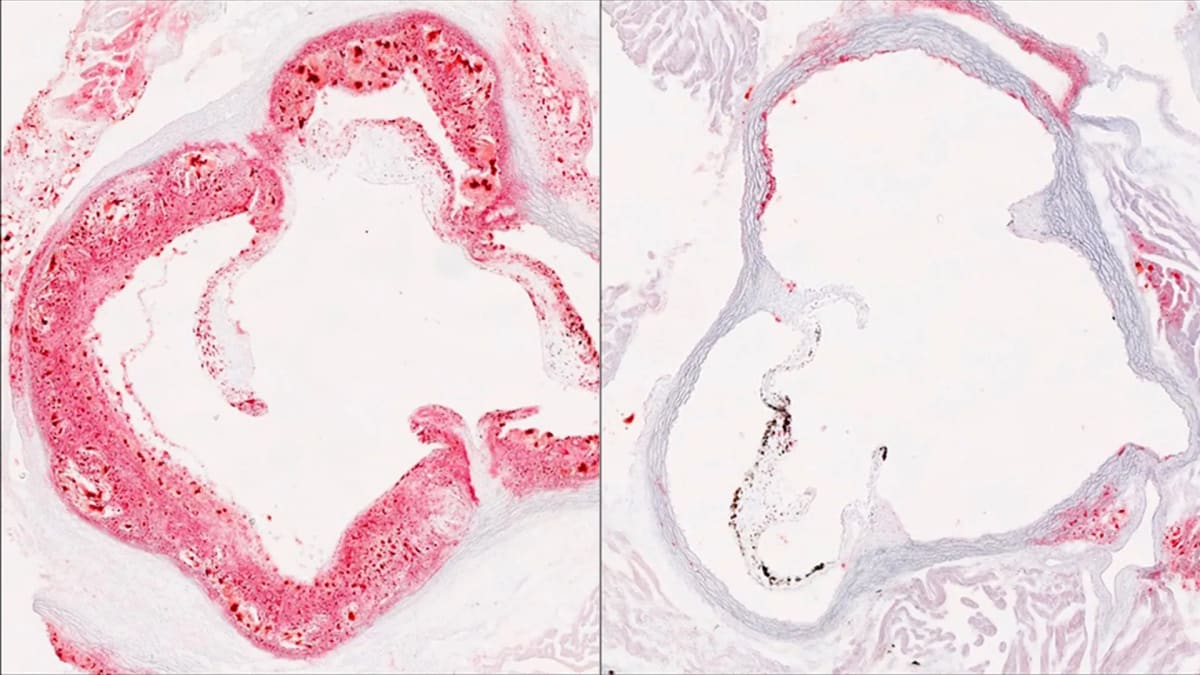
The team found HELZ2 while studying mice with unusual fat buildup in their livers. They noticed that mice with higher HELZ2 activity produced far fewer dangerous LDL particles and showed strong protection against clogged arteries, the main driver of heart attacks and strokes.
Dr. Zhao Zhang, who led the research, compared HELZ2 to a dial between the liver and bloodstream. "Turning it up lowers cholesterol in the blood but increases liver fat," he explained. "That balance makes HELZ2 especially interesting as a potential therapeutic target."
The discovery does come with a trade-off. While mice with more active HELZ2 had cleaner arteries, they also stored more fat in their livers. This means any future treatments would need to carefully balance protecting the heart without harming the liver.
The Ripple Effect
This breakthrough opens doors beyond just heart disease treatment. Nearly 100 million Americans take statins, but not everyone responds well to them or can tolerate their side effects. Having a completely different pathway to control cholesterol gives doctors a new option for patients who need alternatives.
The research could also help treat fatty liver disease, which affects about one in four adults worldwide. By understanding how HELZ2 controls the balance between liver fat storage and blood cholesterol, scientists might develop treatments that tackle both problems at once.
The study appears in the American Heart Association journal Circulation. Dr. Zhang and his team used advanced genetic screening tools developed by Nobel laureate Bruce Beutler to make the discovery.
While treatments based on this research are still years away, the finding represents a fundamental shift in understanding cholesterol regulation. For the first time, scientists have a molecular lever to control harmful cholesterol at its source, before it even enters the bloodstream.
Based on reporting by Google News - Scientists Discover
This story was written by BrightWire based on verified news reports.
Spread the positivity!
Share this good news with someone who needs it