Scientists Find New Beetle Species Steps From Their Lab
A PhD student at Kyushu University in Japan discovered a new species of ladybird beetle on a pine tree right on campus, proving that unknown biodiversity can hide in plain sight. The tiny find sparked the first major update to Japanese ladybird classification in 50 years.
📺 Watch the full story above
Sometimes the most exciting discoveries happen in the most ordinary places.
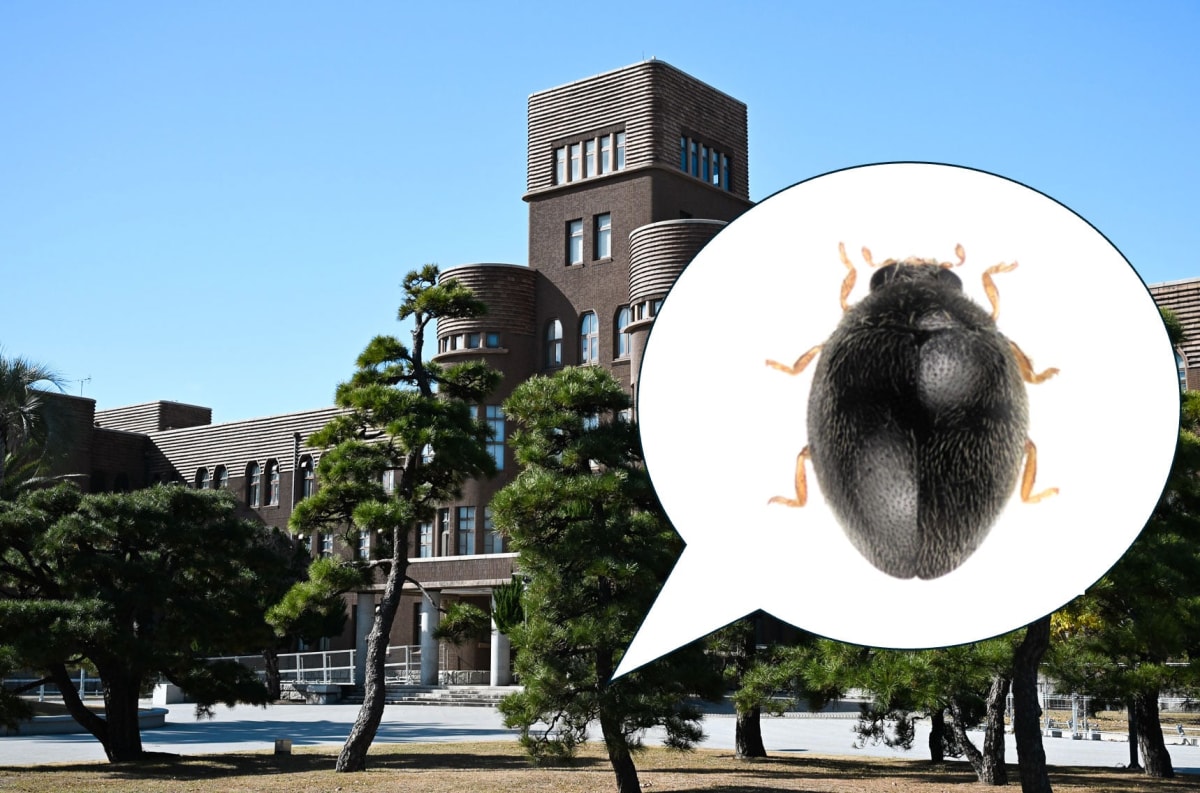
Ryōta Seki, a PhD student at Kyushu University in Japan, made scientific history without leaving campus. He found a completely new species of ladybird beetle living on a Japanese black pine tree just steps from his laboratory building.
The beetle, now named Parastethorus pinicola, measures barely over one millimeter long. That's smaller than a grain of rice, which explains why no one noticed it before despite decades of insect research in Japan.
Seki wasn't just casually strolling past the tree. He knew that certain ladybird species favor pine trees, and he specifically checked the pines at the university's Hakozaki Satellite campus as part of his doctoral research.
"Normally, insect collectors do not pay much attention to pine trees, which is perhaps why scientists have overlooked this species for so long," Seki explained.
The discovery became part of something much bigger. Seki and his supervisor, Associate Professor Munetoshi Maruyama, spent three years analyzing around 1,700 beetle specimens to update the classification of Stethorini, a group of tiny ladybirds that feed on spider mites.
The challenge? These beetles are incredibly difficult to identify. They all look identical to the naked eye, requiring microscopic examination of their reproductive organs to tell species apart.
Why This Inspires
The comprehensive review corrected decades of misidentification. What Japanese researchers had long called Stethorus japonicus turned out to be the same as Stethorus siphonulus, a species found from China to Southeast Asia.
The team also identified another new species from Hokkaido, which Seki named Stethorus takakoae after his grandmother, Takako Ōtsuki, who encouraged his childhood love of insects.
This marks the first major update to this ladybird group in Japan in over 50 years. The standardized naming now allows Japanese scientists to share data more effectively with colleagues across Asia.
For Maruyama, the findings reveal an important truth about biodiversity. "Even in a city or on a university campus, there are unknown species living right beside us," he said.
These tiny beetles play crucial roles in ecosystems by controlling spider mite populations. They work quietly beneath our notice, supporting the natural balance that makes life possible.
The discovery reminds us that wonder exists everywhere, even at our feet, waiting for someone curious enough to look.
More Images
Based on reporting by Google: scientific discovery
This story was written by BrightWire based on verified news reports.
Spread the positivity!
Share this good news with someone who needs it