Scientists Find New Parasite Species Hiding in Museum Drawer
A researcher sorting through old spider specimens in Brazil spotted what looked like a pearl necklace on a tiny spider. It turned out to be a brand new parasite species that had been sitting unnoticed in the collection for years.
Sometimes the biggest discoveries are hiding in plain sight, waiting for someone to look just a little bit closer.
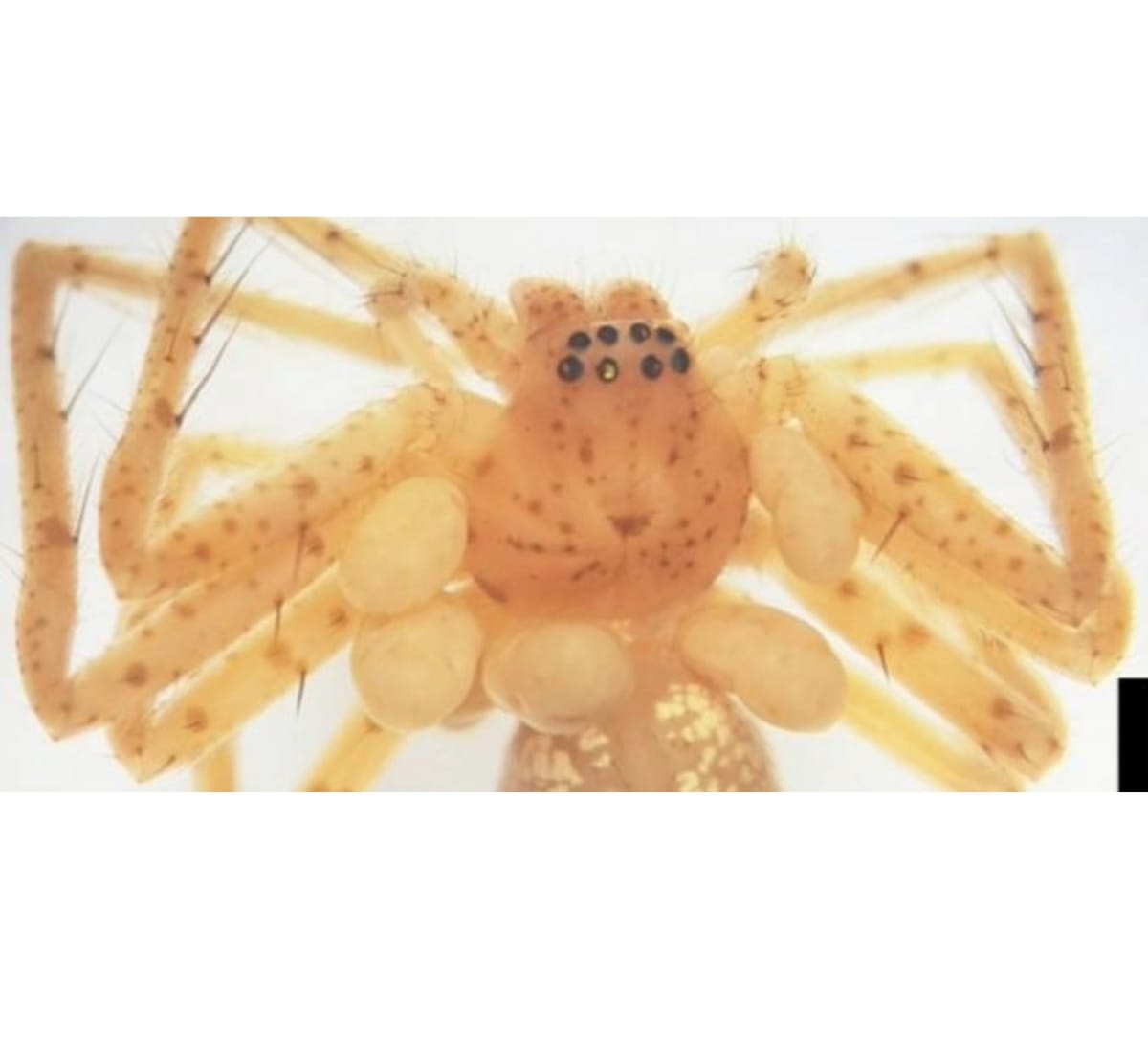
A researcher at Brazil's Butantan Institute was organizing spider specimens when something caught their eye. One tiny spider, just a few millimeters long, appeared to be wearing a delicate string of pale beads around its body.
The "necklace" wasn't jewelry. It was actually mite larvae feeding on the spider's body fluids.
The team called in mite expert Ricardo Bassini-Silva, who realized these parasites didn't match anything previously documented in Brazil. After detailed microscopy and scanning, they confirmed it: a completely new species, now named Araneothrombium brasiliensis.
This discovery marks only the second spider parasite ever recorded in Brazil. The finding also extends the known range of this mite genus, which was first described in Costa Rica just in 2017.
The parasites are incredibly small, measuring about half a millimeter. They attach to the spider's pedicel, the thin connection between its head and abdomen, because that's the easiest place to pierce through.
"This is the spider's most vulnerable region since other parts have a lot of chitin, which forms an exoskeleton difficult for the mites' fangs to penetrate," Bassini-Silva explained.
Why This Inspires
This discovery shows that scientific treasures don't always require expensive expeditions to remote jungles. Sometimes they're already sitting on museum shelves, waiting for curious eyes to notice them.
Museum collections aren't dusty archives of the past. They're living resources full of undiscovered species and relationships we haven't even begun to understand yet.
With over 3,000 spider species in Brazil alone, Bassini-Silva believes the country has enormous potential for discovering more parasitic mites. If one overlooked spider in a drawer can reveal an entirely new species, countless more discoveries are likely waiting in collections around the world.
The finding also suggests these mites might be far more common in nature than scientific records show. They're not necessarily rare, just rarely noticed because few researchers look closely enough at these tiny interactions.
The discovery reminds us that nature still holds countless secrets, and sometimes all it takes is someone paying attention to the small details everyone else walks past.
Based on reporting by Google News - Scientists Discover
This story was written by BrightWire based on verified news reports.
Spread the positivity!
Share this good news with someone who needs it