Scientists Find New Way to Fight Drug-Resistant TB
Researchers discovered a promising target for tuberculosis drugs that could save millions of lives worldwide. The breakthrough offers hope for combating strains of TB that no longer respond to existing antibiotics.
A team of scientists just uncovered a potential game-changer in the fight against tuberculosis, a disease that killed over 1.25 million people in 2023 alone.
Researchers from Imperial College London and the London School of Hygiene & Tropical Medicine identified an enzyme in tuberculosis bacteria that, when blocked, stops the deadly infection from spreading. Working with Johnson & Johnson, they screened thousands of chemical compounds until they found one that was remarkably effective at killing the bacteria.
The challenge with tuberculosis has always been its stubbornness. The bacteria hide deep in the body where antibiotics struggle to reach them, forcing patients to take multiple drugs for months. Many people can't complete the lengthy treatment due to harsh side effects, which allows drug-resistant strains to develop and spread.
Dr. Gerald Larrouy-Maumus, one of the study's co-authors, emphasized the urgency: "TB is still a major global problem. Millions are affected every year, disproportionately in low and middle-income countries."
The Bright Side
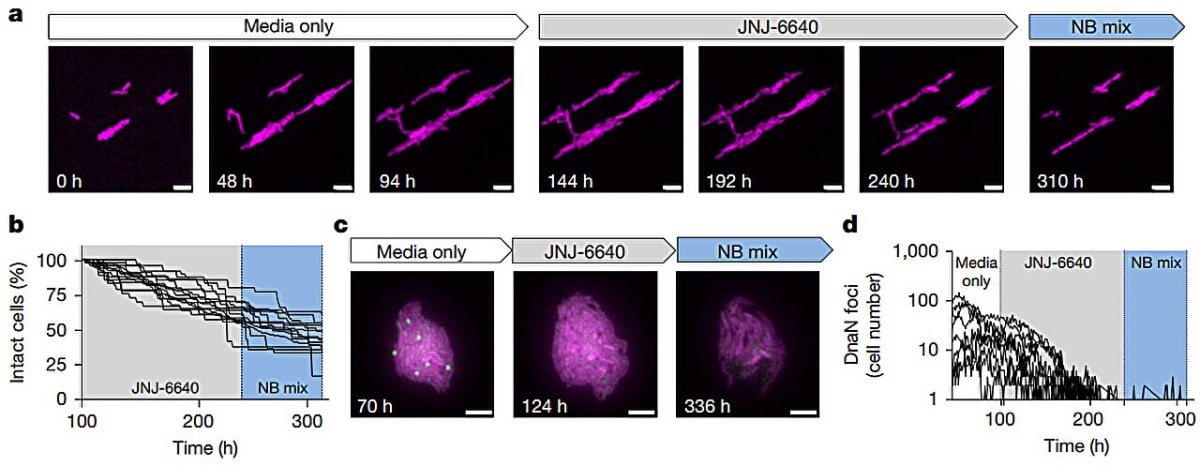
The discovery opens an entirely new pathway for developing tuberculosis treatments. The compound, called JNJ-6640, works by blocking an enzyme named PurF that bacteria need to create essential molecules for survival.
What makes this particularly exciting is that the bacteria can't work around it. While some microbes can steal the molecules they need from human cells, the research team proved that tuberculosis bacteria can't scavenge enough to survive when PurF is blocked.
Tests in mice showed the approach successfully reduced TB infections. Although JNJ-6640 itself isn't stable enough to become a drug, knowing that targeting PurF works gives researchers a clear blueprint for developing new medications.
The findings, published in the prestigious journal Nature, represent years of collaboration between academic scientists and pharmaceutical researchers. This kind of partnership is exactly what's needed to tackle diseases that disproportionately affect people in regions with fewer resources.
For the millions living in areas where tuberculosis remains a leading killer, this discovery brings tangible hope that more effective, easier-to-tolerate treatments may be on the horizon.
More Images
Based on reporting by Google News - Researchers Find
This story was written by BrightWire based on verified news reports.
Spread the positivity!
Share this good news with someone who needs it