Scientists Find New Way to Fight Multiple Sclerosis
Researchers discovered why MS kills brain cells, opening a promising new treatment path. The breakthrough identifies DNA damage as the culprit behind neuron loss in the disease.
For the first time, scientists understand exactly how multiple sclerosis destroys neurons in the brain's outer layer, and the discovery could transform treatment.
A team from UC San Francisco, University of Cambridge, and Cedars-Sinai Medical Center traced the neuron loss to DNA damage caused by inflammation. When MS strikes, the immune system's attack creates chemical reactions that damage DNA faster than brain cells can repair it.
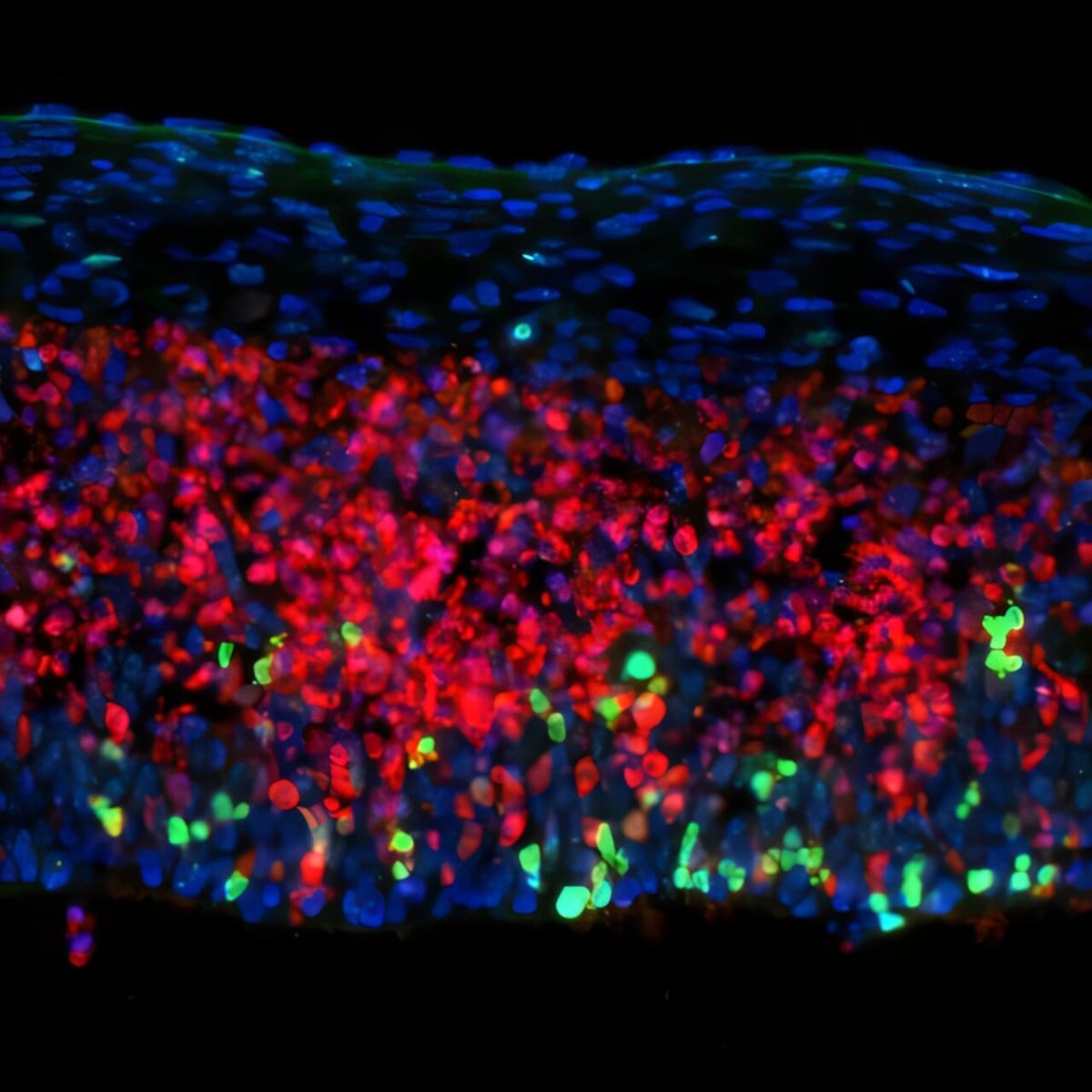
The research, published in two studies in Nature, focused on vulnerable neurons called CUX2 cells. These cells live in the brain's gray matter, which controls thinking and cognition.
During development, these neurons face enormous stress as they multiply and wire themselves throughout the brain. They survive by using a gene called ATF4 that repairs DNA damage and keeps chromosomes intact.
But when MS inflammation overwhelms the brain, that natural repair system breaks down. The same neurons that weathered the stresses of development can no longer keep up with the damage, leading to cell death and brain deterioration.
"We can now point to a mechanism for why these vulnerable neurons in the brain are lost and begin fighting MS on an entirely new front," said Dr. Steve Fancy, professor at the UCSF Weill Institute for Neurosciences.
The finding explains why brain scans of people with MS show damage to gray matter, not just the white matter that doctors traditionally focus on. Gray matter lesions are harder to see on scans but signal chronic and disabling MS.
Why This Inspires
This discovery shifts how researchers approach MS treatment. For decades, scientists concentrated on protecting myelin, the insulation around nerve fibers. Now they can target the neurons themselves.
Dr. David Rowitch, deputy director for Research at Guerin Children's, called the CUX2 neurons a "canary in the coal mine" for MS-affected brains. Protecting these cells might stop disease progression before it accelerates.
The research team already identified the specific repair mechanism these neurons use, giving drug developers a clear target. Scientists can now work on therapies that boost the brain's natural DNA repair systems or shield neurons from inflammation damage.
Understanding exactly how and why these cells die opens doors that were closed just months ago.
More Images


Based on reporting by Google News - Scientists Discover
This story was written by BrightWire based on verified news reports.
Spread the positivity!
Share this good news with someone who needs it