Scientists Find Oldest Whale Song From 1949
Researchers at Woods Hole discovered a haunting humpback whale song recorded in 1949, revealing how much quieter the ocean once was. The 75-year-old recording could help scientists understand how modern shipping noise affects whale communication today.
A humpback whale's song from 1949 has been rediscovered on a dusty plastic disc, giving scientists their first listen to what the ocean sounded like before modern shipping transformed it into a noisier place.
The recording was captured by researchers aboard a vessel off Bermuda in March 1949, nearly 20 years before scientist Roger Payne officially discovered that whales could sing. The team was testing sonar systems for the U.S. Office of Naval Research when they heard something strange.
"They were curious. And so they kept this recorder running," said Ashley Jester, director of research data and library services at Woods Hole Oceanographic Institution in Massachusetts. The scientists didn't know what they were hearing, but they preserved it anyway on a Gray Audograph disc, a dictation machine format that outlasted the deteriorating tapes used for most recordings of that era.
Woods Hole researchers stumbled upon the forgotten recording last year while digitizing old audio files. What they found was more than just a whale's voice. They heard the ocean itself, a soundscape dramatically different from today's shipping-heavy waters.
Peter Tyack, a marine bioacoustician at Woods Hole, explained that the quiet backdrop matters as much as the song. The recordings "not only allow us to follow whale sounds, but they also tell us what the ocean soundscape was like in the late 1940s," he said. That information is nearly impossible to reconstruct any other way.
The discovery comes at a critical time. Research from the National Oceanic and Atmospheric Administration shows that whales adjust their calling behavior based on surrounding noise. As shipping traffic has exploded over the past seven decades, understanding how these changes affect whale communication has become increasingly urgent.
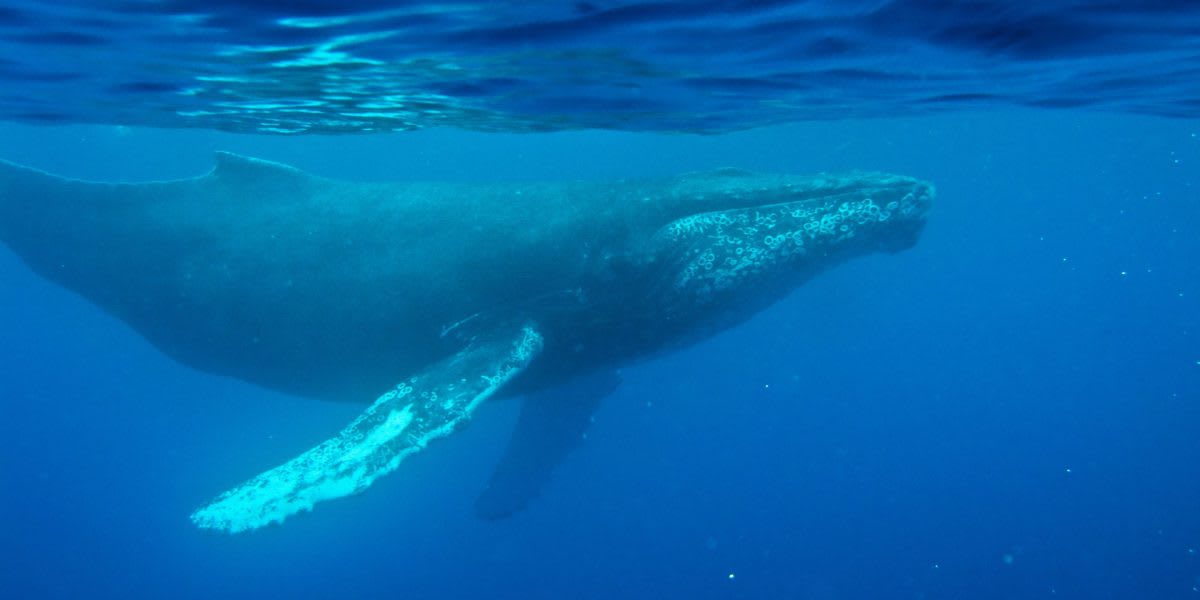
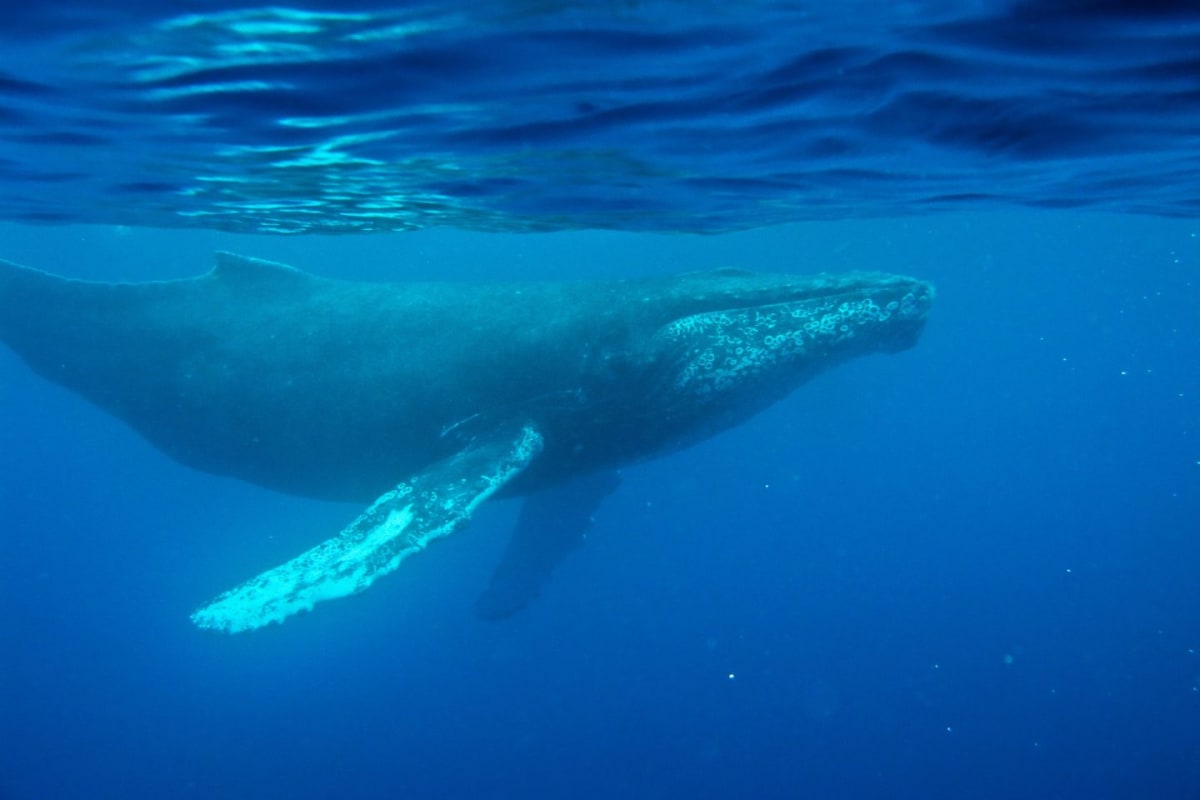
Humpback whales, which can weigh more than 55,000 pounds, are the ocean's most celebrated singers. Their complex vocalizations help them find food, navigate, locate each other, and make sense of their vast underwater world. The sounds are essential for survival, not just beautiful accidents of nature.
The Ripple Effect: This accidental recording from curious scientists three-quarters of a century ago is now helping researchers understand how human activity reshapes ocean life. By comparing the quiet waters of 1949 to today's noise-filled seas, scientists can better protect these gentle giants and advocate for quieter shipping practices that let whales communicate naturally.
Hansen Johnson, a research scientist at the New England Aquarium who wasn't involved in the discovery, said the finding opens new doors for understanding whale behavior. "It's just beautiful to listen to and has really inspired a lot of people to be curious about the ocean, and care about ocean life in general," he said.
Sometimes the most important scientific discoveries are the ones that remind us how much the world has changed, and what we still have the power to protect.
More Images



Based on reporting by Google News - Scientists Discover
This story was written by BrightWire based on verified news reports.
Spread the positivity!
Share this good news with someone who needs it