Scientists Find Path to Save Vanishing Wildlife Worldwide
A groundbreaking study reveals that protecting Earth's vertebrates requires tackling multiple threats at once, not just habitat loss. The research offers hope that coordinated conservation efforts can actually reverse population declines.
Scientists just figured out why saving wildlife has been so hard, and the answer might make conservation work better than ever.
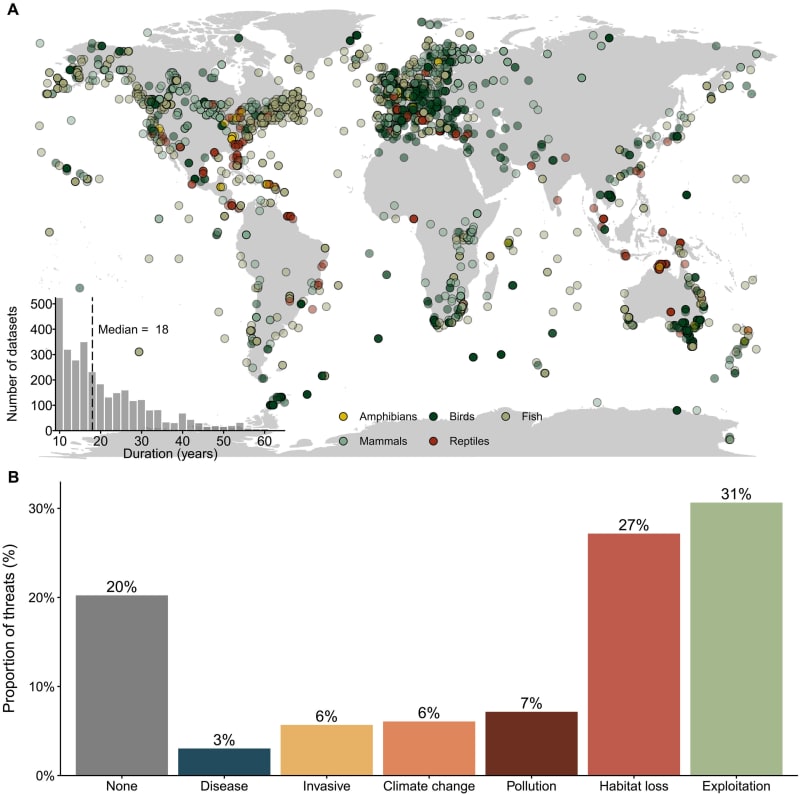
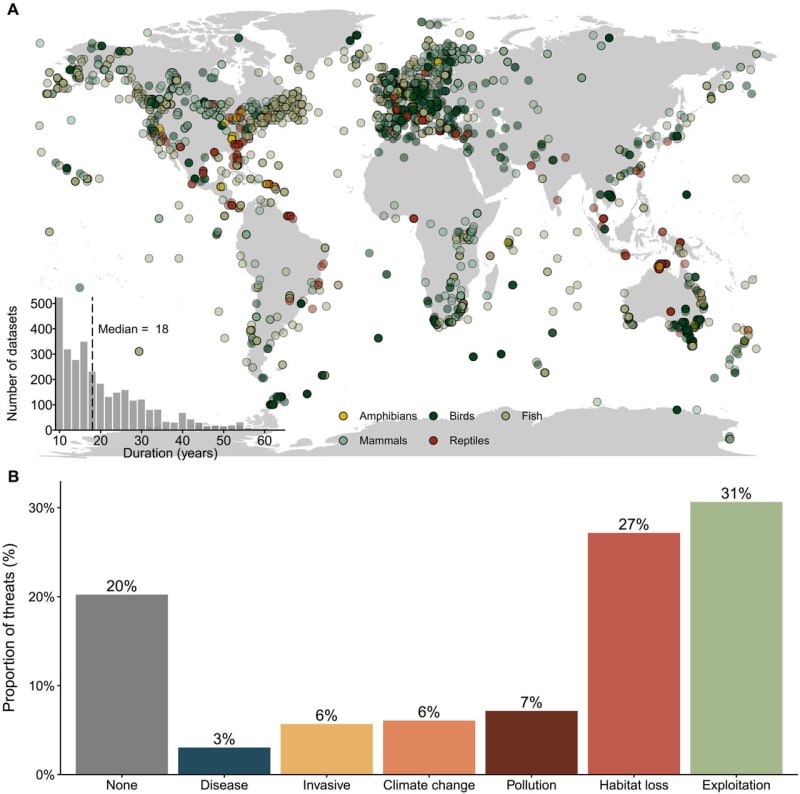
Researchers from the University of Barcelona and University of Bristol analyzed 3,129 animal populations across every continent and discovered something surprising. The threats we've focused on most aren't the ones causing the fastest declines.
For decades, conservationists assumed habitat loss and overexploitation were the biggest killers because they're the most common. But this study, published in Science Advances in February 2026, shows that invasive species, diseases, pollution, and climate change actually drive faster population crashes.
Lead researcher Pol Capdevila found that animals facing multiple threats simultaneously decline much faster than those dealing with just one problem. A frog losing its habitat is one thing, but a frog losing habitat while fighting disease and invasive predators faces a crisis.
Here's where it gets interesting. The threats don't multiply each other's damage as scientists feared. They add up instead, which means each problem solved makes a real difference.
The study covered freshwater, marine, and terrestrial vertebrates including fish, birds, mammals, reptiles, and amphibians. Amphibians came out particularly vulnerable, hit hardest by the combination of multiple threats.
Why This Inspires
The research delivers genuinely good news hidden in concerning data. Yes, animals face serious challenges, but we now know exactly what to do about it.
Conservation efforts targeting just one threat won't reverse global declines. But strategies addressing multiple problems simultaneously can bring population trends from negative to positive. That's not theoretical, it's based on real population data from around the world.
Climate policies emerge as especially important since climate change combines with other threats to accelerate declines. Protecting habitat while ignoring pollution and invasive species won't work, but comprehensive approaches can.
The study represents what Capdevila calls a paradigm shift from traditional conservation thinking. Instead of picking the most common threat and throwing resources at it, effective strategies must coordinate across multiple fronts.
This matters because conservation budgets are limited and every dollar needs to work. Now scientists and policymakers have a roadmap showing where combined efforts will have the biggest impact.
The research proves that reversing biodiversity loss isn't impossible, it just requires smarter, more coordinated action than we've been taking.
More Images


Based on reporting by Phys.org
This story was written by BrightWire based on verified news reports.
Spread the positivity!
Share this good news with someone who needs it