Scientists Find Star Signal That Could Prove Einstein Right
Researchers discovered a rare pulsar near the Milky Way's center that spins 122 times per second. This cosmic lighthouse could help test Einstein's general relativity near a supermassive black hole.
Scientists just found something extraordinary at the heart of our galaxy: a rapidly spinning dead star that could unlock new secrets about how the universe works.
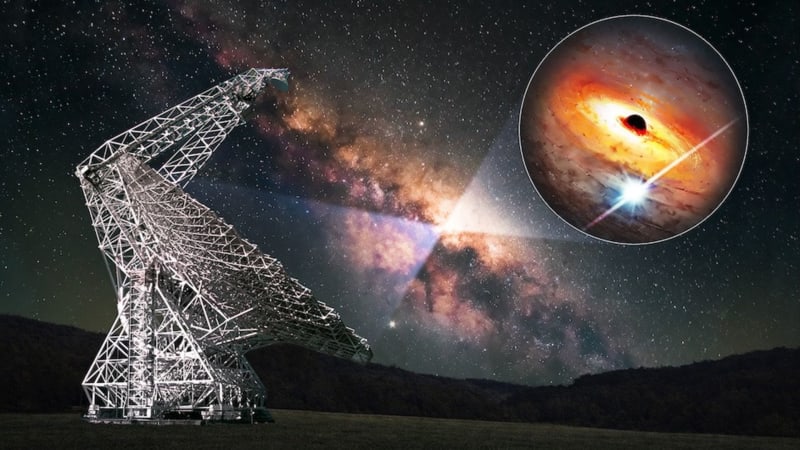
The discovery is a pulsar, the ultradense core of an ancient giant star that rotates every 8.19 milliseconds. That's 122 complete spins every single second, sending beams of radio waves strobing across space like a cosmic lighthouse.
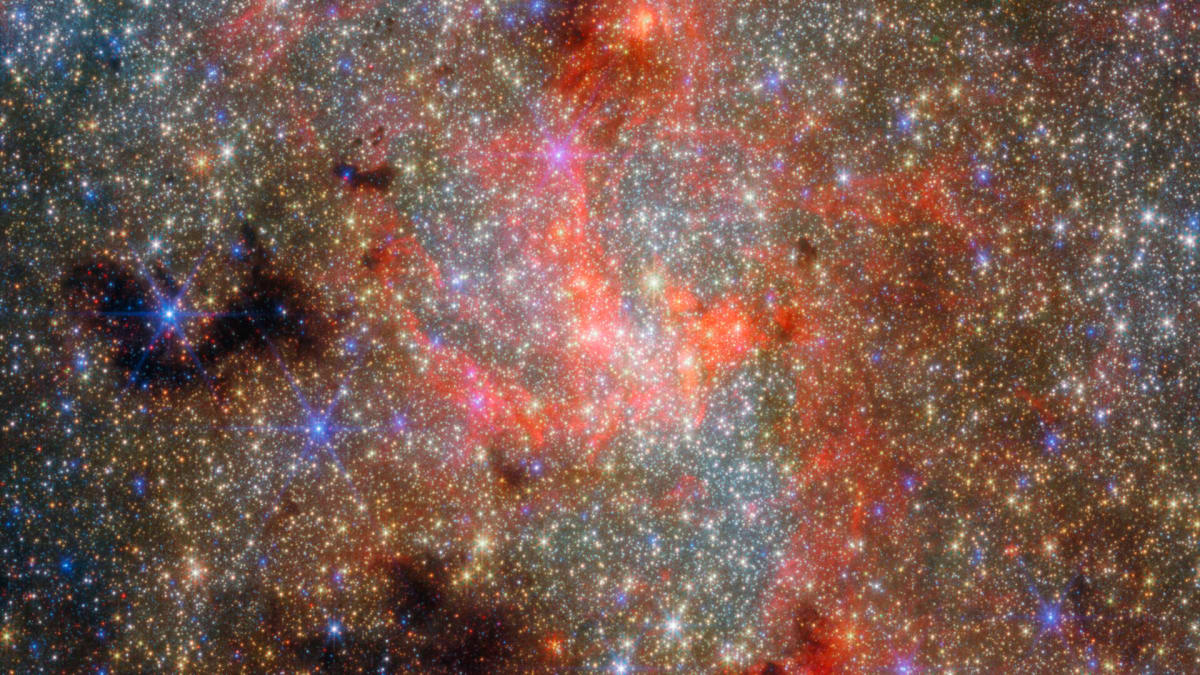
What makes this finding special is where it sits: right next to Sagittarius A*, the supermassive black hole at the center of the Milky Way. That black hole weighs as much as 4 million suns, making it the perfect laboratory for testing Einstein's century-old theory of general relativity.
Karen Perez, a researcher at the SETI Institute who led the study, says the pulsar could help scientists make precision measurements of space and time around the black hole. The findings appeared this week in The Astrophysical Journal.
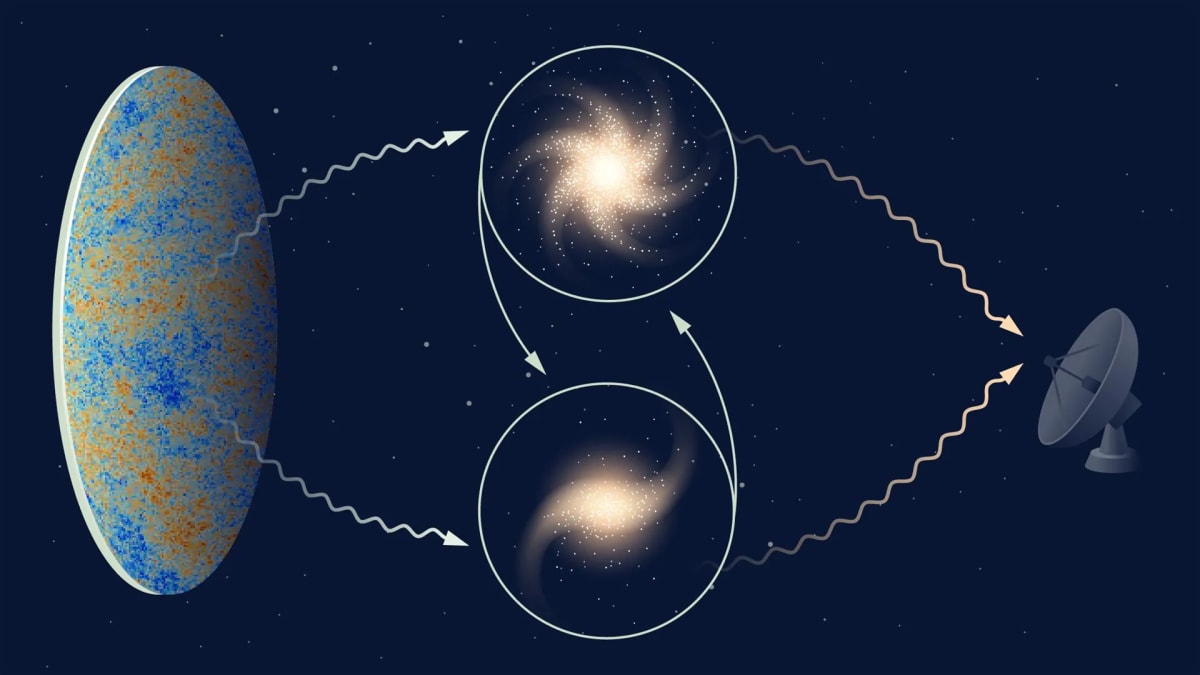
Pulsars spin so fast and so steadily that they're incredibly sensitive to gravity from nearby massive objects. When their light pulses travel near something as heavy as a supermassive black hole, those pulses get bent and delayed by the warping of space-time, exactly as Einstein predicted.
"When the pulses travel near a very massive object, they may be deflected and experience time delays," explained study co-author Slavko Bogdanov from Columbia University. These tiny timing anomalies could reveal whether Einstein's equations hold up in the most extreme environments in the universe.
The team found the signal using Breakthrough Listen, a program that searches for signs of alien civilizations. While they were hunting for extraterrestrial signals at the galactic center, they stumbled upon this natural cosmic beacon instead.
Why This Inspires
This discovery shows how searching for answers to one question can lead to breakthroughs in completely unexpected places. The same tools designed to find alien life are now helping us understand the fundamental rules that govern reality itself.
The researchers released all their data publicly, inviting scientists worldwide to analyze it and make their own discoveries. That spirit of collaboration turns one team's finding into everyone's opportunity.
Further observations will confirm whether the signal truly is a pulsar, but the possibility alone has scientists excited about what we might learn next about the universe's deepest mysteries.
More Images



Based on reporting by Live Science
This story was written by BrightWire based on verified news reports.
Spread the positivity!
Share this good news with someone who needs it