Scientists Find Vast Freshwater Lake Under Great Salt Lake
Researchers discovered a massive freshwater reservoir hiding beneath Utah's shrinking Great Salt Lake, offering unexpected hope as the state faces its worst drought in decades. The ancient water, trapped thousands of feet underground, could help fight toxic dust clouds threatening nearby communities.
Just when Utah's water crisis seemed hopeless, scientists found an ocean of fresh water hiding in plain sight beneath the state's most troubled lake.
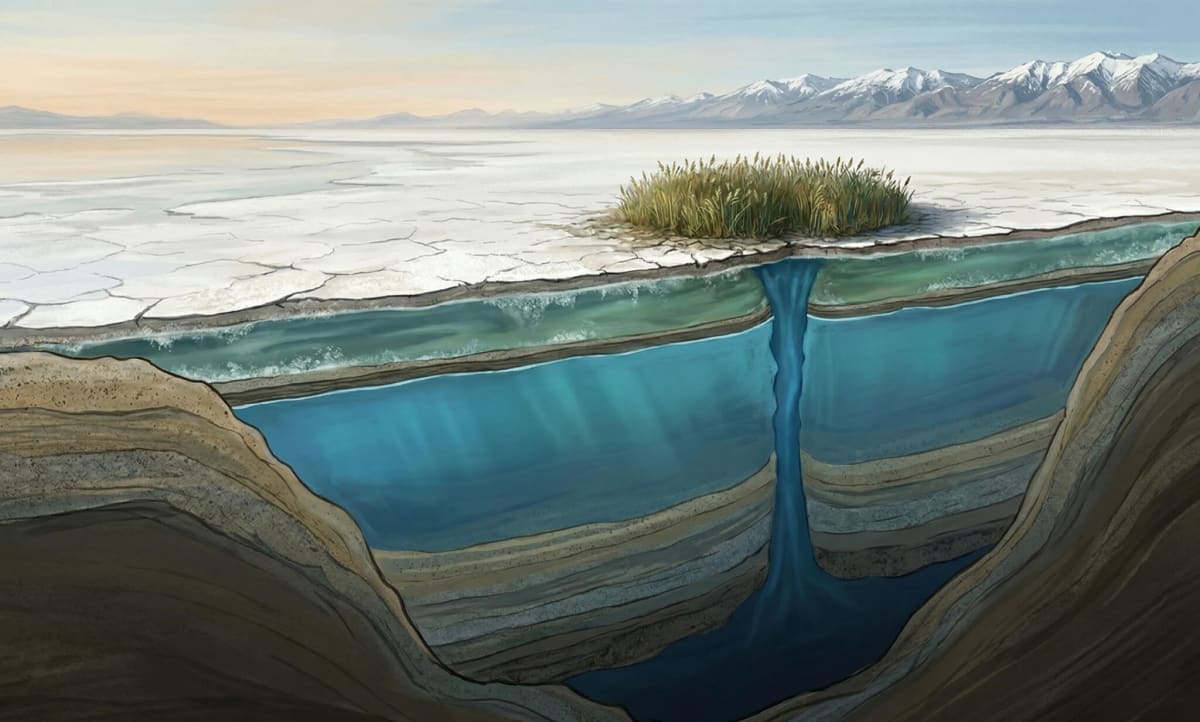
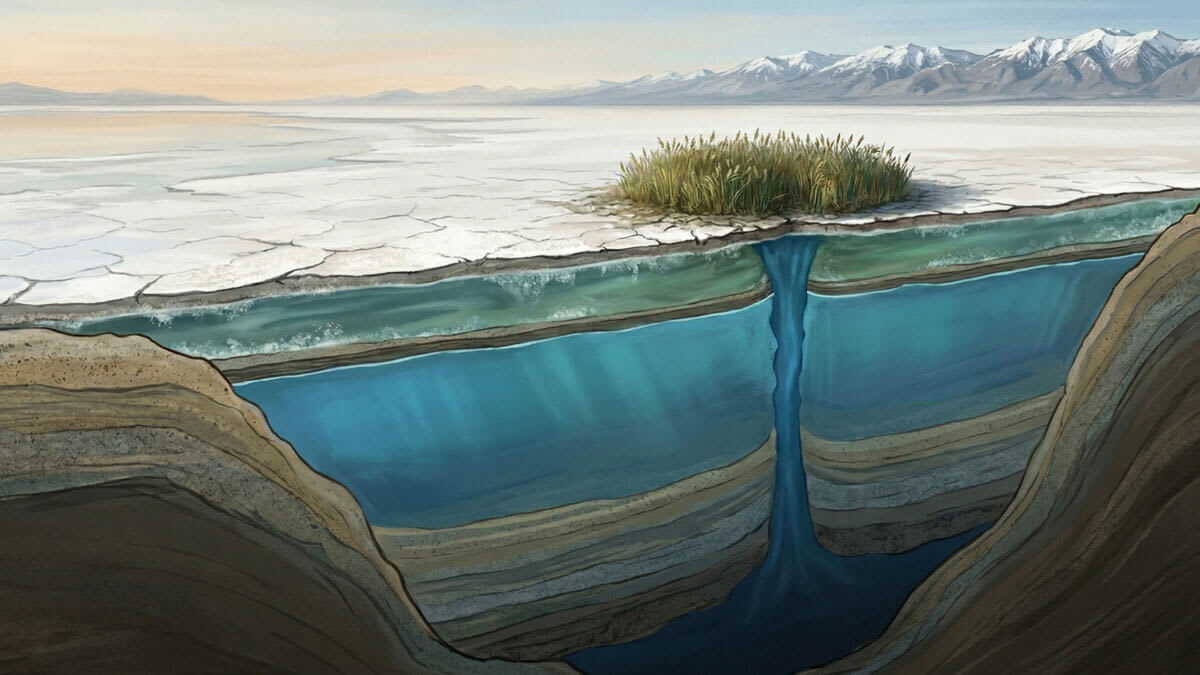
University of Utah researchers discovered freshwater saturated sediments stretching up to 2.5 miles deep below the Great Salt Lake's salty surface. The finding, published in February in Scientific Reports, reveals that only a thin 30 to 50 foot layer of brine separates the hypersaline lake from a potentially enormous freshwater reservoir below.
The timing couldn't be more striking. Utah just recorded its worst winter snowpack on record, with measurements peaking three weeks early at historic lows. As the Great Salt Lake continues shrinking, it has exposed 800 square miles of dried lakebed that now sends toxic dust into communities along the Wasatch Front.
The discovery came from an unexpected place. Strange circular mounds covered in 15 foot tall reeds started appearing on Farmington Bay's dried out bed. Scientists traced these "phragmites oases" to spots where pressurized freshwater was breaking through the brine layer and reaching the surface.
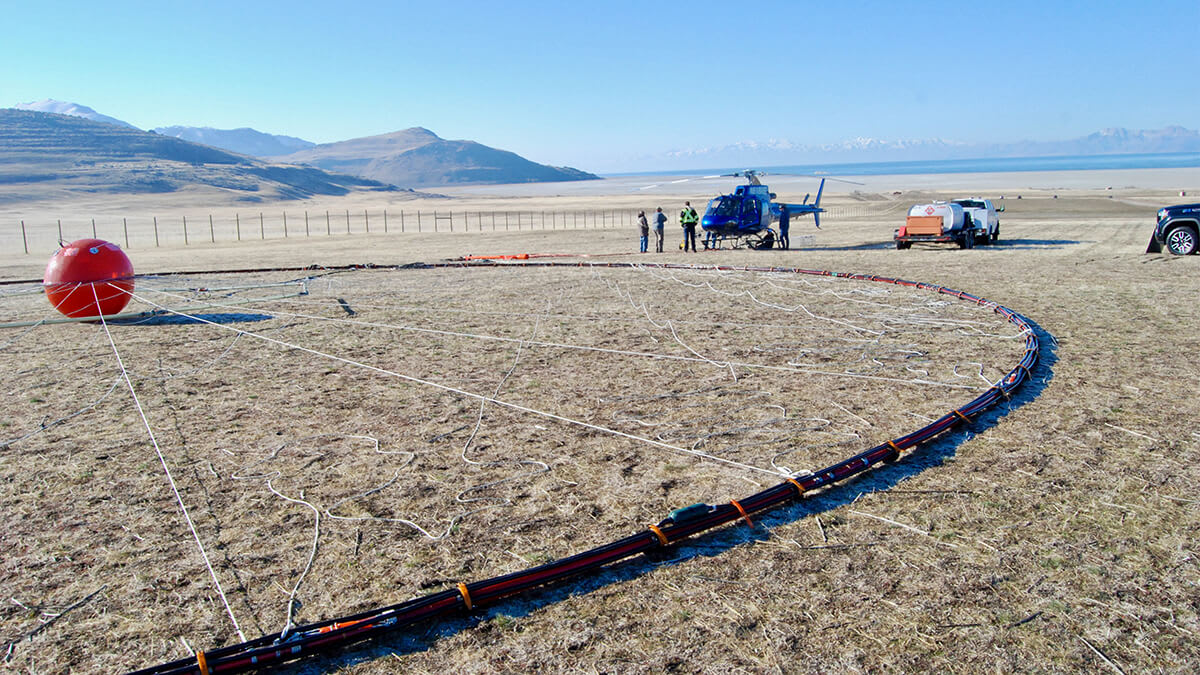
That led researchers to conduct a helicopter survey using electromagnetic equipment that essentially X rayed the geology below. Flying 248 kilometers in a single day last February, the team mapped the boundary between salt and fresh water underground. Direct water samples from drilled cores confirmed what the scans revealed.
Some of this water may be 15,000 years old. Ancient Lake Bonneville once covered the entire region as a massive freshwater lake. When the climate shifted and the lake shrank into today's Great Salt Lake, freshwater became trapped beneath the lakebed, fed over millennia by groundwater flowing from the Wasatch Mountains.
Professor Bill Johnson, who co authored the study, said conventional thinking held that dense brine would fill the entire space beneath the lake. Instead, freshwater appears to push far toward the lake's interior in ways that defy expectations.
The Bright Side
The hidden reservoir offers a practical solution to one of Utah's most pressing problems. Researchers believe the artesian groundwater could be carefully tapped to wet the most active dust hotspots on the exposed lakebed without disrupting the broader freshwater system.
"To me, that's a primary objective because it's very practical," Johnson said. "This would be a great way to get at that."
The pilot study covered only a narrow slice of the lake's 1,500 square mile footprint, so researchers are seeking funding to map the entire area. The same survey technique could potentially locate hidden freshwater beneath struggling terminal lakes worldwide.
The team is working with Utah's Department of Natural Resources and the Great Salt Lake Commissioners' Office to determine the reservoir's full scale and whether it can help save both the lake and the communities depending on it.
More Images


Based on reporting by Google News - Researchers Find
This story was written by BrightWire based on verified news reports.
Spread the positivity!
Share this good news with someone who needs it