Scientists Find Way Life Could Thrive on Jupiter's Moon
Researchers discovered how nutrients might reach the ocean beneath Europa's icy surface, boosting hopes that life exists on Jupiter's moon. The breakthrough uses a process borrowed from Earth's geology to solve a puzzle that has stumped scientists for years.
Jupiter's moon Europa just became one of the most promising places to find alien life in our solar system.
Scientists at Washington State University figured out how life-sustaining nutrients could travel from Europa's frozen surface down to the massive ocean hidden beneath. The discovery tackles a problem that has puzzled researchers for decades: how anything useful for life could make it through miles of solid ice.
Europa holds more liquid water than all of Earth's oceans combined. But that water sits beneath a thick ice shell that blocks out sunlight, and the moon gets constantly blasted by intense radiation from Jupiter.
Here's where it gets exciting. That radiation actually creates helpful nutrients when it hits the salts and materials on Europa's surface. The question was always how those nutrients could sink down to where scientists think microscopic life might exist.
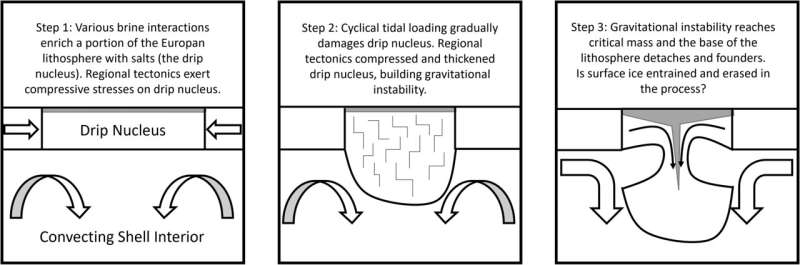
Austin Green, a postdoctoral researcher at Virginia Tech who led the study, found inspiration in an unexpected place. He looked at crustal delamination, a process here on Earth where dense rock breaks away and sinks into the planet's mantle.
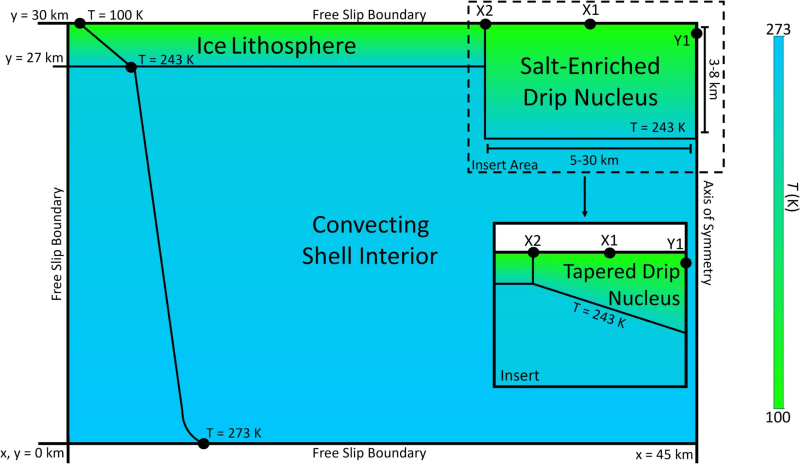
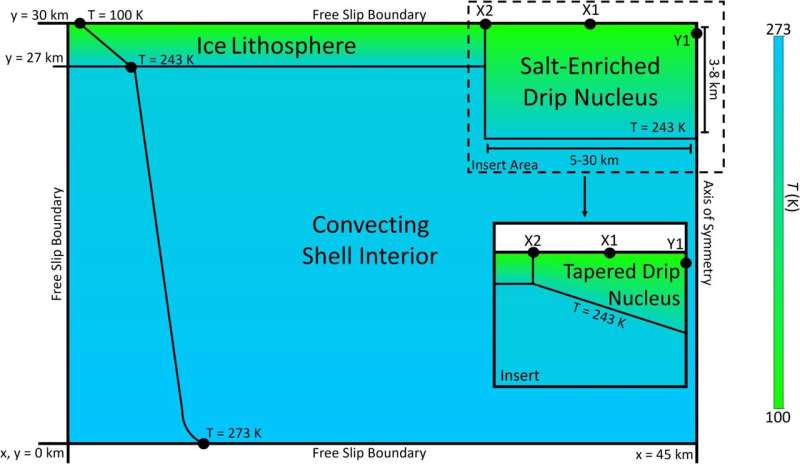
The team realized the same thing could happen on Europa. Salt makes ice denser and weaker, so salty surface ice surrounded by pure ice would naturally want to sink.
Using computer models, they proved that nutrient-rich ice can drop all the way through the ice shell and reach the ocean below. It works for almost any salt content, as long as the surface ice weakens just a little. Even better, the process happens relatively quickly and could feed Europa's ocean on a regular basis.
Why This Inspires
This discovery shows how looking at familiar Earth processes through fresh eyes can unlock mysteries millions of miles away. Green called it "a novel idea in planetary science, inspired by a well-understood idea in Earth science."
The timing couldn't be better. NASA's Europa Clipper mission launched in 2024 specifically to study the moon's ice shell, ocean, and potential for life. This new research gives the mission's instruments clear targets to investigate.
Catherine Cooper, associate professor at WSU who worked on the study, helped prove that Europa's surface could recycle itself in ways scientists hadn't considered. The findings appeared in The Planetary Science Journal and directly support the Clipper mission's goals.
The research doesn't prove life exists on Europa, but it shows the moon has a realistic way to sustain it. A hidden ocean with a constant supply of nutrients sounds a lot like a place where life could take hold.
Finding life beyond Earth would be one of humanity's greatest discoveries, and we just got a clearer roadmap for where to look.
More Images
Based on reporting by Phys.org
This story was written by BrightWire based on verified news reports.
Spread the positivity!
Share this good news with someone who needs it