Scientists Free Electrons to Make Impossible Molecules
Chemists just broke a decades-old barrier that prevented them from making certain useful molecules. By releasing electrons directly into solution, they've unlocked reactions that could lead to new life-saving drugs and advanced materials.
Scientists have just figured out how to break a rule that has limited chemistry for decades, opening doors to create molecules that were once nearly impossible to make.
Researchers at the University of Wisconsin-Madison, working with teams from Colorado State University and the University of Colorado Boulder, developed a breakthrough catalyst that changes how electrons behave during chemical reactions. Their work, published in Nature, could revolutionize how chemists build everything from life-saving medications to high-tech materials.
For years, chemists have relied on single-electron transfer to activate stubborn molecules and make them react. But there was always a catch: when two molecules competed for an electron, the electron always went to whichever molecule was easier to reduce. That natural preference blocked researchers from exploring other potentially valuable reaction pathways.
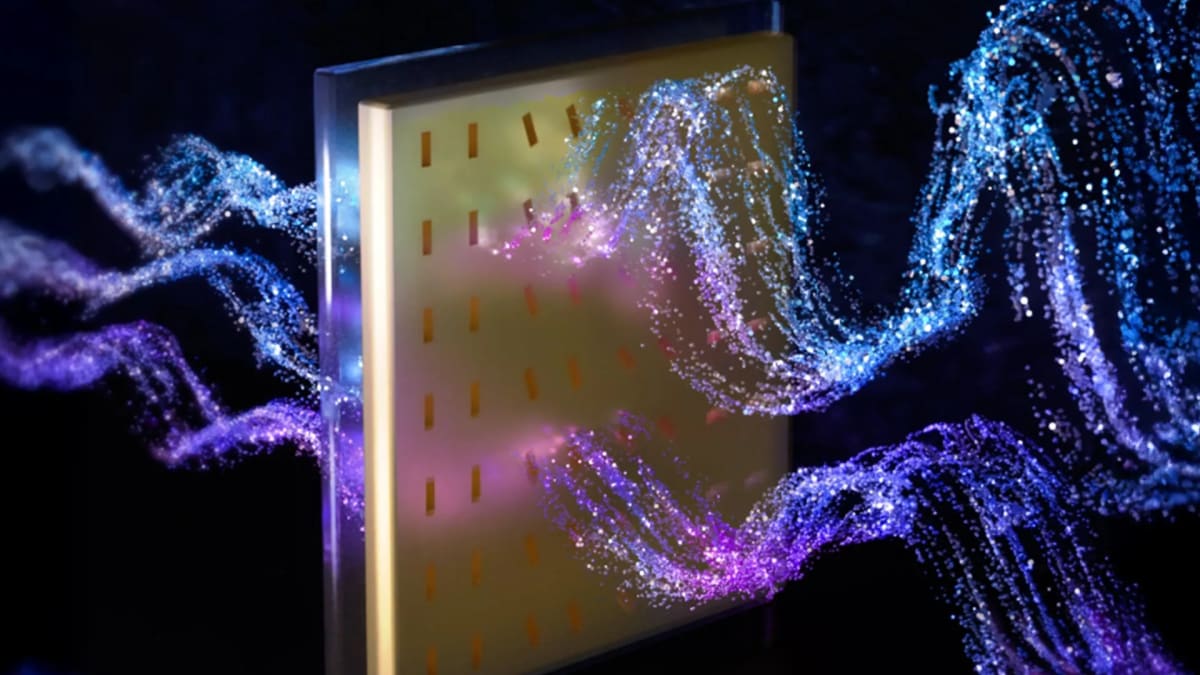
The Wisconsin team found a workaround by releasing electrons directly into the surrounding solution instead of controlling which molecule receives them. "Our catalyst works a bit differently because it actually just ejects the electron directly into solvent," says Professor Zachary Wickens, who led the study.
Once free in solution, an electron becomes extremely reactive. It's so eager to attach to something that it will grab onto the first molecule it encounters, even if that molecule wouldn't normally be the preferred recipient. That simple change rewrites the usual rules.
The Ripple Effect extends far beyond the laboratory. The catalyst could enable chemists to create entirely new classes of molecules for medical treatments, sustainable materials, and technologies that mimic biological processes. The team spent five years developing this family of catalysts, and their patience paid off with a fundamentally new approach to designing chemical reactions.
The Colorado teams helped explain why this unexpected selectivity works. Robert Paton's computational studies at Colorado State revealed that the crucial selection happens after electron transfer, not during it. The desired molecule continues toward the final product, while the molecule that would normally win gets recycled back to its starting material.
"This is not just another synthetic method; it's a new way to design redox reactions," Wickens explains. By changing when and where reaction selectivity is determined, chemists can now access coupling reactions that were previously out of reach.
The breakthrough demonstrates how creative thinking can overcome limitations that seemed permanent, opening pathways to molecules that could improve countless lives.
Based on reporting by Science Daily
This story was written by BrightWire based on verified news reports.
Spread the positivity!
Share this good news with someone who needs it