Scientists Give Corn Its Wild Roots Back to Cut Fertilizer
Researchers are reintroducing wild traits from corn's ancestor into modern crops, helping plants compete better for nitrogen and potentially slashing fertilizer needs. The breakthrough could make corn farming cheaper and more sustainable while keeping harmful chemicals out of waterways.
What if the secret to making modern farming more sustainable was hiding in corn's wild past all along?
Scientists at the University of Arizona have discovered that bringing back certain traits from teosinte, the wild grass that became modern corn thousands of years ago, could revolutionize how crops use fertilizer. The findings could help farmers spend less on nitrogen while protecting nearby streams and groundwater from chemical runoff.
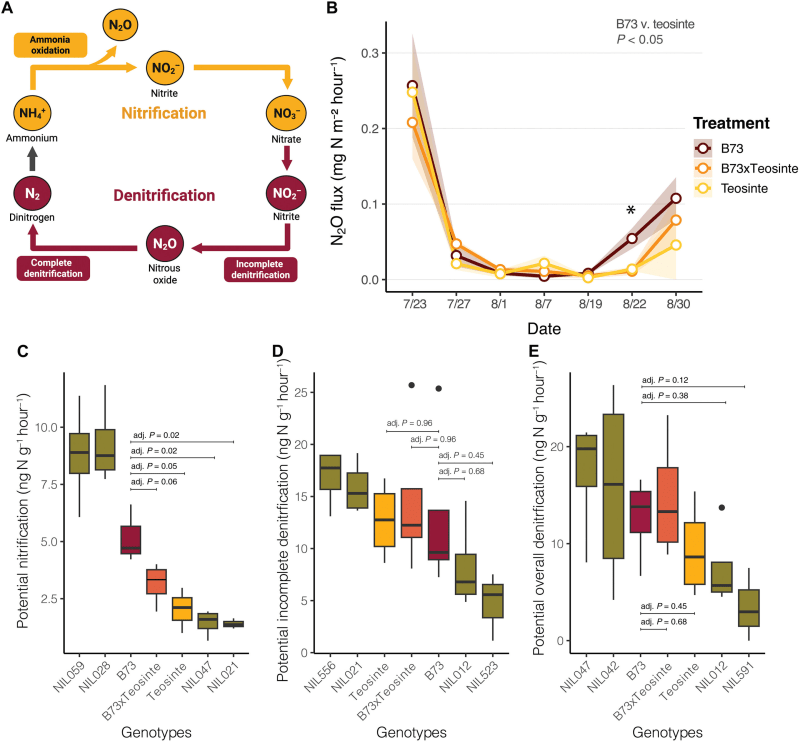
Here's the problem they're solving: plants only absorb about half the nitrogen fertilizer spread on fields. The rest gets transformed by soil microbes into gases that escape into the atmosphere or chemicals that leach into water systems. It's expensive for farmers and harmful to the environment.
Lead researcher Alonso Favela and his team compared modern corn with versions carrying specific inherited traits from teosinte. They found something remarkable happening underground in the rhizosphere, the thin layer of soil surrounding plant roots where microbes and plants interact.
Wild teosinte competes aggressively with nitrogen hungry microbes in the soil, but modern corn has lost that competitive edge. Bred for thousands of years in nitrogen rich fields, today's corn doesn't need to fight for nutrients because fertilizer provides plenty.
The research team grew different corn varieties side by side at the University of Illinois, analyzing how their roots interacted with soil microbes throughout the growing season. They discovered that corn carrying teosinte traits releases different chemical signals from its roots, reshaping the entire microbial community around them.
These chemical compounds help the plant grab nitrogen before microbes can transform it into forms that escape the field. More nitrogen stays available for the crop instead of feeding microbes that don't contribute to yield or drifting away as pollution.
The team mapped the specific genetic regions responsible for these changes and confirmed the mechanism in follow up experiments. The inherited traits alter plant chemistry in ways that fundamentally change how roots and microbes share resources.
Why This Inspires
This research represents a new way of thinking about sustainability in agriculture. Instead of developing entirely new crops through complex genetic engineering, scientists are reconnecting modern plants with traits tied to their evolutionary history.
Other researchers are already exploring wild crop relatives for heat tolerance and pest resistance. Favela's team focuses on the hidden world beneath our feet, where ancestral wisdom about competing for nutrients could transform modern farming.
The potential impact extends beyond individual farms. Lower fertilizer inputs mean reduced costs for farmers and less nitrogen pollution affecting communities downstream. It's a solution that makes economic and environmental sense simultaneously.
The research team is now exploring how to scale these findings to commercial agriculture, potentially breeding teosinte derived genes into elite corn varieties farmers already trust and grow.
One day soon, looking backward to corn's wild roots might be exactly what moves agriculture forward.
More Images
Based on reporting by Phys.org
This story was written by BrightWire based on verified news reports.
Spread the positivity!
Share this good news with someone who needs it