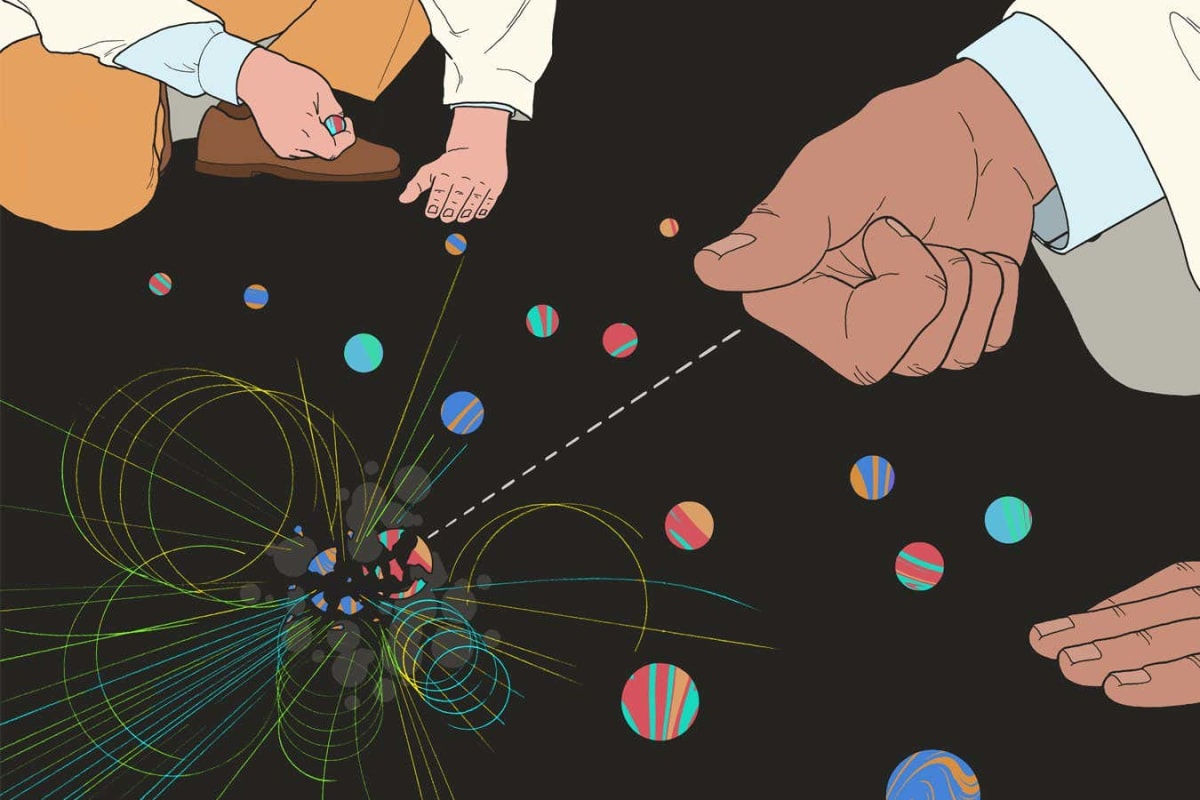
Scientists Make Big Step Toward Revolutionary New Collider
A once-fanciful particle collider that seemed impossible to build is now getting serious funding attention. The muon collider could unlock mysteries about our universe that current machines can't solve.
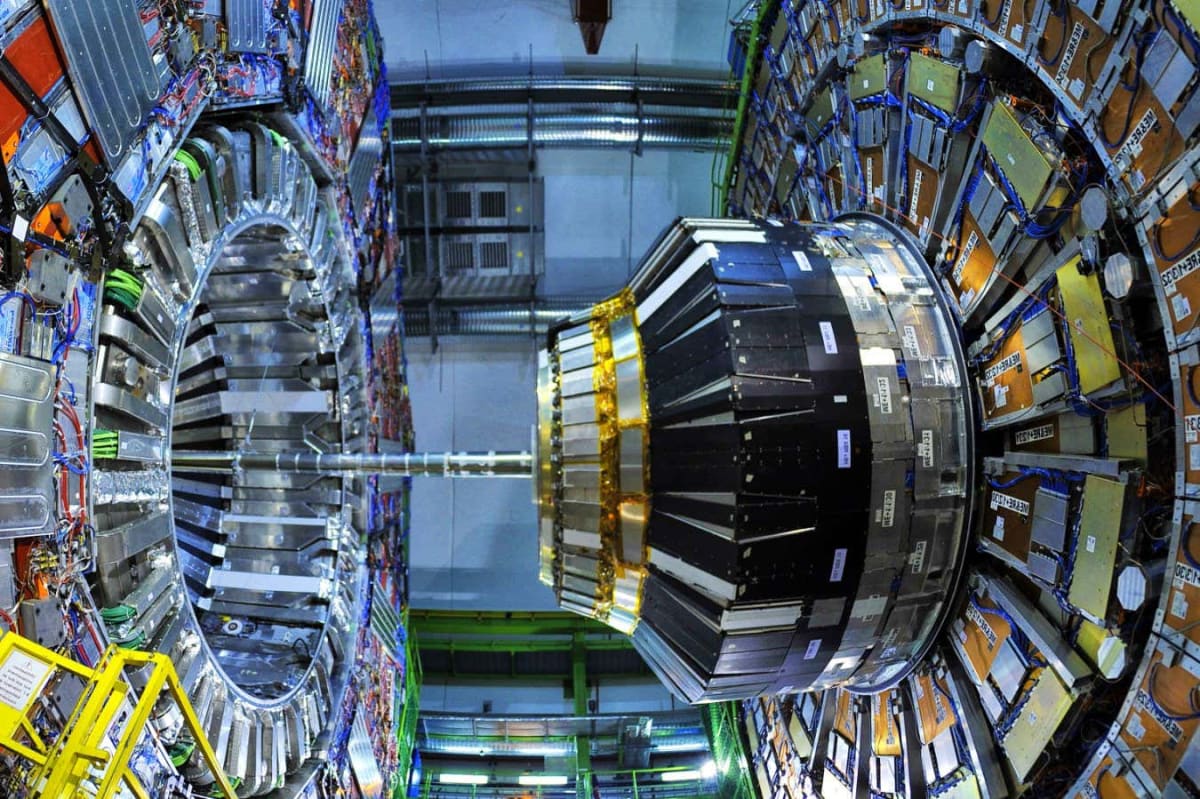
Physics researchers are watching an exciting idea come to life: a particle collider that could answer questions about reality itself while fitting in a space not much bigger than what we already have.
The muon collider was once dismissed as fantasy. After all, muons are particles that exist for only a fraction of a second. But new technology is making this ambitious machine possible, and funding organizations are taking it seriously.
Tova Holmes from the University of Tennessee knows how to build excitement. In 2022, she and colleagues showed up to a physics meeting wearing T-shirts with one simple message: BUILD. The shirts represented their dream of creating something that could revolutionize particle physics.
The timing couldn't be better. The famous Large Hadron Collider near Geneva discovered the Higgs boson in 2012, a triumph that confirmed theories from half a century earlier. But that discovery raised more questions than answers, and the LHC hasn't made major breakthroughs since.
The Higgs boson's mass is mysteriously small. It sits at exactly the right level to keep space stable, but nobody knows why. "People talk about the Higgs discovery as the completion of particle physics," says Patrick Meade at Stony Brook University. "But it was really the most confusing answer. It was the start."
Finding those answers requires a new approach. Building a bigger version of the LHC would work, but it would cost enormous amounts of money. Linear colliders offer cleaner data but can't reuse particles like circular ones can.
The Bright Side
The muon collider offers the best of both worlds. Muons are 200 times heavier than electrons, which means they can reach much higher energies without needing a massive tunnel. They're also fundamental particles, so their collisions produce cleaner, easier-to-read data than proton smashers.
According to design studies, a muon collider could push four times beyond our current energy limits while fitting in a ring similar in size to the LHC. That means discovering new particles and phenomena without the impossible price tag of building something three times larger.
The shift from impossible dream to serious consideration shows how persistence pays off. What seemed like science fiction just a few years ago is now attracting real funding interest. Holmes and her colleagues are watching their BUILD campaign gain momentum.
The next generation of particle physics is taking shape, and it might just fit in our current backyard while opening doors to parts of reality we've never seen before.
More Images



Based on reporting by New Scientist
This story was written by BrightWire based on verified news reports.
Spread the positivity!
Share this good news with someone who needs it