Scientists Make Exciting Breakthrough in Clean Energy with Common Metal
Researchers at Yale and the University of Missouri have discovered that manganese—an abundant and affordable metal—can power the next generation of sustainable fuel cells. This breakthrough could help transform carbon dioxide from a greenhouse gas into clean hydrogen fuel, paving the way for a greener future.
In a discovery that's sparking optimism in the clean energy world, scientists have found that one of Earth's most common metals could hold the key to sustainable fuel technology. Researchers at Yale University and the University of Missouri have successfully developed manganese-based catalysts that can efficiently convert carbon dioxide into formate—a compound that could revolutionize how we produce hydrogen for fuel cells.
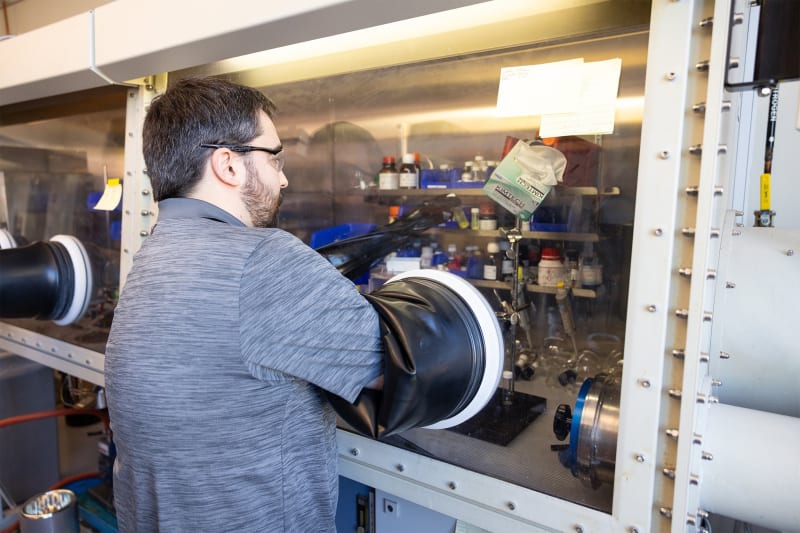
The breakthrough, published in the prestigious journal Chem, represents a significant step forward in making clean energy accessible and affordable for everyone. Led by Yale postdoctoral researcher Justin Wedal and Missouri graduate research assistant Kyler Virtue, working under professors Nilay Hazari and Wesley Bernskoetter, the team has solved a problem that has challenged scientists for years.
What makes this discovery so exciting is that manganese is not only abundant and inexpensive, but it's also far less toxic than the precious metals typically used in similar applications. "Carbon dioxide utilization is a priority right now, as we look for renewable chemical feedstocks to replace feedstocks derived from fossil fuels," explains Nilay Hazari, Yale's John Randolph Huffman Professor of Chemistry.
The innovative approach tackles two environmental challenges at once: it removes carbon dioxide—a greenhouse gas—from the atmosphere while simultaneously creating a valuable resource for clean energy production. Formate can serve as a hydrogen carrier for fuel cells, which work like batteries by converting chemical energy into electricity without harmful emissions.
The research team's key innovation was stabilizing the manganese catalysts by cleverly adding another donor atom into the ligand design. This simple but brilliant modification extended the catalytic lifetime so dramatically that these earth-abundant metal catalysts now outperform most precious metal alternatives. "I'm excited to see the ligand design pay off in such a meaningful way," Wedal shared enthusiastically.
What's particularly promising is that this approach isn't limited to just one application. The researchers believe their technique could be broadly applied to other catalytic transformations, opening doors to numerous sustainable chemical processes.
Currently, formic acid—the protonated form of formate—is already produced at industrial scale for use as a preservative, antibacterial agent, and tanning agent. However, traditional production methods rely on fossil fuels. This new discovery points toward a future where we can produce these essential chemicals sustainably while actually reducing atmospheric carbon dioxide.
The implications extend far beyond the laboratory. As the world seeks cost-efficient ways to produce and store hydrogen for widespread fuel cell adoption, breakthroughs like this bring us closer to cleaner transportation, more sustainable energy systems, and reduced dependence on fossil fuels.
This research exemplifies how scientific innovation can transform common materials into extraordinary solutions. By looking at abundant resources in new ways, these researchers are helping build a bridge to a more sustainable planet—and that bridge may well be paved with manganese.
Based on reporting by Phys.org - Technology
This story was written by BrightWire based on verified news reports.
Spread the positivity! 🌟
Share this good news with someone who needs it
More Good News
 🚀 Innovation
Norway's Flying Kite Technology Shows Exciting Future for Clean Energy Innovation
 🚀 Innovation
JinkoSolar's AI-Powered Partnership Heralds Exciting Solar Energy Breakthrough
 🚀 Innovation
Clean Energy Breakthrough: Fusion Power Plant Takes Major Step Toward Reality
Joke of the Day
Why did the librarian get kicked out of class?
Explore Categories
Quote of the Day
"Do not go where the path may lead, go instead where there is no path and leave a trail."
— Ralph Waldo Emerson