
Scientists Make Thrilling Discovery That Could Revolutionize Our Understanding of the Universe
An international team of astronomers has made an extraordinary discovery that challenges everything we thought we knew about galaxy formation. They've found a blazing hot galaxy cluster that formed much earlier than thought possible, opening exciting new doors for cosmic research and our understanding of the early universe.
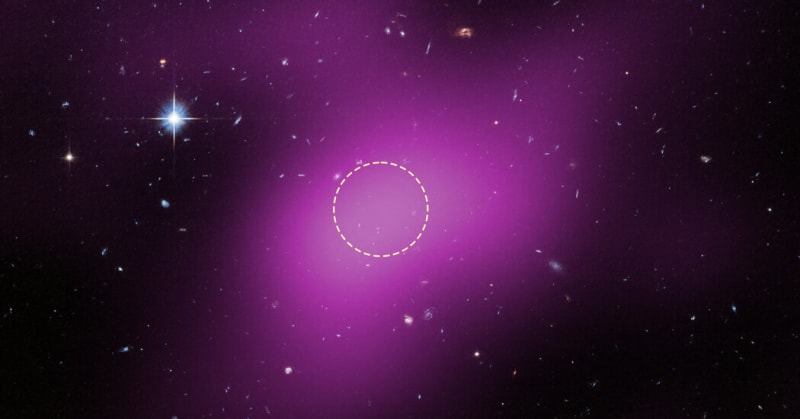
In a groundbreaking discovery that's sending ripples of excitement through the scientific community, astronomers have uncovered something truly remarkable: a galaxy cluster burning with incredibly hot gas just 1.4 billion years after the Big Bang. This finding, published in the prestigious journal Nature, represents a thrilling opportunity to expand our understanding of how the universe evolved.
Led by Canadian researchers at the forefront of astronomical discovery, the international team found themselves genuinely surprised by what they observed. "We didn't expect to see such a hot cluster atmosphere so early in cosmic history," explained lead author Dazhi Zhou, a PhD candidate at the University of British Columbia. The gas they discovered is at least five times hotter than predictions suggested, and remarkably, even hotter than what exists in many present-day clusters.
What makes this discovery particularly exciting is what it tells us about the dynamic, energetic nature of the early universe. The findings suggest that supermassive black holes were already hard at work, pumping enormous amounts of energy into their surroundings and actively shaping young galaxy clusters far earlier than scientists previously believed possible.
The research team focused their attention on SPT2349-56, an infant galaxy cluster that's proving to be quite the cosmic overachiever. Using the powerful Atacama Large Millimeter/submillimeter Array in Chile, they peered back approximately 12 billion years through time. What they found was extraordinary: this baby cluster contains more than 30 active galaxies and forms stars more than 5,000 times faster than our own Milky Way, all packed into a remarkably compact region.
Dr. Scott Chapman, a professor at Dalhousie University and co-author of the study, emphasized the significance of understanding galaxy clusters. "These massive galaxies mostly reside in clusters, and their evolution is heavily shaped by the very strong environment of the clusters as they form," he explained. Understanding these cosmic nurseries is essential to understanding how the biggest galaxies in the universe came to be.
This discovery opens up fascinating new questions and research opportunities. Current models suggested that galaxy clusters heat up gradually as they mature and stabilize. However, this new evidence points to a much more explosive and energetic birth process, suggesting the universe's infancy was even more dynamic and active than we imagined.
The research team is now eagerly pursuing answers to compelling questions: How do intense star formation, active black holes, and superheated atmospheres all interact simultaneously in such young systems? What does this tell us about the formation of present-day galaxy clusters?
"We want to figure out how all the pieces fit together," said Zhou enthusiastically. This discovery doesn't just challenge existing models—it invites scientists worldwide to reimagine the sequence and speed of cosmic evolution, promising exciting advances in our understanding of the universe's magnificent history.
As researchers continue investigating this remarkable finding, we're reminded of how much wonder remains to be discovered in our cosmos, and how each new observation brings us closer to understanding our place in this vast, dynamic universe.
Based on reporting by Reddit - Space
This story was written by BrightWire based on verified news reports.
Spread the positivity! 🌟
Share this good news with someone who needs it
More Good News
 🚀 Innovation
China's Fusion Reactor Smashes 30-Year Energy Barrier in Hefei Breakthrough
 🚀 Innovation
Tech Billionaire Eric Schmidt to Fully Fund New Hubble Space Telescope
 🚀 Innovation
Astronomers Discover Cloud-9: A Cosmic Fossil That Unlocks Universe's Secrets
Joke of the Day
Why did the dog apply for a job at the bank?
Explore Categories
Quote of the Day
"The greatest thing you'll ever learn is just to love and be loved in return."
— Moulin Rouge (from the film, popularized by Ewan McGregor)