Scientists Map Ancient Ancestor, Find Links to Rare Diseases
Scientists at UT Austin mapped the protein networks of a billion-year-old organism that gave rise to all complex life, uncovering hundreds of genes connected to human diseases. The breakthrough has already helped identify genetic causes of three rare disorders.
Scientists just created a map of life from over a billion years ago, and it's helping solve medical mysteries today.
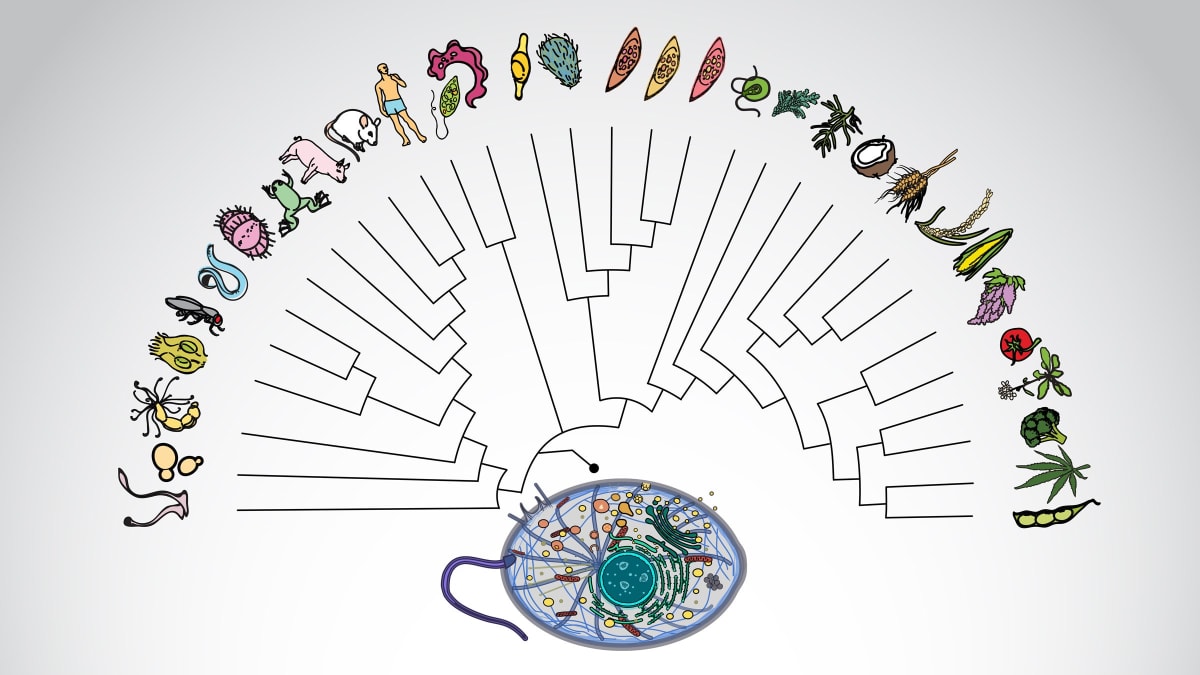
Researchers at the University of Texas at Austin reconstructed the most detailed picture yet of the molecular machines inside an ancient single-celled organism called LECA. This tiny ancestor, which lived 1.5 to 1.8 billion years ago, gave rise to every complex living thing on Earth today, from redwood trees to dolphins to humans.
The team analyzed 156 modern species to identify which genes and proteins were likely present in LECA. Then they ran more than 25,000 experiments across 31 species to figure out how these proteins worked together like tiny machines inside cells.
These molecular machines do critical jobs: making energy, transporting materials, building structures, and removing waste. Because they're so essential, versions of them have been passed down through evolution for over a billion years.
When genes that build these machines break, serious diseases can result. That's where the breakthrough comes in.
The researchers used their ancient map to identify hundreds of genes previously unknown to be linked to human diseases. They've already confirmed connections to three rare conditions: osteopetrosis (a bone disorder), end-stage kidney disease, and short-rib thoracic dysplasia (a skeletal condition).
The discovery was made possible by supercomputers at the Texas Advanced Computing Center, which analyzed the massive dataset. The team used frog and mouse models to verify the disease connections, and they consulted human patient data to confirm the findings.
Former UT doctoral student Rachael Cox, who led the data analysis, explained that many diseases can be predicted by studying these ancient protein networks. The genes are so fundamental that similar versions exist across the tree of life.
The Ripple Effect
This research opens doors for understanding countless other diseases with unknown genetic causes. The map serves as a treasure trove for future discoveries, giving scientists a powerful new tool to investigate conditions that have puzzled medical researchers for years.
The work also reveals our deep connection to all complex life on Earth. About half of human genes can be traced back to LECA, and we share versions of these same genes with organisms across the planet.
Professor Edward Marcotte, who led the research, encourages us to look around at other organisms with fresh perspective. That plant in your window, the family dog, even pond algae share fundamental genetic machinery with you.
The team plans to continue using animal models to verify more gene-disease associations revealed by the map. Each discovery could lead to better diagnostics, treatments, or even cures for rare conditions that affect thousands of families.
Looking at a cartoon of this ancient ancestor is like seeing your own great-great-great grandparent to the nth degree, and that shared heritage is now helping heal people today.
More Images



Based on reporting by Google News - Scientists Discover
This story was written by BrightWire based on verified news reports.
Spread the positivity!
Share this good news with someone who needs it