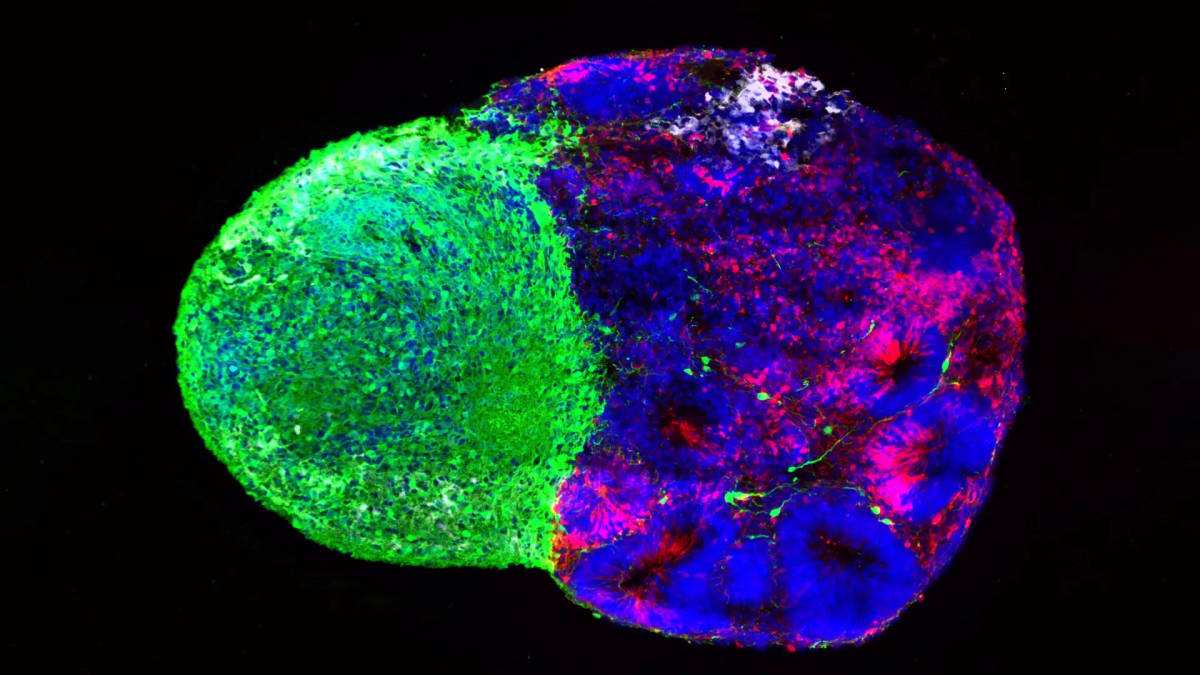
Scientists Map Complete Fruit Fly Brain in Neuroscience First
Harvard and Princeton researchers have published the first complete wiring diagram of a fruit fly's entire nervous system, revealing how 160,000 neurons connect to control complex behaviors. The free online tool could unlock new understanding of how all nervous systems work.
Scientists just handed neuroscience researchers everywhere a gift that could transform how we understand the brain and body connection.
A large international team led by Harvard Medical School and Princeton University has published the first complete map of every neural connection in an adult fruit fly's central nervous system. The achievement, published in Nature, includes all 160,000 neurons in both the brain and nerve cord (the fly's version of a spinal cord).
Think of it as Google Maps for the nervous system. For the first time, researchers can trace exactly how information flows from sensation to action through an entire working brain and body system.
"We can see all of the neurons and their connections as a complete unit for the first time," said Rachel Wilson, senior author and professor of neurobiology at Harvard Medical School. The detailed diagram shows precisely how each neuron connects to every other neuron at the synapse level.
The team created thousands of thin slices from a single fruit fly, captured millions of electron microscope images, then used AI tools to stitch everything into a cohesive 3D map. The painstaking process paid off with surprising discoveries right away.
One key finding challenges long-held assumptions about how brains control bodies. Many fruit fly behaviors turn out to be controlled by local neural circuits in specific body parts rather than a central command hub in the brain. It's like discovering your neighborhood has its own power grid instead of relying entirely on the main station downtown.
Why study fruit flies? Despite their simple nervous system, these tiny creatures navigate, learn, interact socially, and respond to sensory cues with remarkable sophistication. They're easy to breed in labs and come with what researchers call an incredibly sophisticated genetic toolkit for studying individual neurons.
The complete connectome builds on a 2024 brain-only map published by the FlyWire Consortium. Adding the nerve cord was crucial because those neurons handle the most useful functions for understanding behavior: sensation and movement.
The Ripple Effect
The entire connectome is now freely available online for scientists worldwide to use in their research. It's already helping the team develop new hypotheses about motor control and how flies move their legs and body parts.
"The connectome has shown us that most of our hypotheses are too simple," said Wei-Chung Allen Lee, associate professor of neurobiology at Harvard Medical School and Boston Children's Hospital. "Now we can develop more complex hypotheses and move forward with experiments to test them."
The breakthrough could accelerate understanding of basic nervous system principles that apply across species, including humans. When you can follow complete information pathways from what an organism senses to how it acts, you unlock entirely new questions to explore.
The work was supported by the federal BRAIN Initiative, National Institutes of Health, and National Science Foundation. It represents years of collaboration across multiple institutions, all working toward a shared goal of making neuroscience knowledge accessible to everyone who needs it.
Based on reporting by Google News - Science
This story was written by BrightWire based on verified news reports.
Spread the positivity!
Share this good news with someone who needs it