Scientists Map Dark Matter in Unprecedented Detail
Scientists at Durham University created the most detailed map of dark matter ever, revealing the invisible substance that makes up most of the universe. Using NASA's James Webb Space Telescope, they tracked nearly one million galaxies to see where this mysterious matter hides.
Scientists just pulled off something that sounds impossible: mapping something we can't even see.
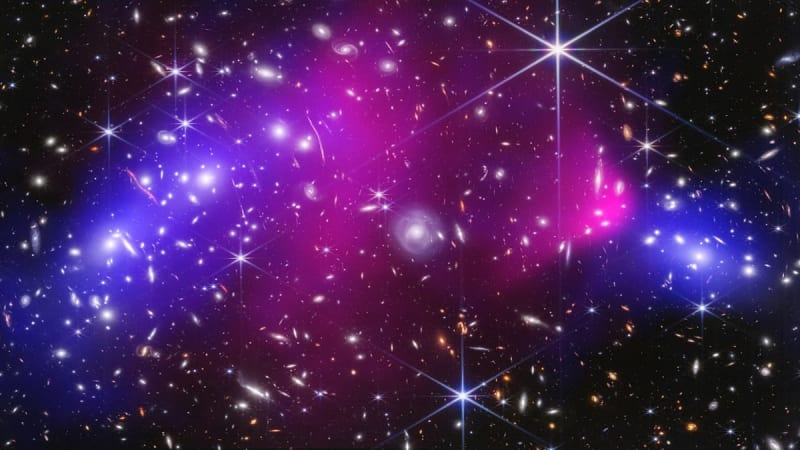
Researchers at Durham University in the United Kingdom created the most detailed picture yet of dark matter, the invisible substance that makes up most of the universe. Using NASA's James Webb Space Telescope, they tracked how light from nearly one million distant galaxies bends and warps as it travels through space.
Dark matter remains one of physics' greatest puzzles. Scientists know it exists because of its gravitational pull, but nobody knows what it's actually made of. It doesn't emit light, reflect it, or absorb it.
The team used a clever trick called gravitational lensing. Dark matter's gravity bends light from faraway galaxies, making them look distorted or stretched. By measuring these warps across hundreds of thousands of galaxies, astronomers pinpointed exactly where dark matter sits and how much exists.
"They appear warped into unusual shapes," explained Richard Massey, a computational cosmology professor at Durham University. "That's how the James Webb Space Telescope can see dark matter even though it's invisible."
The mapped region lies in the constellation Sextans, covering an area about two and a half times wider than the full Moon appears from Earth. Previous telescopes had studied this patch before, but never with this level of clarity.
Gavin Leroy, a postdoctoral research associate on the team, compared earlier maps to seeing through frosted glass. "Now, with amazing data from the James Webb Space Telescope, we are able to see the universe with a closer, clearer view of where the dark matter is."
The Ripple Effect
This breakthrough does more than satisfy scientific curiosity. The new map confirms that dark matter isn't randomly scattered across space but forms a connected structure that shapes everything we can see.
The James Webb telescope identified twice as many galaxies as the previous deepest survey from Hubble. That extra detail helps scientists understand how galaxies form and why the universe looks the way it does today.
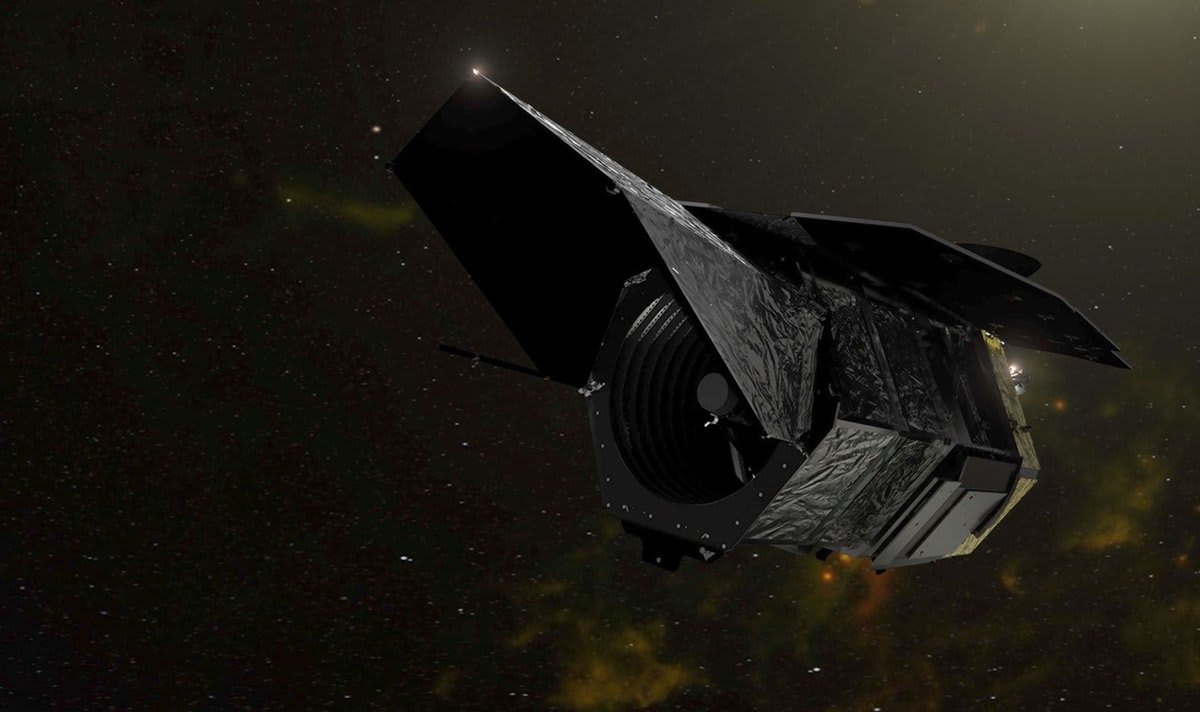
Future space missions will build on this work. The European Space Agency's Euclid telescope and NASA's Nancy Grace Roman Space Telescope will use similar techniques to map dark matter across much larger sections of the sky.
Every invisible thread they trace brings us closer to understanding the invisible scaffolding that holds our universe together.
More Images



Based on reporting by Euronews
This story was written by BrightWire based on verified news reports.
Spread the positivity!
Share this good news with someone who needs it