
Scientists Map 'Gemstone' Atmosphere on Marshmallow Planet
Astronomers using the James Webb Space Telescope discovered a bizarre exoplanet with the consistency of marshmallow and an atmosphere decorated with rising "gemstone" formations. The breakthrough mapping technique reveals how the scorching hot world's atmosphere shifts dramatically between its eternal day and night sides.
Scientists just created the most detailed 3D map ever of an alien world's atmosphere, and what they found looks like a ring studded with gems.
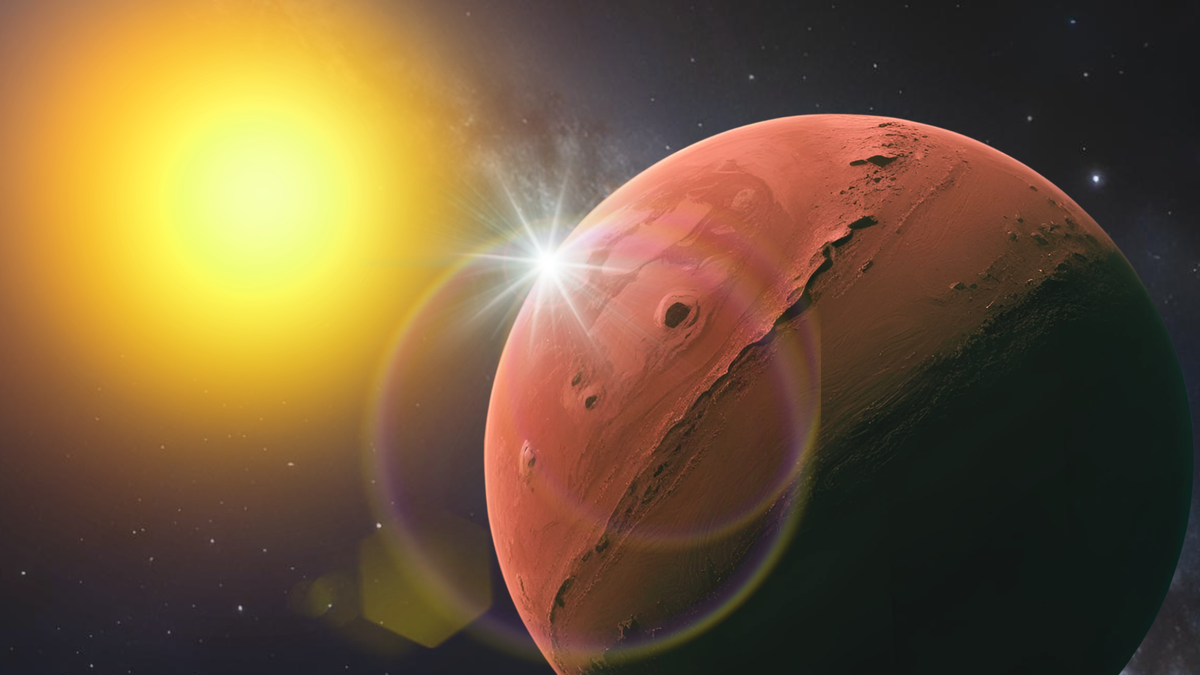
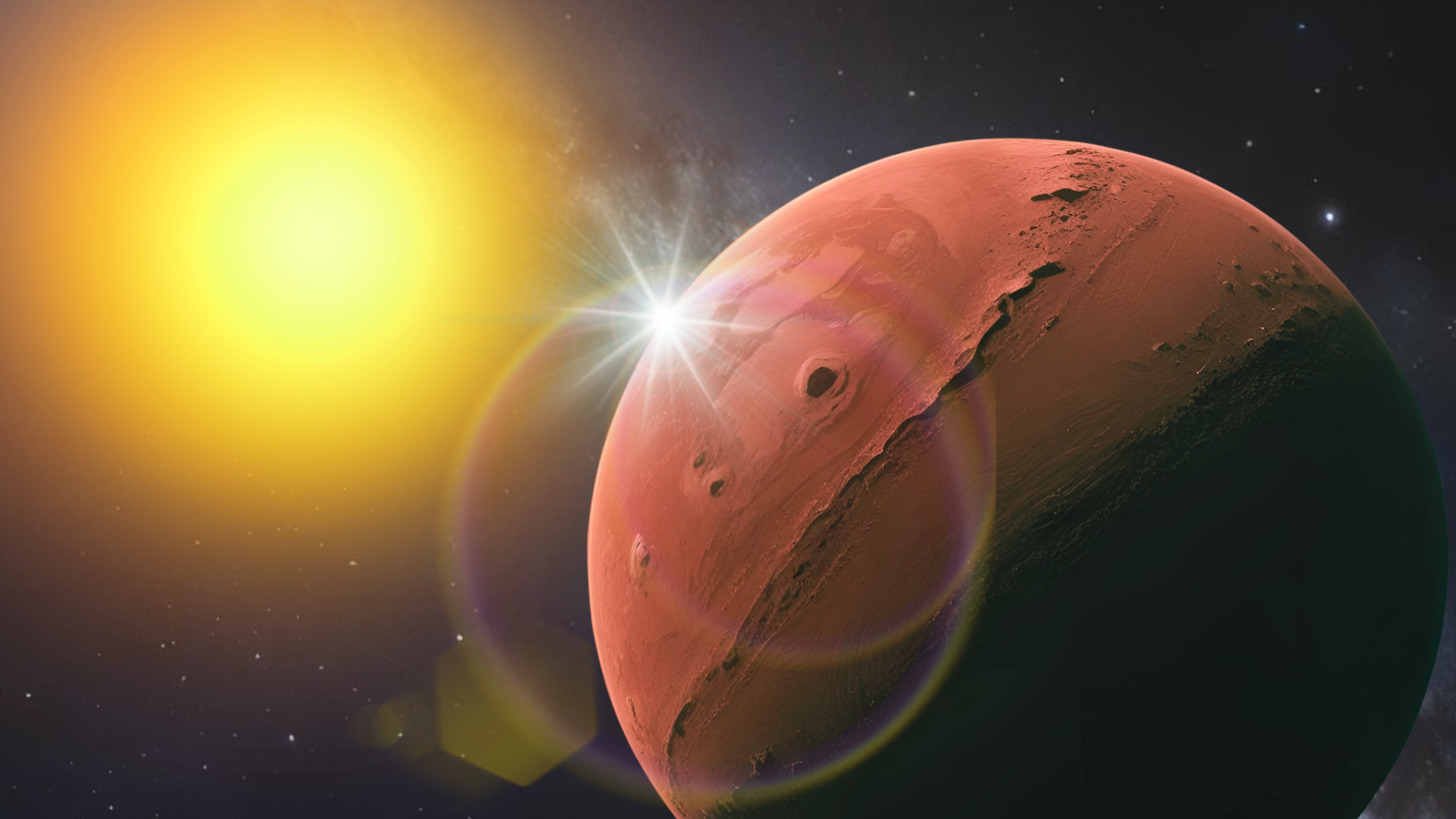
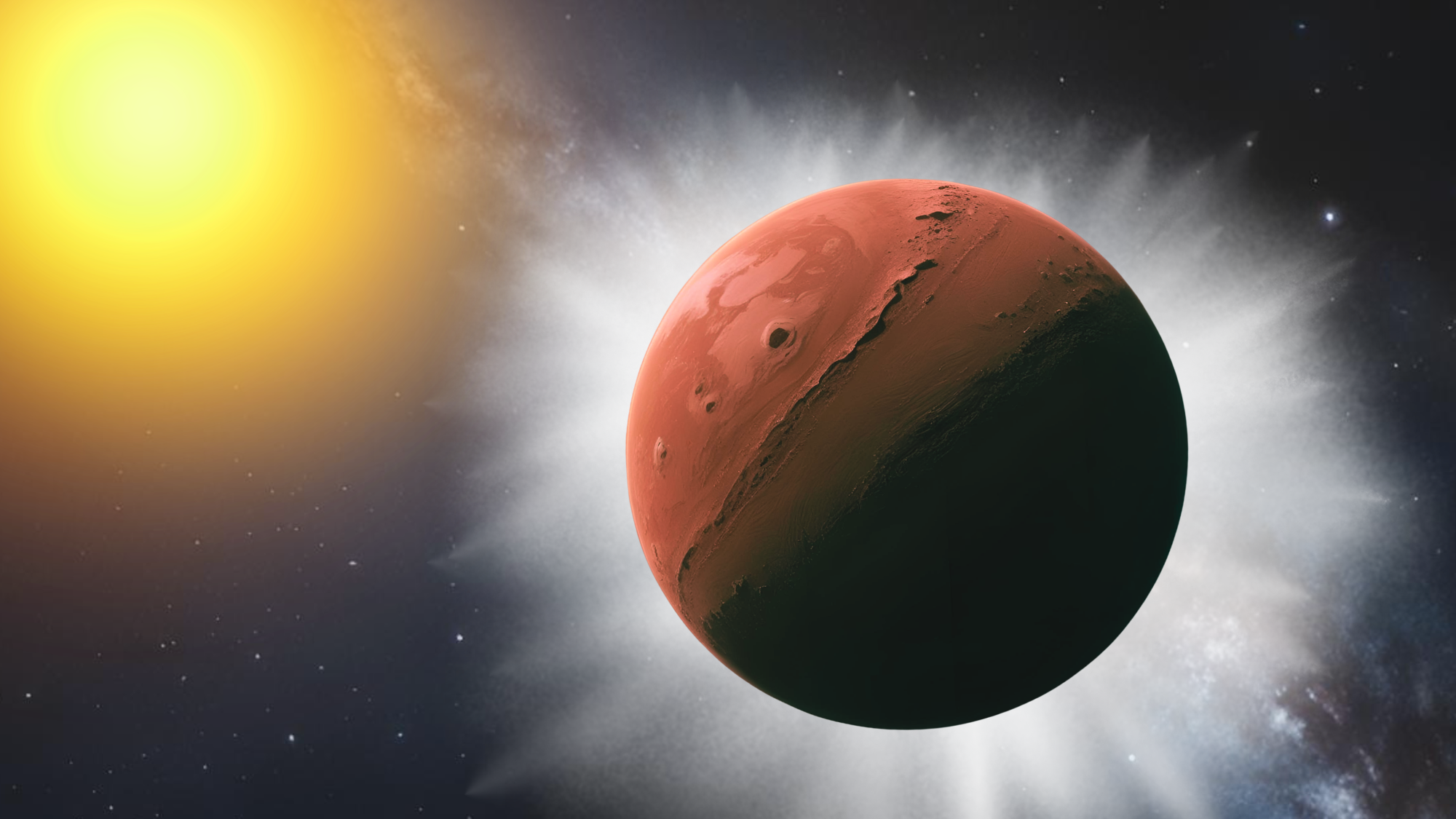
WASP-17b sits 1,300 light-years from Earth, and it's nothing like the planets in our solar system. Despite weighing slightly less than Jupiter, this "super-puff" planet stretches twice as wide, giving it the fluffy density of a marshmallow.
The planet hugs its star so tightly that a complete orbit takes less than four Earth days. That closeness cranks up the heat to blistering temperatures, creating what astronomers call a "hot Jupiter."
Using the James Webb Space Telescope, researchers from Cornell University and the University of Bristol developed a revolutionary technique called transmission strings. Instead of averaging atmospheric data around the planet's edge, this method tracks how light passes through different points as the planet crosses in front of its star.
What they discovered was breathtaking. The atmosphere forms a ring shape with dramatic bulges rising from it like gemstones on jewelry.
"Planets are temperamental, their atmospheres complex and chaotic," said team member Hannah Wakeford from the University of Bristol. "The fact that all of these numbers came together and showed us this very structured, dynamical picture of this giant world over 1,000 light-years away was just really exciting."
WASP-17b is tidally locked, meaning one side forever faces its star while the other stares into the darkness of space. The dayside bakes under constant radiation while the nightside remains cooler.
The researchers found one prominent "gem" where scorching winds from the dayside race toward the equator and nightside. When these hot winds meet the cooler atmosphere, that side puffs up dramatically, creating the gemstone effect.
Why This Inspires
Lili Alderson from Cornell University explained the breakthrough simply: "Rather than assuming your atmosphere is a circle with the same radius all the way around, our technique allows you to pull out different distances from the center to the edge of the planet."
The planet's temperature differences matched theoretical predictions almost perfectly. "WASP-17b fits really nicely in that trend, pretty much bang-on what we thought it would be," Alderson said.
This isn't just about one weird marshmallow planet. With over 6,000 confirmed exoplanets in NASA's catalog, this new mapping technique opens doors to understanding thousands of distant worlds in stunning detail.
"This is proof of concept that planets are, in fact, 3D objects," Alderson explained. The technique transforms planets from flat data points into living, breathing worlds we can actually visualize.
The successful mapping shows that what scientists predicted in computer models actually happens in reality across the cosmos, turning theory into observable fact and bringing distant alien worlds into focus like never before.
More Images

Based on reporting by Google News - Scientists Discover
This story was written by BrightWire based on verified news reports.
Play Today’s BrightWire Positive Mini Crossword & Word Game
Keep your mind sharp with our free 5-minute uplifting daily crossword and positivity word puzzle.
Spread the positivity!
Share this good news with someone who needs it
